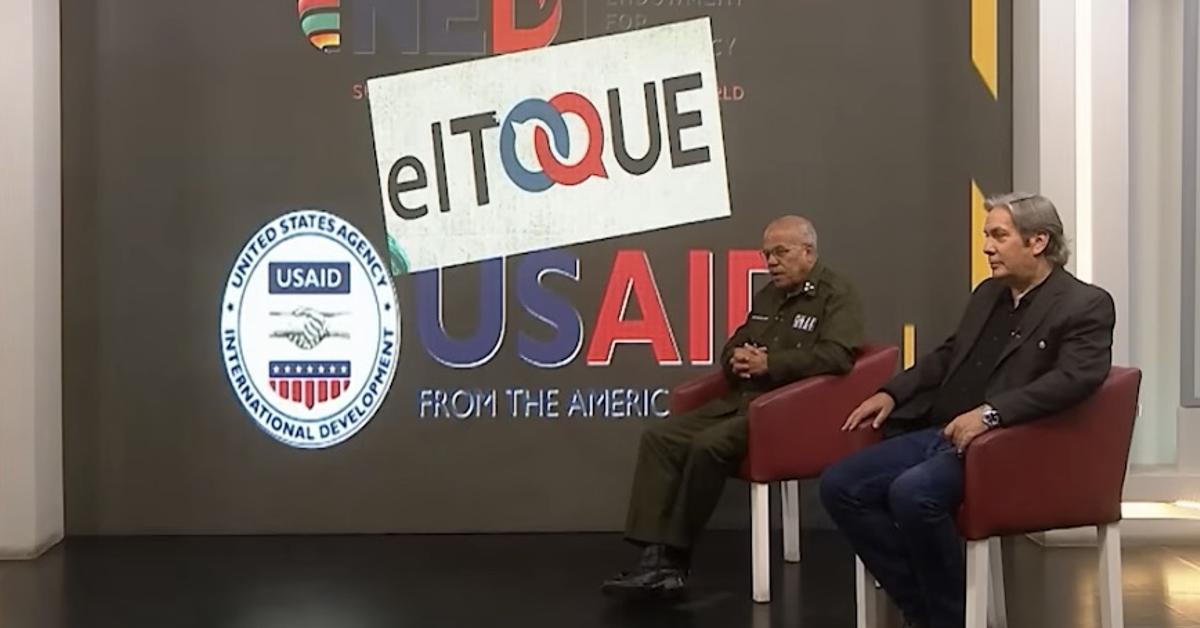
Madrid/The official press continues the campaign against The Touch at the pace of up to two and three news items a dayand last night Razones de Cuba once again dedicated more than 30 minutes to the independent media. Humberto López and his guests talked while sitting in front of a huge digital logo: the largest free advertising campaign in recent years of the state information monopoly on a “counter-revolutionary” media that there is no Cuban who does not know if there was one.
This Wednesday’s episode didn’t contribute much to what was already known, except the fact that “18 managers involved, based in different countries, as well as a group of collaborators” are being investigated. It was not said whether the latter are in Cuba, because they are the ones who could face problems if the Ministry of the Interior follows the path it has taken, which is none other than accusing them of terrorism and mercenarism. The Touch.
To support his theories, López invited to his program the writer and professor, as well as a former spy, Raúl Antonio Capote and Colonel Francisco Estrada Portales, head of department of the Organ for the Investigation of Crimes against State Security. The dissertation included a trip to the past, from Radio Free Europa to Radio Prague – accused of influencing the fall of the USSR, which they called Russia –, to connect Radio Nederland with The Touch.
To support his theories, López invited the writer and professor, as well as former spy, Raúl Antonio Capote and Colonel Francisco Estrada Portales to his program.
Capote, who in 2011 said he had collaborated for eight years with the CIA to turn university students into counterrevolutionaries, said that the germ lies in the visits that the American academic Ted Henken made to Cuba to study the blogosphere in the first decade of the 2000s. There he would have captured José Jasán Nieves – director of The Touch– and Harold Cárdenas – former collaborator of The Young Cuba and currently resident and citizen in the United States – to carry out the project.
Capote, who petulantly maintains that no one had ever told this story, claims that the two argued on a train through Germany over who should be the leader, an issue that was eventually resolved with Cárdenas’s abandonment. “Jasán kept the little jewel,” he says, in relation to the important financing that the United States had planned to allocate to The Touch.
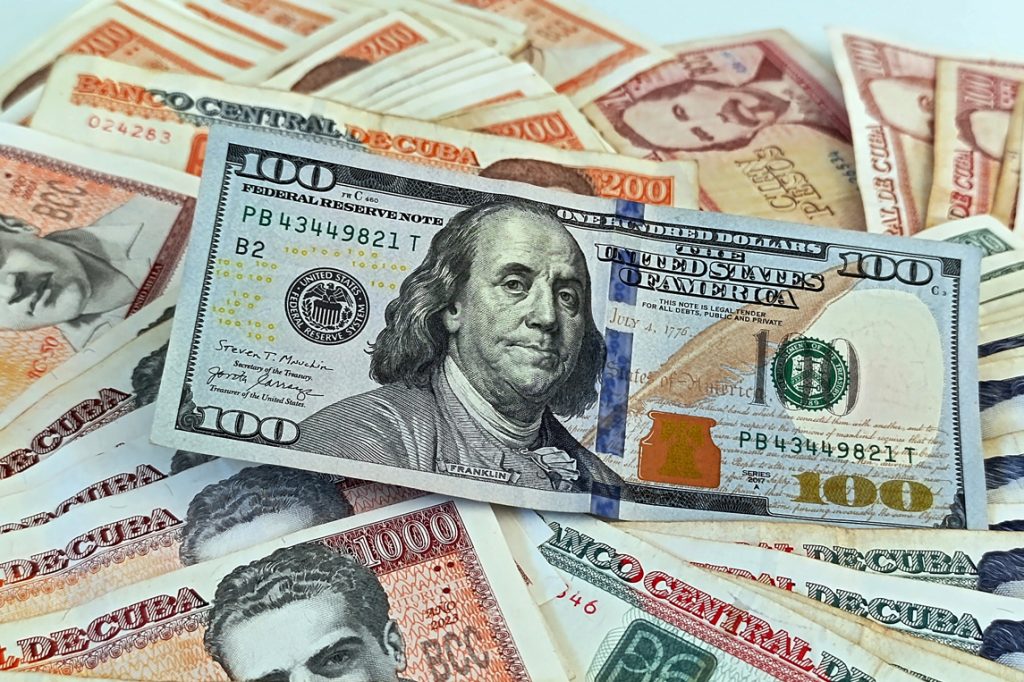
After telling this anecdote, which matters little to Cubans who live dependent on the price of the dollar – the main issue that the guests of the program take a long time to address – but entertained until reaching the 15th minute, Colonel Estrada links up accusing Nieves of having created the non-profit foundation Colectivo Más Voces to channel money from the United States to The Touch and which later ends up leading, already in Miami, to a company – Media Plus Experience – to “meet the objectives of those who finance it.” Thus, in a second, the thing ends up becoming “mercenarism.”
López and Estrada then comment on José Jasán Nieves’s publication on social networks on the 13th to fend of the accusations of Razones de Cuba and emphasize that in it “he is saying that in effect he receives money from the United States Government.” In his stupor, the spokesperson for the regime ends up leaving the colonel in a not very good light: “I mean, what you are trying to say, what you, I imagine colonel, have had to use techniques, tactics, research and time, this person is already saying publicly,” he blurts out. As Nieves already said last week, all that information is public.
Estrada continues to accuse the director of The Touch not just to collaborate with a foreign country by “attacking” one’s own, but to do so specifically with a country that is “a historical enemy of the Cuban nation.” “That is a crime anywhere in the world. That, wherever it is, is also a complete violation of the laws. From a legal point of view it is like that,” he points out. He also adds that the United States would pursue anyone who conspired against its government in exchange for money anywhere in the world.
López arrives quickly and asks the colonel to explain if a similar standard can be applied and people linked to ‘El Toque’ can be placed on the list of terrorists.
For another good number of minutes, those present insist that The Touch It cannot be independent journalism in any way if you take into account that it receives public money from a Government. Capote takes advantage of the moment to sneak in another little battle and explains – without naming names – that years ago he met a journalist who “honestly believed in the values of American society” but made the mistake of “once making a criticism of a festive event that had occurred in the Interests Section (former name of the US diplomatic representation in Havana).” And he continues: “That was a disaster. The consequence of that was that he was immediately banned from entering (…) and they put him on the blacklist in such a way that he could never again do journalism or anything else related to the American Government in his life.”
To the voice of “lists”, López comes quickly and asks the colonel to explain if a similar standard can be applied and include people linked to The Touch on the terrorist list. “Well, as I said, enough elements of various criminal activities are emerging,” warns Estrada, who refuses to give clues about how the investigation is progressing and once again attacks the alleged manipulation of the exchange rate in the informal market.
Humberto López ends with an extensive statement in which he throws a dagger at official journalist Ariel Terrero, who pointed out a few days ago that it is “grotesque” to blame the information provided by the Nieves media for inflation. “There is no need to overstate the alleged economic harm,” argued the expert. The presenter highlights that everything that has been said in the program is “based on logic.” “Or are there those who continue to claim that the harmful effects are overstated?” he asks.
López argues that there are many problems that affect Cuba – most of them due to the “blockade” – and that no one accuses Cuba of them. The Touchbut that “this adverse environment amplifies any disturbance.”
The disruption, the leaders of the Communist Party have decided, is the publication of an exchange rate that the bickering seems to be affecting. This Thursday, the US currency is now exchanged for 435 pesos, after having been at 485 at the end of October, but experts from The Touch They believe that the decrease is due more to factors such as the greater balance point between supply and demand, and the classic reaction to the 500 barrier, without also ruling out the influence they grant to the distrust that part of the population feels right now due to the discredit campaign.
Meanwhile, the Government continues without concentrating its efforts on the problems that have really led to the absolute devaluation of the Cuban peso and that range from the abandonment of functions of the National Bank to zero production in all economic sectors. As the specialist Pedro Monreal said last week – without, of course, having heard it –: “The Touch It is 0.0001% of the issues that the Cuban Government should address in terms of exchange rate policy. The informal rate is a subject subordinate to monetary and exchange unification in the context of structural crisis. The cannon shots go there, the other thing is fireworks.”