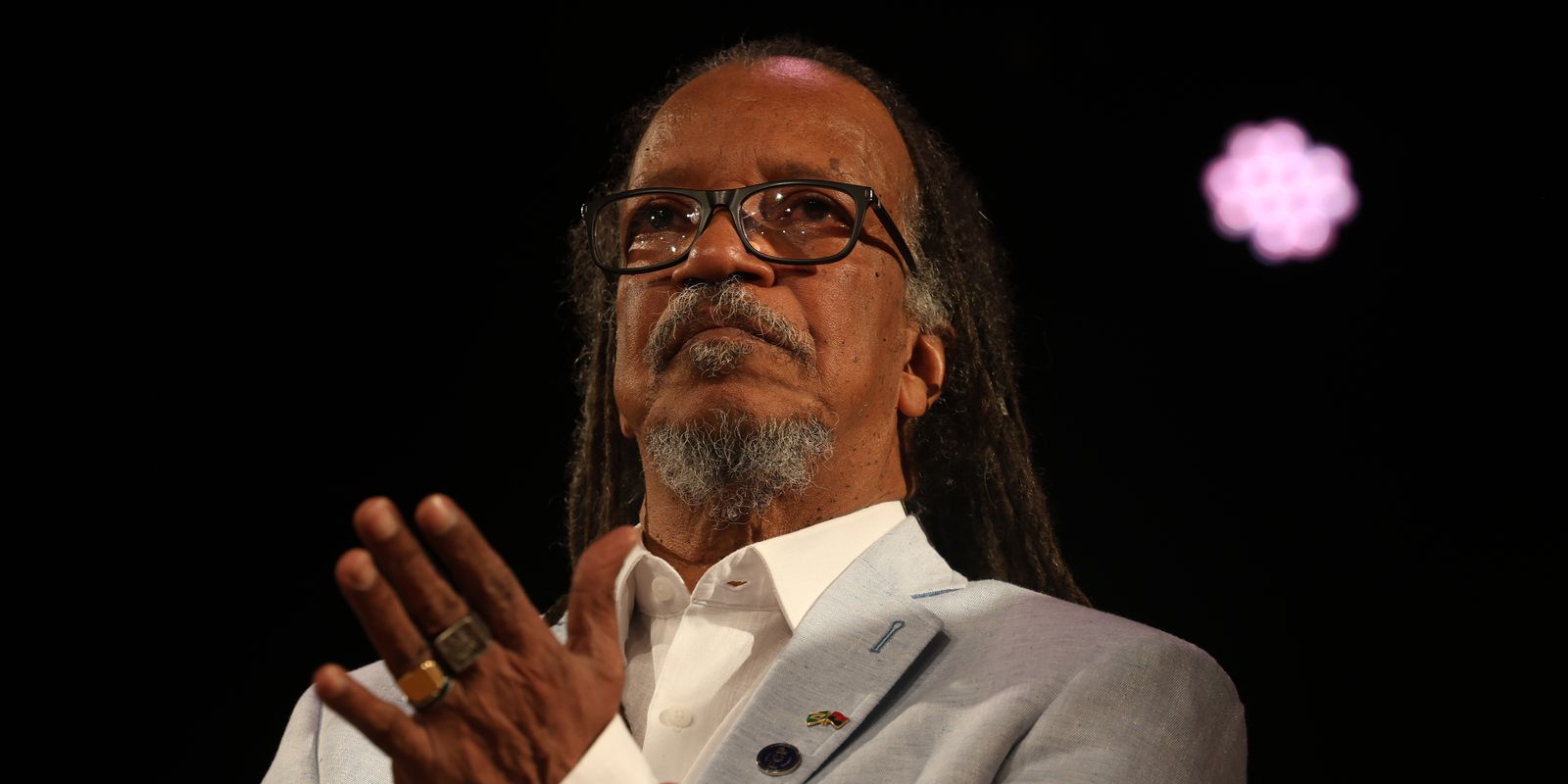
The celebration of Black Awareness Day, this November 20th, the date on which the death of Zumbi dos Palmares is remembered, is a demonstration that there have been “extraordinary” advances in the country in the last 60 years in terms of racial equality. This is the assessment of the president of Fundação Palmares, João Jorge Santos Rodrigues.
THE Brazil AgencyRodrigues celebrated that the result of the struggles of the black movement and leaders such as Abdias Nascimento and Lélia Gonzalez was progress in the construction of a more democratic society. The president of the foundation also warned, however, that the scenario continues to not be ideal, despite achievements that he highlights, such as racial quotas, the creation of the Ministry of Racial Equality and the protection of demarcated quilombola territories.
Abdias Nascimento was a writer, playwright, visual artist, university professor, politician and civil and human rights activist for black Brazilian populations. Likewise, Lélia Gonzalez was a Brazilian intellectual, author, activist, teacher, philosopher and anthropologist, considered a reference in studies and debates on gender, race and class in Brazil and the world.
Rodrigues compares that Brazilian racism is very different from racism in the United States, South Africa, India or Australia.
“It is systemic racism, a continuous, sophisticated and permanent crime. It finds formulas to prevent black people from being alive to benefit from these affirmative actions. This is the case of the massacres in Rio (de Janeiro), Bahia or São Paulo, where there is a death toll among the black population.”
Serra da Barriga
The president also highlights the role of the Palmares Cultural Foundation, founded on August 22, 1988. One of its missions is the protection and valorization of Serra da Barriga, site of the largest and longest-lasting quilombo in the Americas, Quilombo dos Palmares, located in the city of Palmares, in Alagoas. There is the Quilombo dos Palmares Memorial Park, a space dedicated to Afro-Brazilian memory, resistance and culture.
Rodrigues recalled that the Foundation spent six years, between 2018 and 2022, without any activity celebrating Black Consciousness Day in Serra da Barriga, transformed into a national holiday by President Luiz Inácio Lula da Silva and ministers Anielle Franco, of Racial Equality, and Margareth Menezes, of Culture. For him, The national holiday allows us to promote the cause of justice and equal opportunities.
“The black population is not asking for anything that is not due. We built this Nation with work, with sweat, with blood, and Brazil has the third largest black population in the world, after Nigeria and Ethiopia, with 113 million people.”
For this reason, João Jorge Rodrigues stated that the black people are owed a series of historical reparations, which are being carried out, although “not at the speed that my ancestors dreamed of”.
In the historic quilombo of Serra da Barriga, he reports that many improvements have been made in preservation and access, in terms of information, for Brazilian and foreign visitors.
“Building the memory of the Brazilian people is not a simple task, because it involves the memory of women, indigenous people, the black population, waste pickers, participants in the Canudos and Malês revolts, for example. It is everything that was hidden and was treated by politics as oblivion”.
The Canudos War was an armed conflict that involved the Brazilian Army and members of the socio-religious community led by Antônio Conselheiro, in Canudos, in the interior of Bahia. The clashes took place between 1896 and 1897, with the destruction of the community and the death of most of the 25 thousand inhabitants of Canudos. The Malês Revolt was a rebellion of enslaved Africans that took place in Salvador (BA), during the First Reign, on January 24, 1835. It is considered the largest uprising of enslaved people in the history of Brazil.
Greater understanding
The executive secretary of the National Council for the Promotion of Racial Equality (CNPIR), Larissa Santiago, also assesses that there have been advances in relation to racial equality in Brazil.
“We have been able to discuss racial equality with more clarity, coverage. I think that people, today, understand what racial equality means and are able to discuss more about this topic, about racism, confronting racism.”
For Larissa, this is due, above all, to advances in education policies, with the consolidation and expansion of quota laws in universities and the expansion of quotas in the public service.
“It means that we have a presence. Of course, it is not ideal, and we are working to make this progress further, but there is, in fact, and the participation and presence of black people in universities, in federal and technical courses is notable.”
As a result, he highlighted, there has been an increase in black teachers, who are able to bring history, perspectives of race, class and gender to their students.
Larissa admitted, on the other hand, that Brazil still has many challenges in this field. As a continental-sized country, with many states and municipalities, and a majority black population spread across the country, one of the challenges is ensuring access to full health and public safety for all people.
“I imagine that, as racial equality policy is a transversal policy, we have challenges in different areas, in different spectrums of public policies. And health and safety are two policies of the greatest importance to reach, at the end, our population”, he stated.