Madrid/The fuel deficit affects Cuba more than ever in 2025, when the drop in exports from its two regional benefactors compared to the previous year is already more than a third. The collapse in oil shipments from Venezuela that has been observed throughout the year is now joined by that of Mexico, whose deliveries between January and October 2025 were reduced by 73% compared to the same period of the previous year. The collapse contrasts with the data from the first half of the year, which indicated a 2.8% increase in shipments, excluding derivatives.
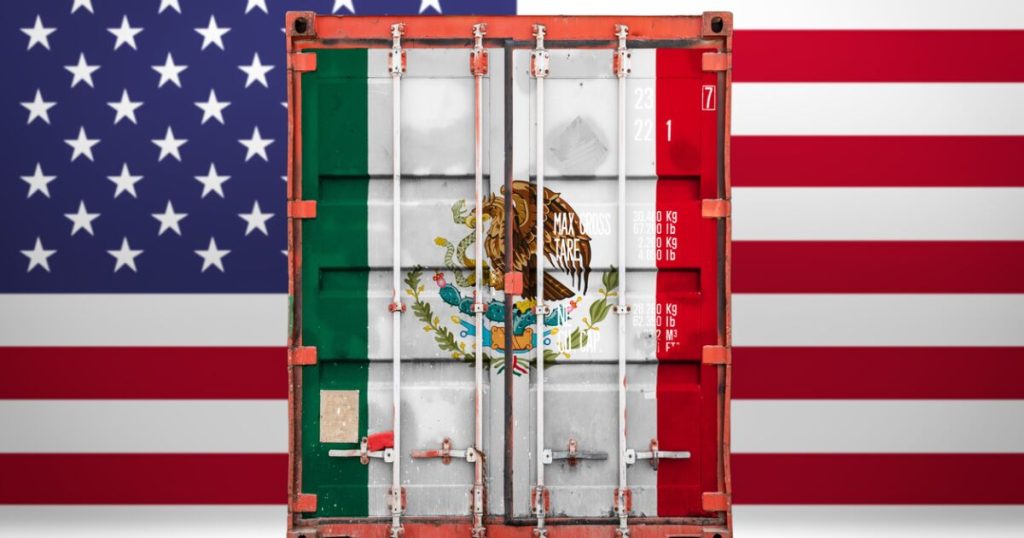
Exports from the state-owned Pemex to the Island stand at 5,000 barrels per day (bpd) on average for the first ten months of the year, a very low amount compared to the 18,800 for the same period in 2024, according to cargo shipment data obtained by Reuters.
The figures from the British agency show that Mexico is reducing its cooperation with the Island, spurred by its own economic and productive limitations.
The figures from the British agency show that Mexico is reducing its cooperation with the Island, spurred by its own economic and productive limitations, after in July 2023 it had become a new – and important – energy partner for the Havana regime. That year, the country – then governed by Andrés Manuel López Obrador – sent about 16,000 barrels of oil and derivatives per day to the Island on average (equivalent to about 300 million dollars, which no one knows how they were paid for).
Throughout 2024, the collaboration rose to 20,100 bpd, 20% more (although derivatives fell 18%), with a joint value estimated at 600 million dollars. To have the global comparison we will have to wait until the end of the year, since after months without receiving anything from Pemex, this monday arrived on the island Ocean Mariner with about 70,000 barrels of diesel (valued approximately between 12 and 18 million dollars).
The Reuters data also calls into question those provided by the organization Mexicans Against Corruption and Impunity (MCCI), which on October 13 published a report in which it exposed extraordinarily high amounts. According to the document, the value of hydrocarbons sent by Mexico to Cuba between May and August 2025 exceeded 3,000 million dollars, delivered in 58 shipments.
“I understand that, currently, Mexico is not sending oil to Cuba,” dThe University of Texas researcher then told this newspaperin Austin, Jorge Piñón, who added: “the MCCI has misinterpreted the data from Mexican Customs and, on the contrary, Pemex has light crude oil production problems (Isthmus).”
So far this year, according to Reuters accounts, the drop is 15% compared to 2024, when, in fact, they had already dropped 42% compared to 2023
Added to this problem is Venezuela’s non-compliance with the 2000 agreements, signed between Fidel Castro and Hugo Chávez and by which Caracas would deliver PDVSA crude oil to Havana in exchange for resources in different sectors – from doctors to intelligence agents. So far this year, according to Reuters accounts, the drop is 15% compared to 2024, when, in fact, already they had dropped 42% compared to 2023.
In the first ten months of 2025, the average sent by Venezuela is 27,400 bpd and the product that decreases the most is, precisely, fuel oil, necessary to generate energy.
Reuters places the total impact at 35%, taking into account both origins and all products – crude oil, liquefied petroleum gas, and residual and motor fuels. The bill went from 69,400 bpd to 45,400. According to the agency, both Mexico and Venezuela have little surplus to sell to Cuba – despite what is stated by President Claudia Sheinbaum last October, denial by the sources of 14ymedio – which adds to the problems of Havana to pay in cash. This has led to a ceiling on imports, the agency notes, although the payment mechanism to Gasolina Bienestar, the front company created by Pemex for this type of non-transparent business, is still unknown.
To all these drawbacks are added two more. On the one hand, the Olmeca crude oil that Pemex preferentially destined for Havana is being sold – Reuters states – to solvent clients. Meanwhile, PDVSA’s residual fuel oil that the Island demands for its electrical generators has reduced its production, according to internal company documents. Finally, Cuba’s lack of capacity to store fuel – after the fire in 2022 at the Matanzas Supertank Base, where 17 people died – puts the final touch on the situation.
Cuba’s lack of capacity to store fuel – after the fire in 2022 at the Matanzas Supertanker Base, where 17 people died – puts the finishing touch on the situation.
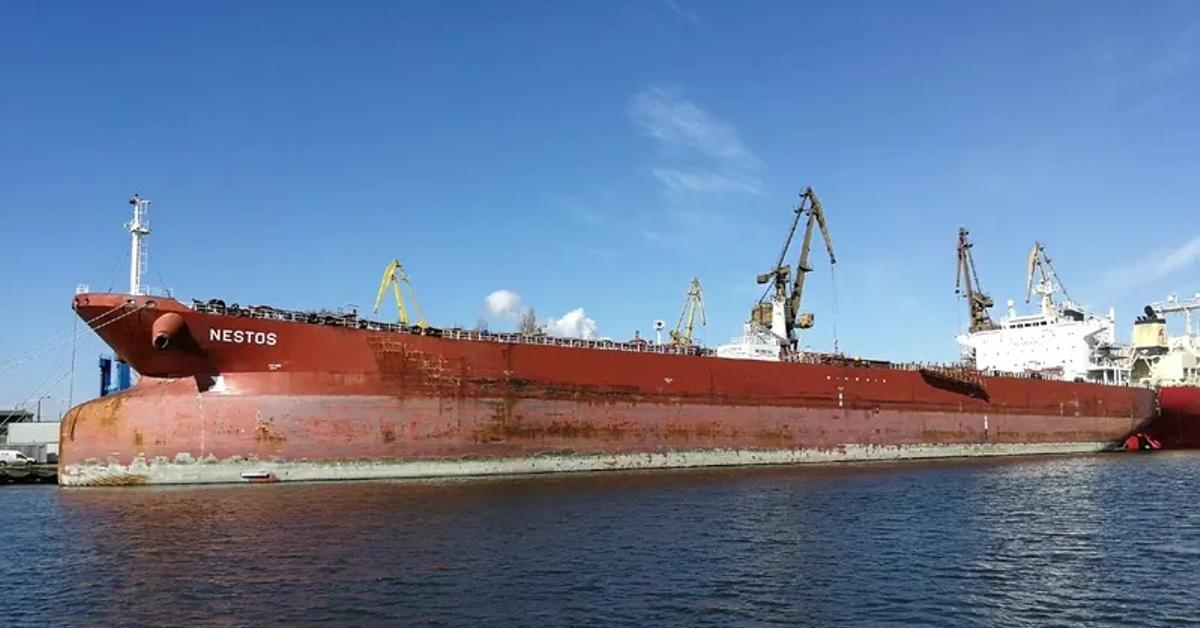
For its part, Russia has only sent two shipments to Cuba – similar to 2024 –: one in February and another in September. On the most recent trip, the Akademik Gubkin brought 740,000 barrels of Ural crude to the Island (about 48 million dollars), while in the first of the year 790,000 arrived, valued at $55 million.
This Wednesday, the Cuban Electrical Union placed the deficit impact at 1,775 megawatts (MW) during peak hours. The system was only capable of generating 1,375 during the hours of greatest demand, more than 3,000 MW.
The energy production of the 31 new photovoltaic solar parks was 1,659 MWh, with 392 MW as maximum power, but the lack of batteries prevents this energy from being stored for times when there is no sun and the breakdowns in five thermoelectric units, together with the two that are out of service for maintenance, aggravate the situation. But the real problem is in distributed generation, where there are 91 plants out of service that stop contributing 731 MW.
“I’m only going to report so they can publish me. Callejón de los Perros, in Santa Marta, Matanzas, today at 8 in the morning we had been without power for 27 hours in a row and it continues to add up, because I hadn’t come yet. Not another word,” lamented one user.