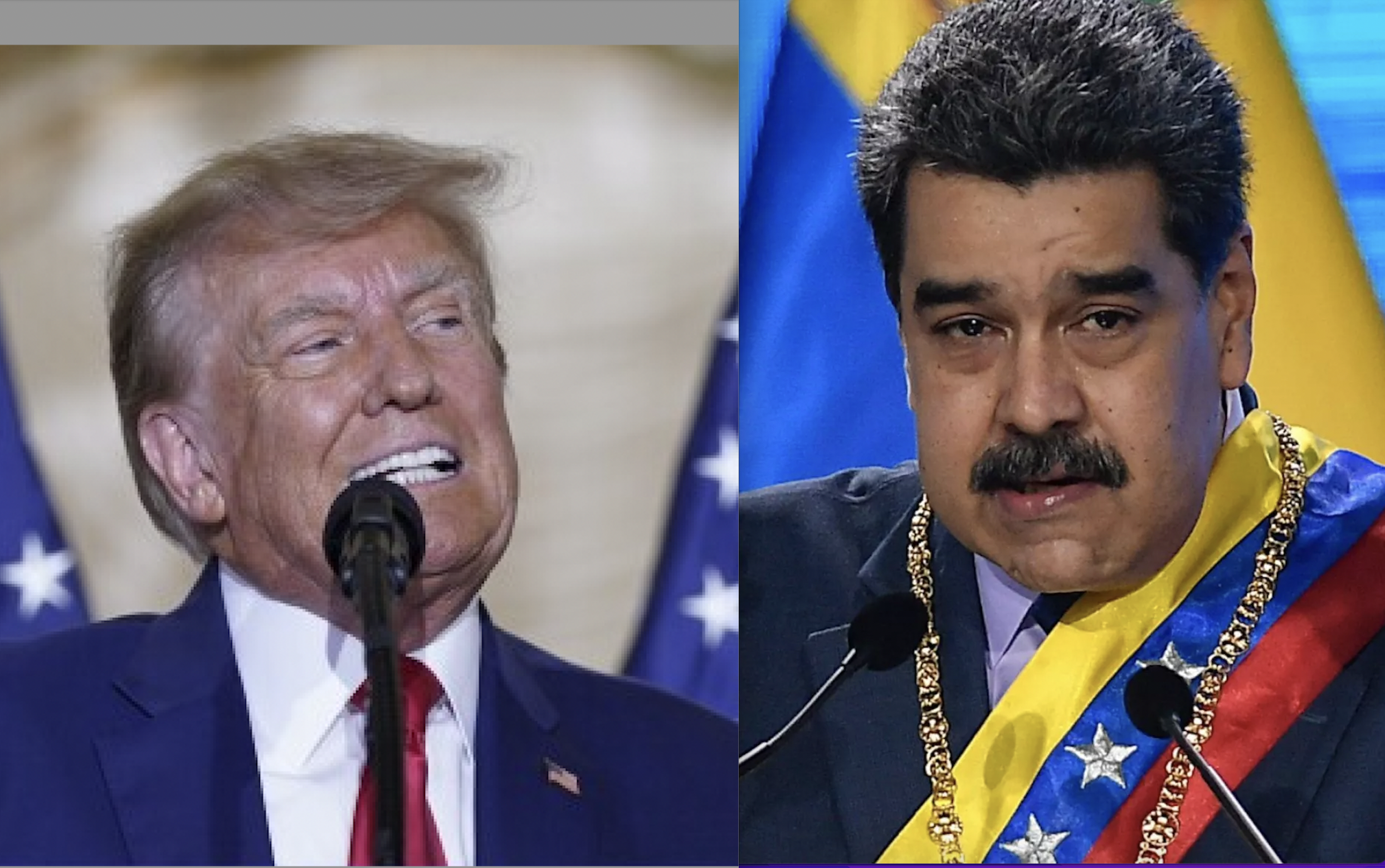
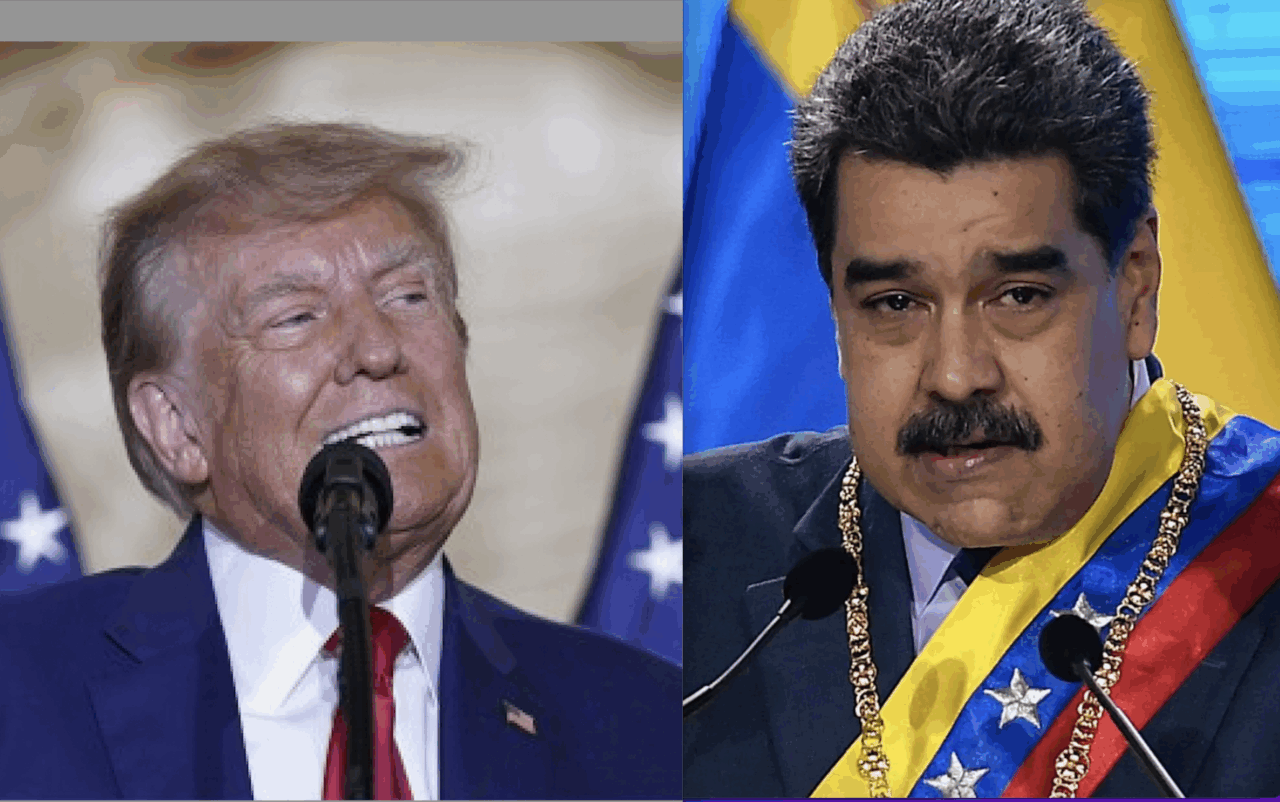
This weekend, United States policy towards Venezuela once again entered a terrain of mixed signals and contradictory messages. From Florida, President Donald Trump assured on Sunday that Washington “could be having some discussions” with Nicolás Maduro and that Caracas “wants to talk”although he avoided offering details.
At the insistence of the reporters, he responded with a shrug: “I talk to anyone. I talk to you”the same message he sent on Monday from his office.
His comments, far from clarifying the White House’s position, coincided with a visible hardening of military and diplomatic pressure against the Venezuelan government.
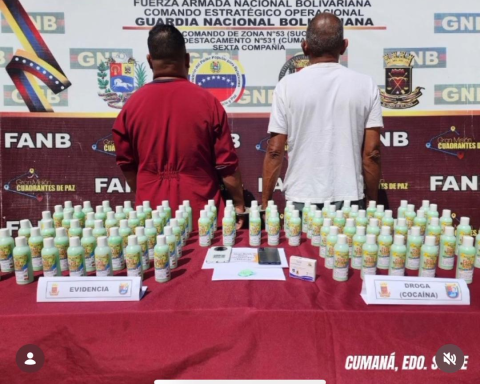
Just hours before these statements, the State Department announced that it would designate the so-called Cartel of the Suns – which it attributes links to drug trafficking and which it claims is “led by Maduro and senior officials of his government”– as a foreign terrorist organization.
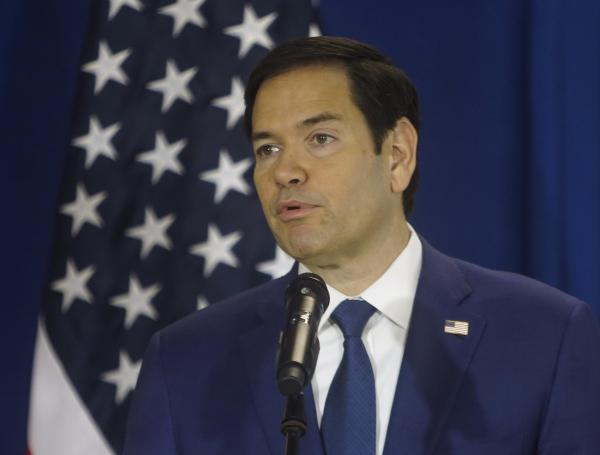
That qualification restricts financial transactions and opens the door to additional sanctions. The measure, announced by the Secretary of State, Marco Rubio, adds to a federal accusation presented in 2020 that already accused Maduro of crimes related to drug trafficking.
The increase in pressure is not only legal. On Sunday, the US Navy confirmed the arrival in the Caribbean of the USS Gerald R. Ford, the largest and most advanced aircraft carrier in the United States, accompanied by destroyers, cruisers and fighter aircraft. This deployment coincides with the announcement of military exercises in Trinidad and Tobago.
Unprecedented deployment amid conflicting messages
The deployment, ordered by Secretary of War Pete Hegseth, brings US soldiers and sailors in the region to nearly 15,000, the largest contingent in decades. With this move, Washington consolidates a military architecture that includes operations from Panama, an airport in El Salvador and plans for an airfield in Ecuador, according to documents cited by defense officials.
This increase in presence coincides with the announcement of Operation Lanza del Sur, intended – according to the administration – to stop maritime narcotics trafficking and neutralize “narcoterrorism” networks. Since September, the United States has launched at least 21 attacks against ships in the Pacific and Caribbean, killing more than 80 people.
However, legal experts cited by US media point out that Washington has not presented evidence that these vessels transported drugs and warn that these actions could violate international law.
“Just a friendly reminder that a declaration of war and the large-scale use of military force requires Congress, under the Constitution, and that extrajudicial executions are not permitted under international law,” Democratic parliamentarian Melanie Stansbury said on Sunday.
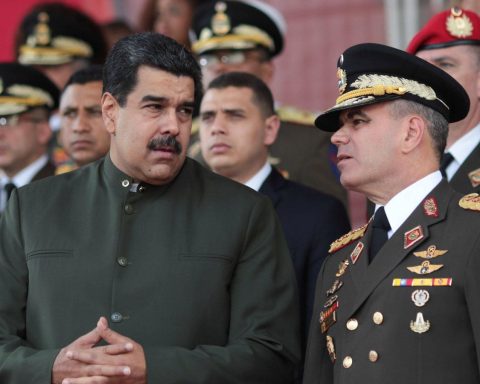
In Caracas, Maduro ordered the armed forces to be put on “high alert” and accused Washington of trying to reissue “unjust wars” such as those in Iraq or Afghanistan. But the military tension contrasts with the messages of apparent political openness. Vice President Delcy Rodríguez would have transmitted a negotiation offer for a transition weeks ago, according to diplomatic sources cited by the US press.

Reports also circulated about an alleged willingness by Caracas to offer advantageous conditions for US companies to access Venezuelan oil.
Washington’s calculated strategy?
Analysts in Washington consider that this ambiguity is not a mistake but an instrument. A Trump administration official cited by Washington Post He assured that the government is “very connected” with the discussions in Chavismo and that Maduro “He is very scared, as he should be.”
The strategy, according to this vision, would seek to generate fractures in the elites and force sectors of the regime to contemplate a negotiated solution. Benigno Alarcón Deza, a political analyst in Caracas, wrote in Americas Quarterly that attacks against infrastructure used by criminal networks “could trigger realignments” and open a path towards an internationally supervised negotiation.
Not everyone shares that reading. Researchers such as Alexander Downes and Lindsey O’Rourke recall in Foreign Affairs that comparing Venezuela with Panama is misleading: the South American country is larger, more populated, with complex geography and porous borders that could favor insurgencies or irregular groups. The recent history of conflicts like Vietnam or Afghanistan, they say, suggests that such a scenario could become a military quagmire, even for a power like the United States.
Trump himself, in a May speech in Saudi Arabia, criticized “nation builders” who “intervened in complex societies they didn’t even understand.”
However, in his administration there are voices that vindicate the idea that “the Western Hemisphere is America’s neighborhood,” as Hegseth said, hinting at a strategic reassessment that prioritizes the Caribbean and Latin America and that would already be underway.
The countries of the region watch with concern. Brazilian President Luiz Inácio Lula da Silva warned that South America is a “zone of peace” and that the Venezuelan crisis must be resolved through political means.
Colombian President Gustavo Petro went further by announcing the suspension of intelligence cooperation with Washington in protest of the bombings of ships and called Trump “barbarian.” A few days later, however, the government announced that cooperation with the United States would not be suspended.
“Colombia has cocaine factories where the drug is produced. Would I destroy those factories? I would do it with pride, personally. I have not said that I am going to do it, but I would be proud to do it,” Trump said Monday at a press conference, in a message in which he did not rule out attacks against cartels in Mexican territory.
In any case, the US administration still has not publicly defined what its final objective is. And many remember how Trump often uses ambiguity as a strategy to camouflage his final intentions. As he did in the days before the bombings against the nuclear power plants in Iran, when he hinted that a negotiation was still possible despite the fact that all the scaffolding was already in motion.
Maduro’s response in his program
The Venezuelan president reacted on Monday on his weekly program With Maduro Mature +to Trump’s statements. He stated that Caracas has maintained a position formally transmitted to Washington for weeks. “This letter was delivered to the president of the United States nine weeks ago, and Venezuela has an invariable position of respect for international law,” he said.
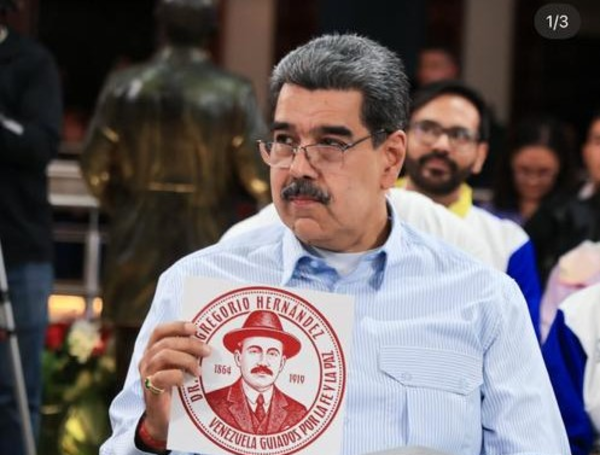
He added that his government “questions the use of force to impose rules on the relations of countries” and that it ratifies “the UN Charter as a framework for coexistence.”
Maduro insisted that the only possible path between Caracas and Washington is political understanding. “I think that the most powerful thing a true political leader can have is the word (…) Only through diplomacy should free countries be understood, only through dialogue should mutual interests be understood,” he stated.
He also stressed that Venezuela is willing to talk with any interlocutor of the US government. “In the United States, whoever wants to talk to Venezuela will talk. Face to face, face to face,” he said.
*The Grupo de Diarios América (GDA), to which El Nacional belongs, is a network of leading media outlets founded in 1991, which promotes democratic values, the independent press and freedom of expression in Latin America through quality journalism for our audiences.