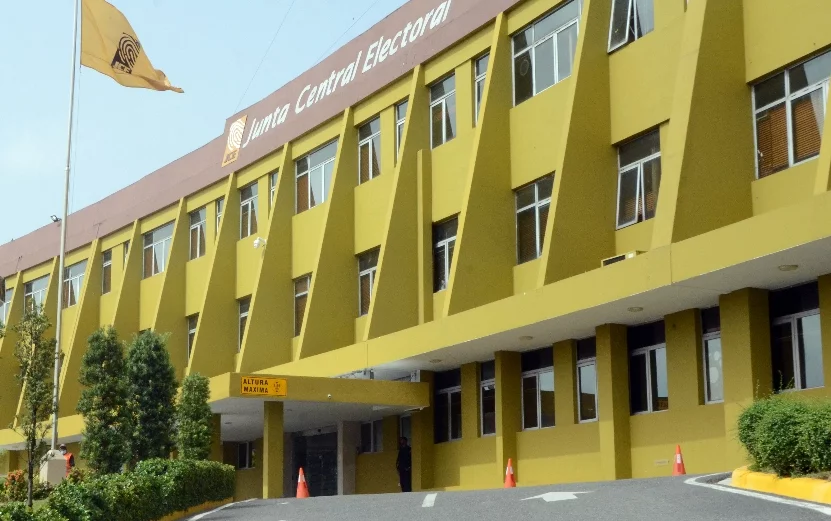
SANTO DOMINGO.- The lawyer and journalist, Cristian Miguel Moreta Romero, filed this Wednesday with the Central Electoral Board (JCE) a formal complaint in which he requests an in-depth investigation into alleged irregularities in the civil registry related to the Haitian citizen Millien Midrene Manessa, who was arrested in November 2022 with a shipment of high-caliber ammunition on the border of El Carrizal, Elías Piña province.
In statements offered by telephone, Moreta Romero explained that the foreigner was detained by Cesfront while she was trying to cross the border aboard a jeep loaded with 22,000 capsules for AK-47 and M60 rifles, ammunition that, according to official reports, would be destined for an armed gang in Haiti.
“This is a transnational crime that worries even the United States Department of State, because this weapons route leaves through Elías Piña. This misfortune that Haiti is experiencing has also been fueled from here,” said the jurist.
Alleged scheme to obtain Dominican documents
The lawyer reported that Mrs. Manessa had managed to obtain Dominican birth certificates for five minors, with the supposed purpose of creating false roots and thus obtaining judicial benefits during her criminal process.
According to his story, the procedure would have involved: a private law office in Comendador, staff at the Hondo Valle hospital, where live birth certifications would have been issued that, according to him, do not correspond to reality, and the Civil Status office of that municipality, where the births were registered.
Moreta assured that the documents were processed for minors born in Haiti, some over the age of 15, but registered in the Dominican Republic to avoid the biometric controls of the JCE system. “They didn’t even take the children; they reduced the biological ages on the papers so that biometric data would not appear,” he said.
Lack of supervision in the civil registry
The complainant, who served for more than 20 years as a Civil Status officer, harshly criticized the lack of controls in the JCE in the border areas.
“The civil registry is in the hands of officials with enormous power, who decide who is Dominican and who is not. If there is no supervision, the doors are opened to this type of maneuvers. What is happening in Hondo Valle, Bánica, Pedro Santana and other border areas is worrying,” he declared.
He also assured that this case is not isolated, but part of “a network that has been operating for years” and that it would begin in law offices that know how to circumvent control mechanisms.
The criminal case: conviction and variation of measure
Manessa was sentenced to 10 years in prison in the first instance for arms and ammunition trafficking, a sentence that was later ratified on appeal. However, as Moreta Romero explains, after presenting the new documents obtained in the Dominican Republic, the accused managed to have the measure of coercion changed to house arrest, alleging family roots.
“The Public Ministry accepted those documents without verifying their legitimacy. I have the first instance and appeal files, and now I have taken the case to the JCE because this cannot remain as a simple cancellation of records,” he said.
Calls for a forensic audit and criminal sanctions
The lawyer asked the JCE to carry out a forensic audit in the border officials and send the findings to the Public Ministry.
“The only ones who are not guilty are the minors. But all the adults involved – the civil officer, the hospital, the acting lawyer, the non-biological father and the accused – must respond to justice,” he said.
Moreta stated that he handed over the entire file to the JCE Legal Consultancy so that they can act quickly to prevent more similar cases from being repeated.