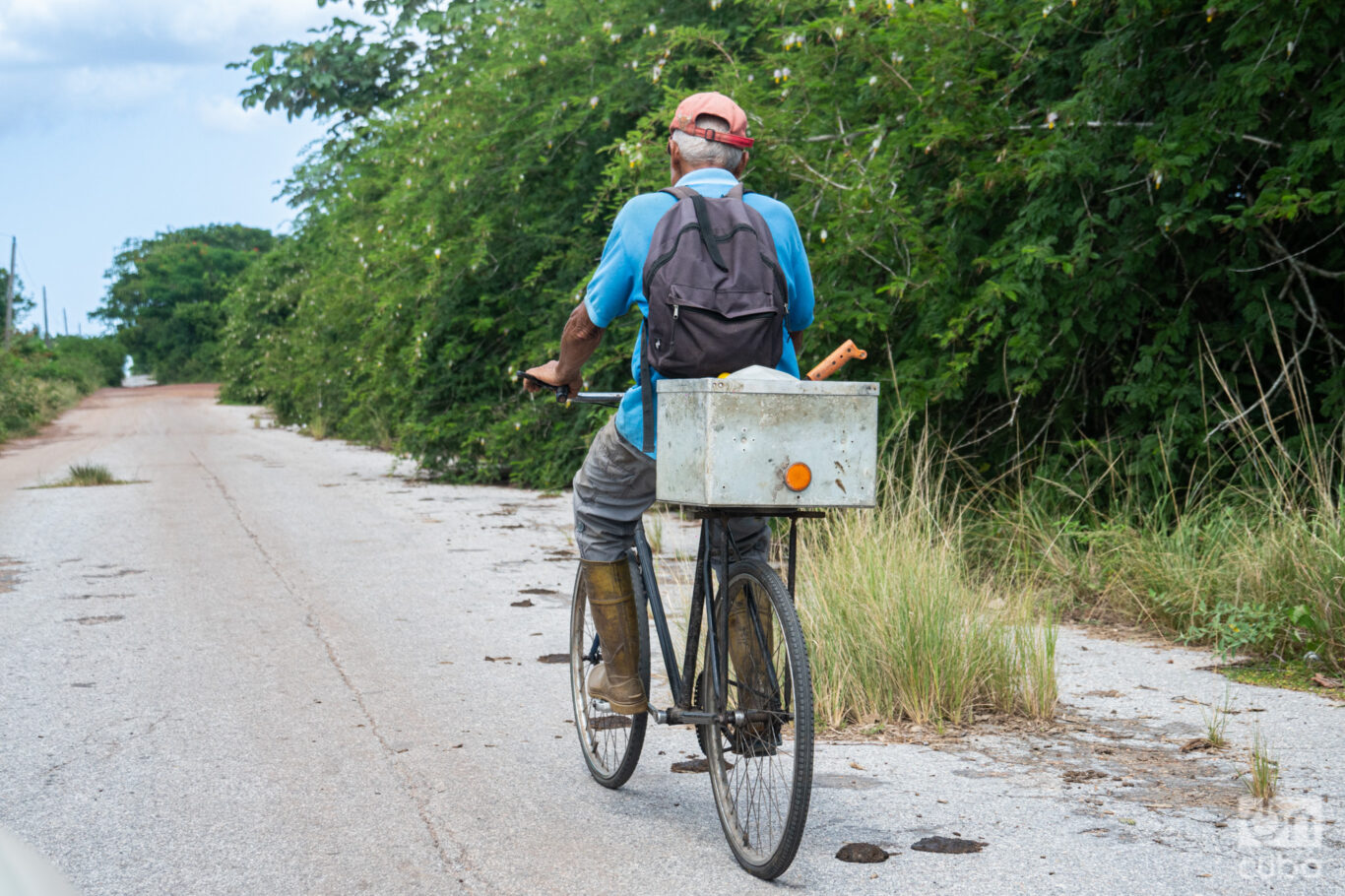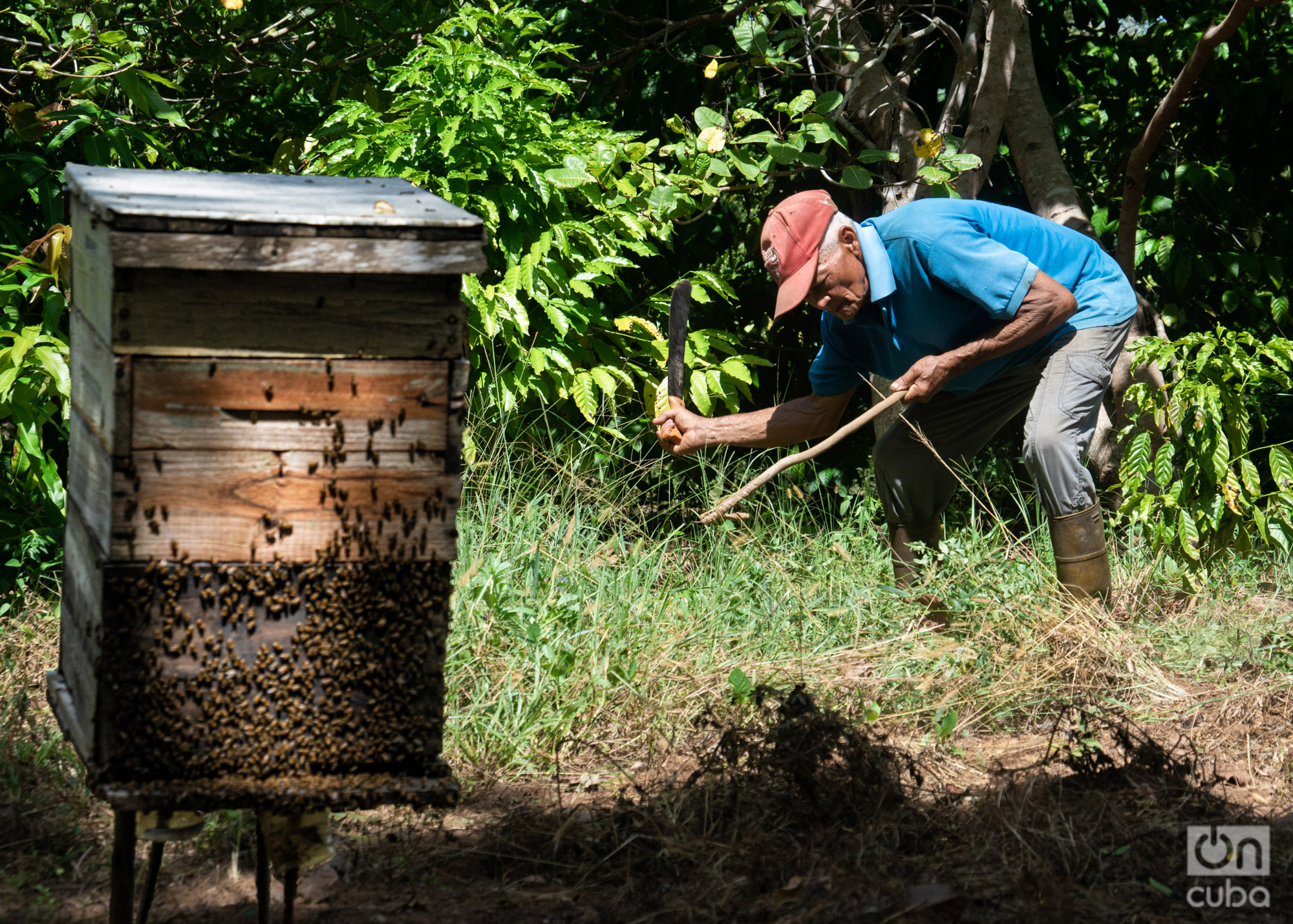
On our tour of the Isle of Youth we created a map of places and people. Stories that are linked to my family and that of many people who passed through there. Among them is Córdova. Everyone knows him. You only have to mention his last name and people automatically say: “The geologist!” as if he were the only one on the entire Island. Córdova told me that he had not been the only one, nor the best of the geologists who worked on the Isle of Youth. But many left and he stayed, working for years for that Revolution.
We went to see Córdova at his farm, in La Demajagua. Near the old pollera, El Geologist has its own little paradise. Since we were his space guests, he wanted us to meet there where the coffee grows that he would later offer us at his house.
We had just spent three days at the Colony Hotel. After so much beach and swimming pool, the children were excited by the idea of a walk in the countryside among guavas, lemons and bees.
José Tomás Córdova was born in Jobo Dulce, a small town at the entrance to Baracoa. Then he studied at the Camilo Cienfuegos School City in Manzanillo and went to learn to read and write. After teaching others to read and write, he finished high school and became an agricultural technician. He began studying Agronomy at the University, but he did not like the livestock profile and requested a scholarship to study geology in Romania.
I was in Czechoslovakia doing what was called “an update.” In 1981 he boarded the plane to return to Cuba and his gift was that they sent him to the Isle of Youth for 6 months. Their task was to make a project to reopen the Punta de Colombo quarry. When he finished his mission he had already fallen in love with the Young Island and stayed forever.
The first person Córdova met on the Island was my mother. They met at the airport, he arrived and she said goodbye to my grandmother, who was leaving for Havana. My mother invited him to her house and there she introduced him to her friend Carmen Tejedor, who lived with her. Córdova and my aunt Carmita tied. Then Augustus was born. When he divorced Carmita, they sent him to Pinar del Río and he was there from 1984 to 1990. “When I returned to the island, neither your mother nor your father were there; your aunt was gone and your uncle, who was half crazy, was not there either; your grandfather had already died.”
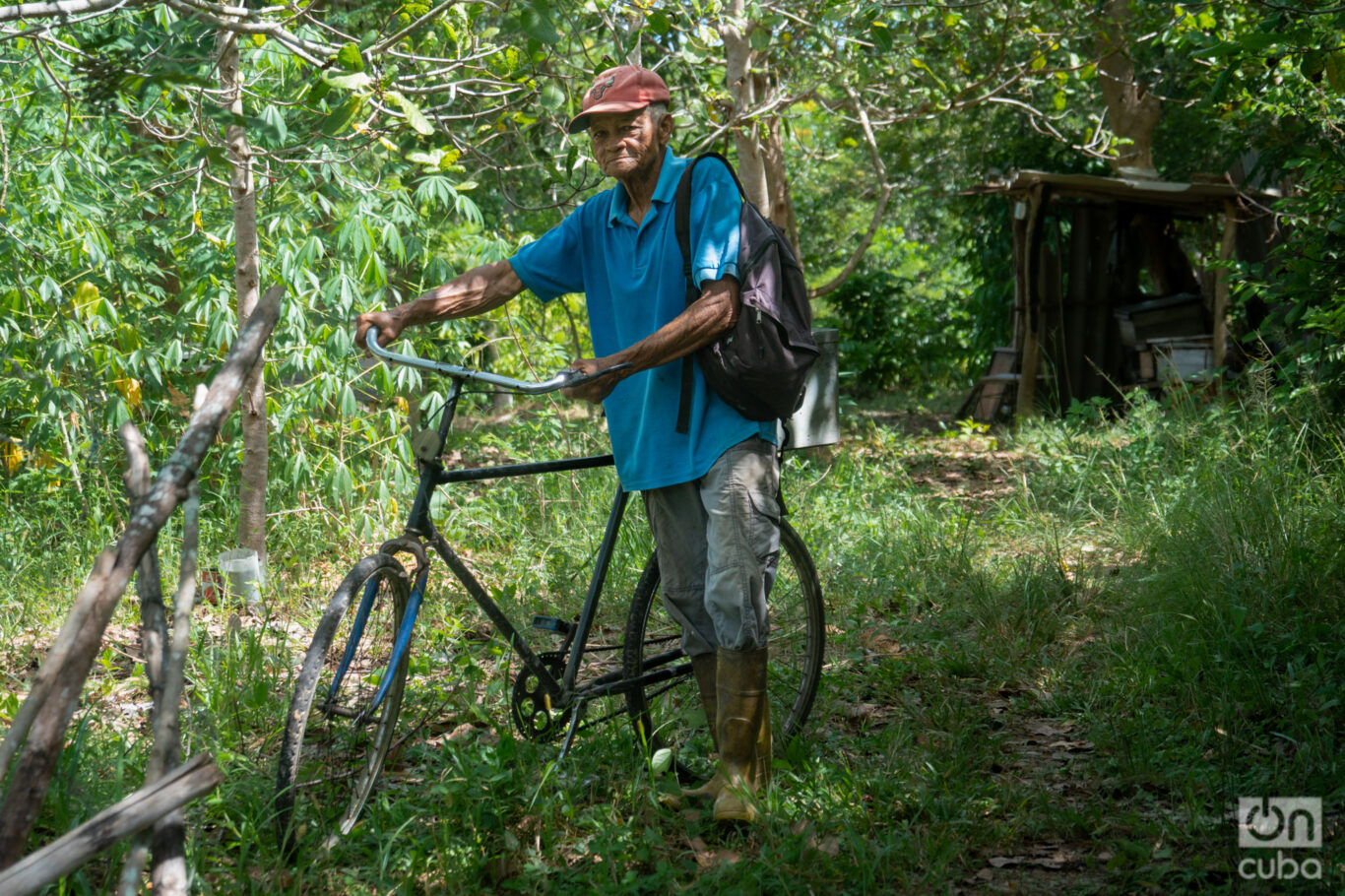
After a lifetime of working, Córdova retired from Geominera when he turned 65, with the “old law.” But he realized that that salary was enough to “starve” and he rejoined, like many people do. He worked at the National Geological Survey for a year, until he was called from the National Office of Mineral Resources to attend to the Isle of Youth. He was there from 2013 to 2024. During the pandemic he moved the office to his home and continued working. Last year he realized he couldn’t take it anymore and decided to retire.
He already had his small farm and had been working on it on weekends for some time. Now he comes every day and is happy to have changed the office for the countryside. “This is my world here, my peace of mind.”
I do 14 kilometers going back and forth on the ISA once a week on a modern bicycle with a gear system and I get tired. Córdova travels 16 kilometers every day. He is 80 years old and has a Chinese bicycle from the year of the bomb. He leaves his house in La Demajagua at 7 in the morning and goes to his little farm, where he has his faith and his joy of living.
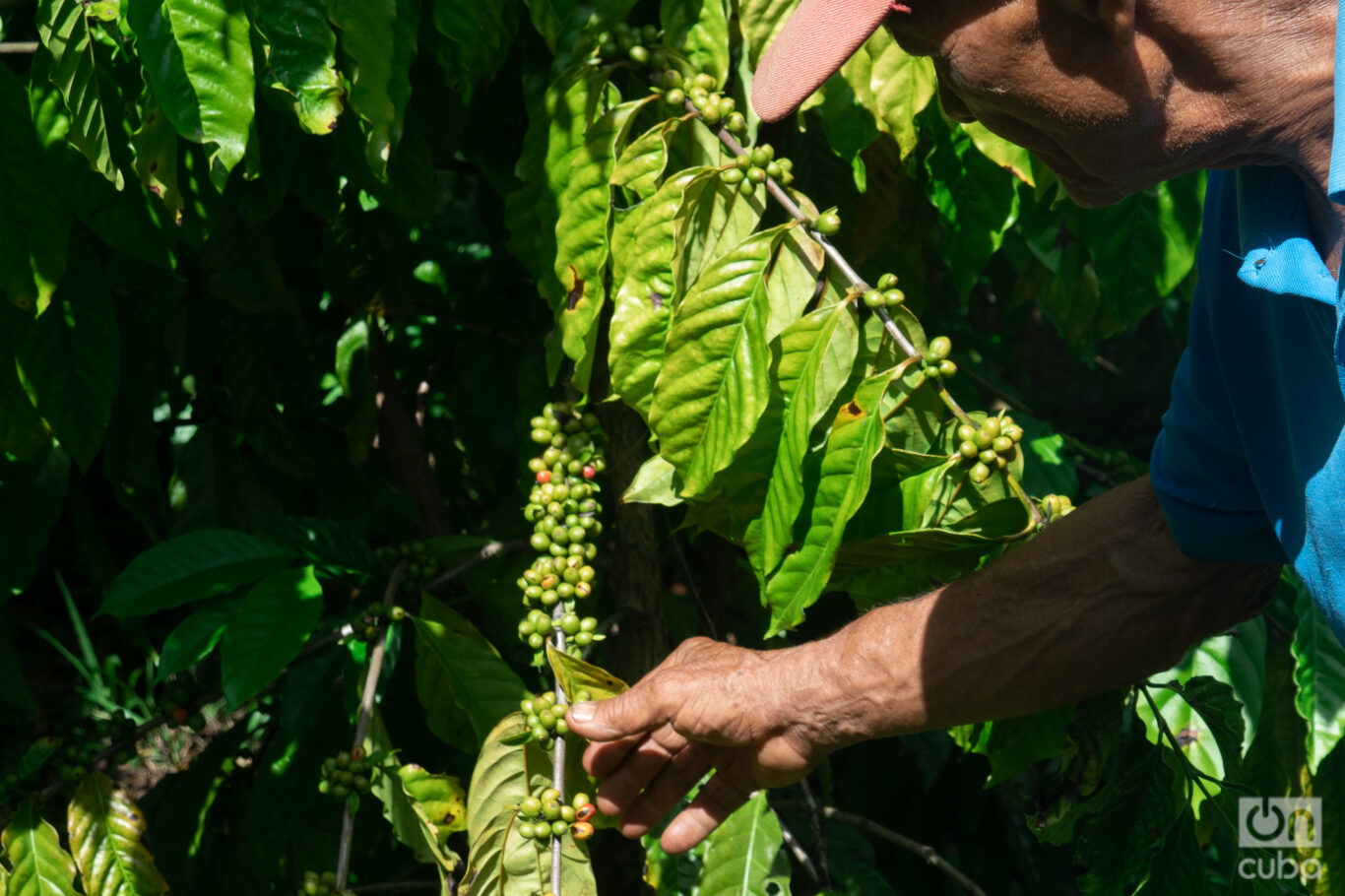
He plants yucca to eat with mojo and to give as gifts to his friends. The coffee is enough for his house and he always has a little left to sell. Although his farm is small, he has avocado, cashew, mango, sugar apple, papaya fruit, soursop, and lemon. But his greatest pride is the honeycombs. The children ran to see them thinking they were meliponas. “No, these are the ones that sting!” said Córdova and put some veils on the boys so they could get closer. He told us that he builds the boxes himself and that his bees make top quality honey.
Last year he delivered 291 kilograms of premium honey to Beekeeping and they paid him less than ten thousand pesos when he no longer even remembered about it. In addition, they give you a stimulus in MLC. To collect it is an odyssey. There are so many bureaucratic obstacles that it is almost better not to do it at all. This year, Córdova has not delivered honey. He is waiting for more justice for beekeepers and more respect for their work. Before, 305 pesos in retirement, plus his salary, were enough for him. After the monetary changes in the country, his pension rose to four thousand, but it is not enough for him at all. Working on the farm is their worthy option to live.
“It’s my country, I love it, I give my life for this, but we have a very bad economic system and I tell you this from a revolutionary position,” he told me. The Geologist is 80 years old and still sees the good things about Cuba, but he also sees the bad things, and when he talks about them he does so with sadness.
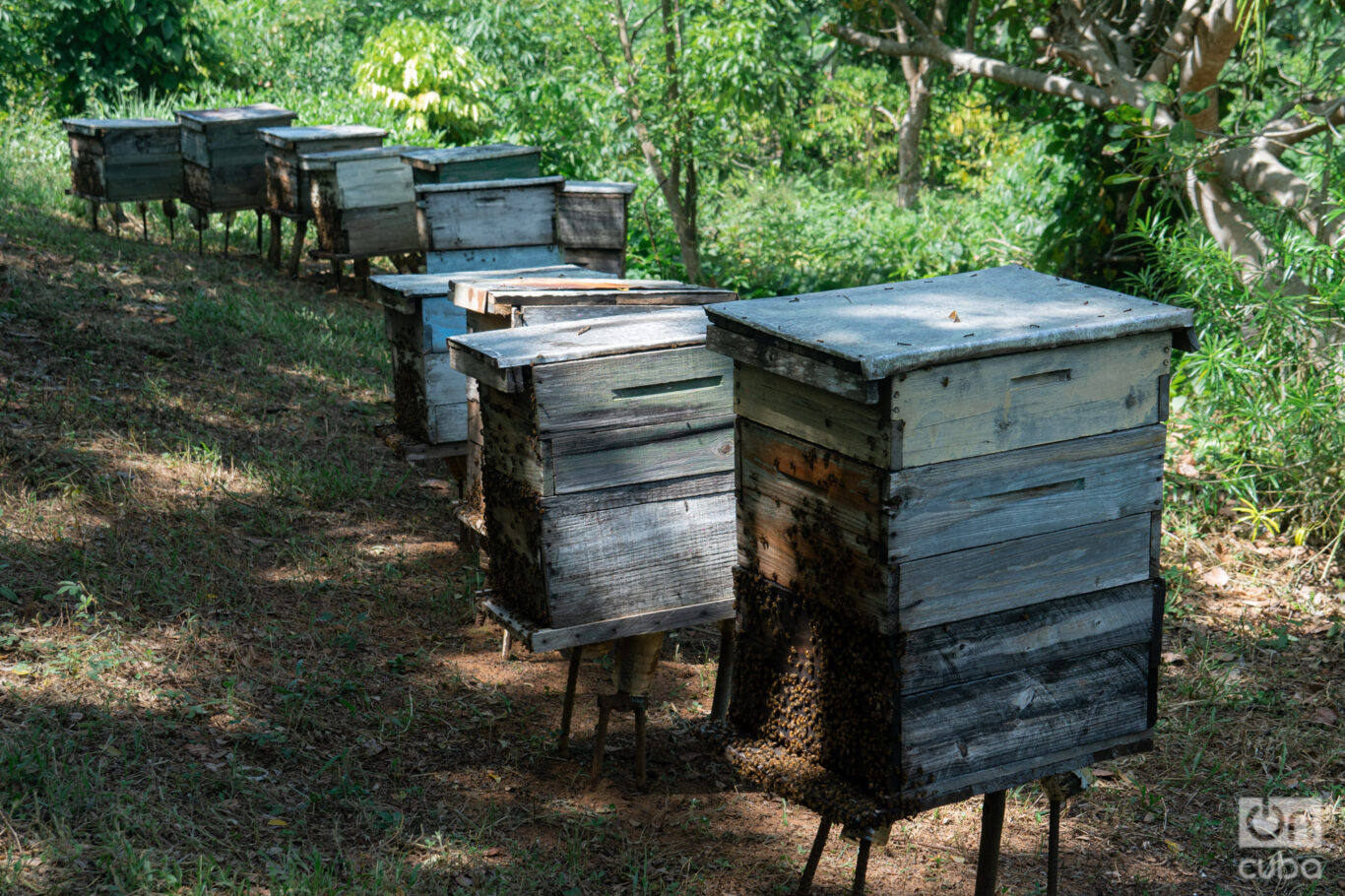
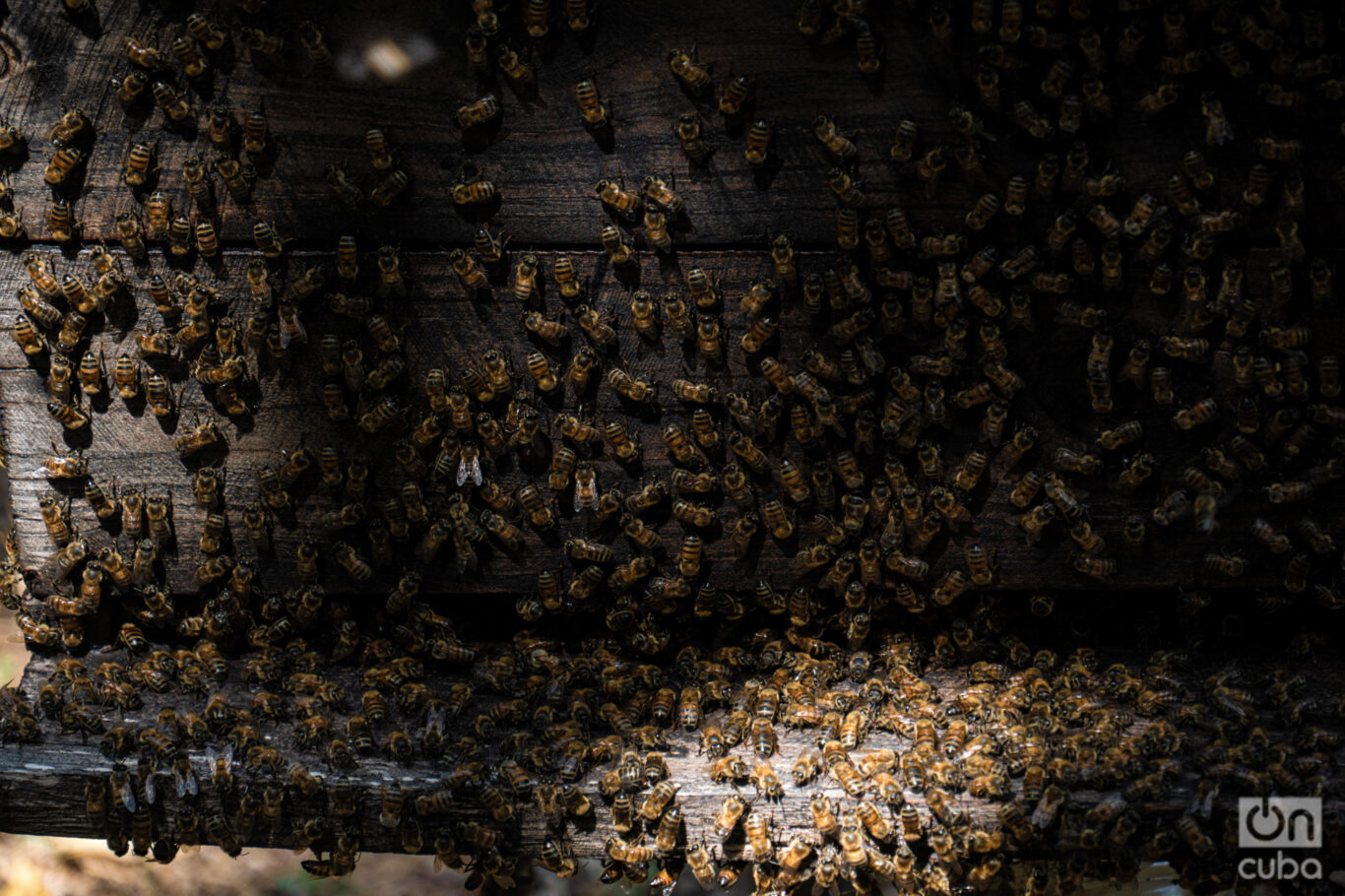
Geology has been his passion for years, but now he takes refuge in his bees and his plants. He hopes that his three children will give him shelter when he cannot plant or produce honey. When that moment arrives, he spends his days between his farm and his house with his wife Coralia, with whom he has been married for 23 years.
While chattering, Córdova tells us about the carbonate rocks and the substrate of the Island, about the types of marble: siboney gray, pearl and black, which has a lot of organic matter.
I, who am a great conversationalist, not because of good topics, but because I talk a lot, was hypnotized by Córdova’s dissertations: the coffee cycle, the life of bees and dark minerals, regional metamorphism and silicate quartz. Whoever sees it, realizes that you can be a geologist and a farmer at the same time.
He also talks about his trips to Nicaragua, Romania, Russia, Bulgaria and the entire Socialist Country. He has made family trips to Spain, but he has not wanted to stay, what is called stay, in any country in the world. “I am Cuban, this is my land, I have always fought for this. I am a revolutionary from the Revolution of before, what we are experiencing now is something else that I don’t know what it is. But I give my life for my country.”
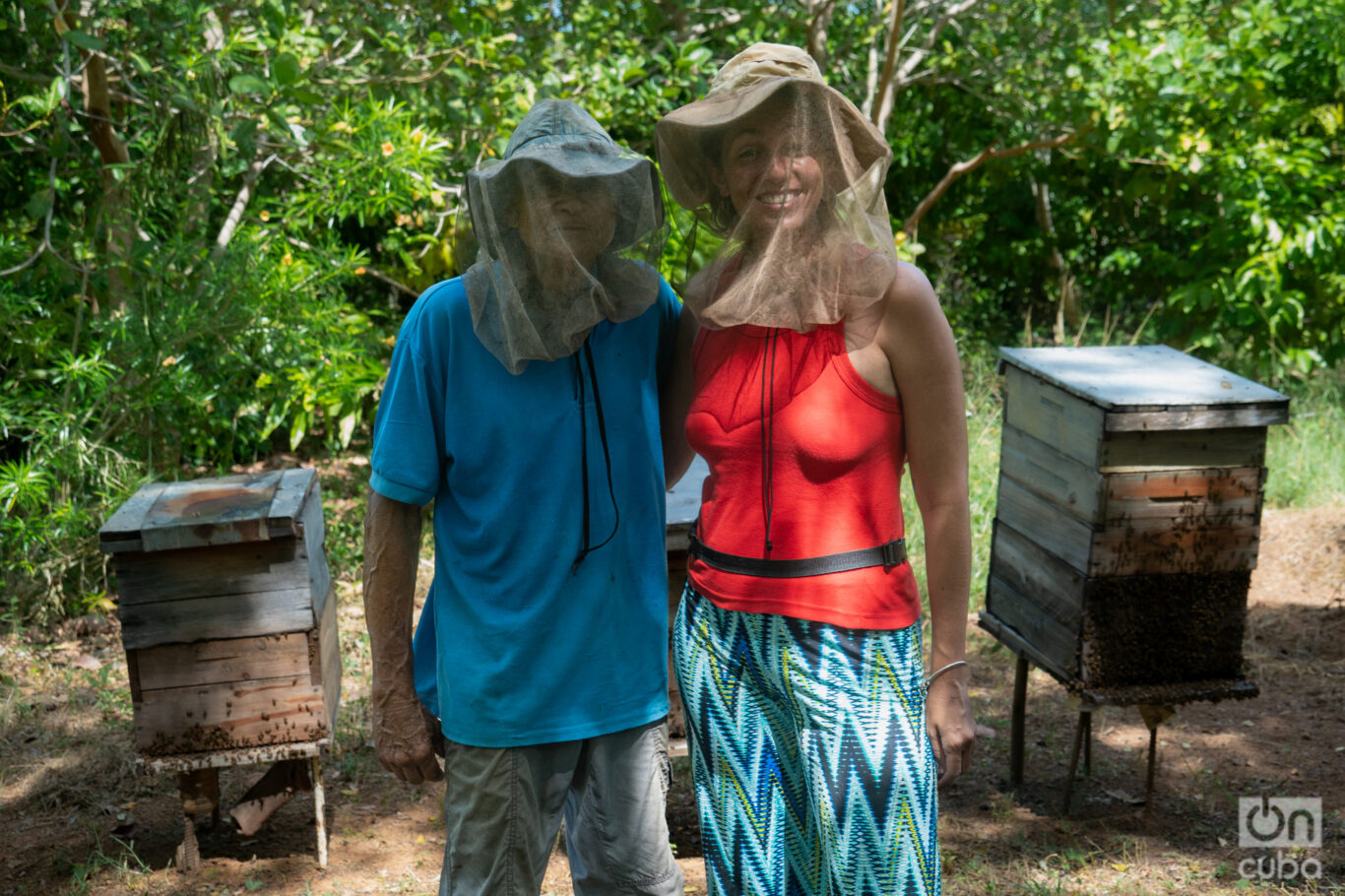
That day Oliver wished he had a lot of honeycombs, Jorge got stung by a bee on the arm while he was taking a photo of Córdova and Diego verified that, if you bury a bee stinger that has already stung, it will sting you again.
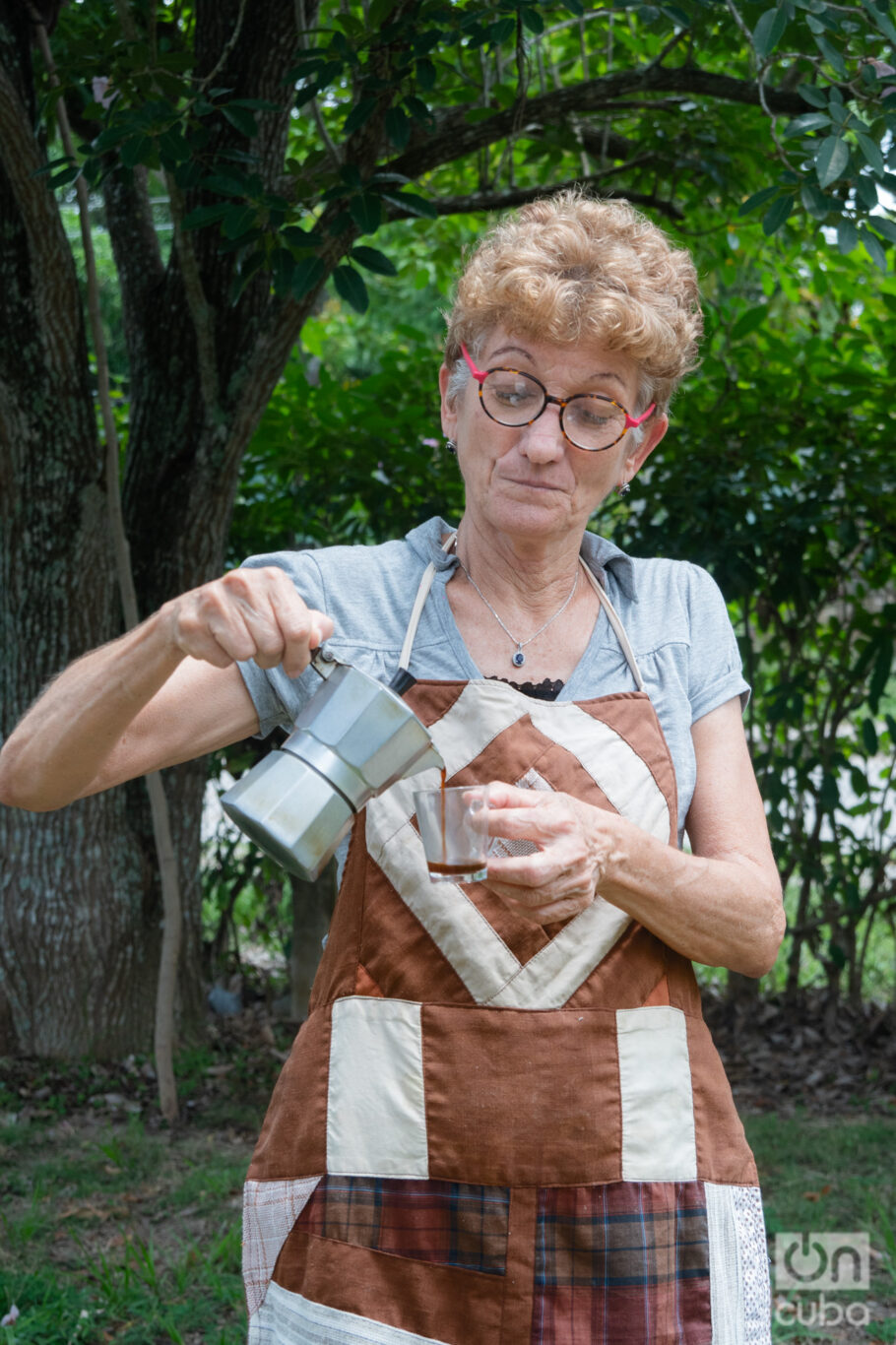
We leave the farm, we in an old Moscow and Córdova on his bicycle. We arrived at her house and the beautiful Coralia made coffee for us. We talked about the times before, when I was not born, and about these strange times that almost no one understands. Córdova gave me a bottle of honey that we brought to Havana as a treasure.
Although he is now retired and spends time among his bees, he is still worried about things like those 400 tons of export marble, already manufactured, that could not be taken off the Island due to lack of infrastructure.
When I asked him what the name of his farm was, it turned out that he had not given it a name. So we brainstormed and together we named it Jurassic Estate. Because under their lemons and yuccas there are Jurassic stones. We said goodbye, leaving a name for Córdova’s happiness, The Geologist. And the promise that we would return remained in the air.