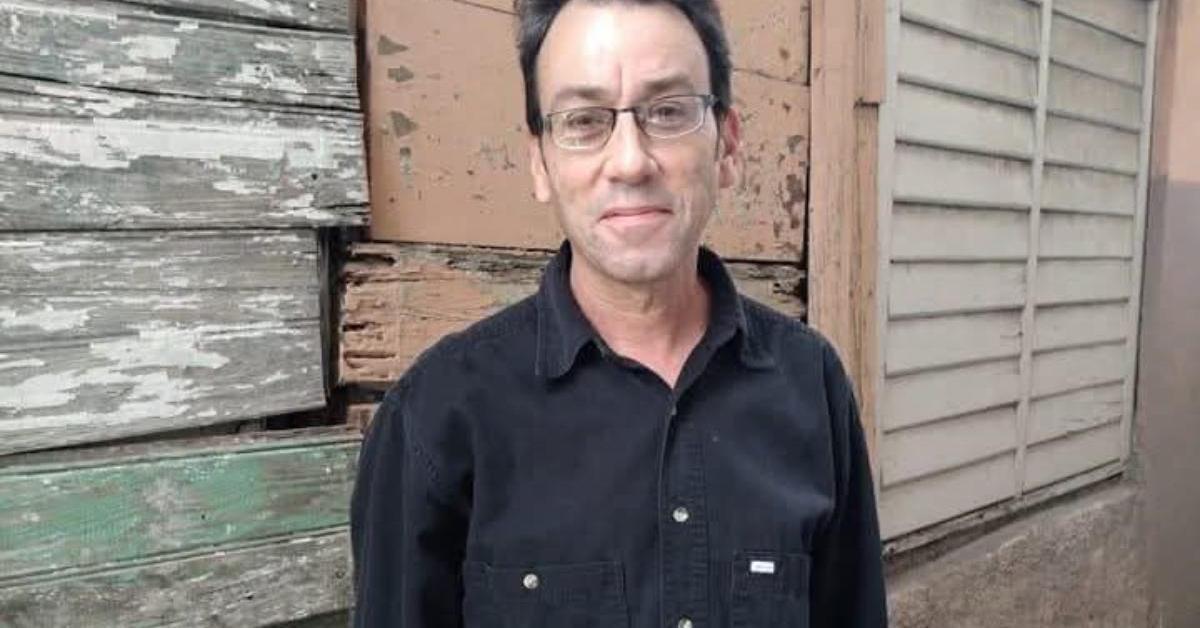
Havana/Almost two months after the trial against the writer and intellectual from Villa Clara José Gabriel Barrenechea Chávezthe court has not yet issued a ruling. The prolongation of judicial silence keeps the accused and his family in a state of anxiety and uncertainty that human rights organizations consider a form of covert political punishment.
The process, held on September 24was marked – according to family members and independent organizations – by numerous irregularities that are often repeated in cases against voices critical of the Government: imprecise accusations, denial of exculpatory evidence and a clearly dissuasive environment for defense witnesses. The Prosecutor’s Office requested six years in prison for Barrenechea, for participating in a peaceful protest against the blackouts in November 2024 in the town of Encrucijada, Villa Clara. The Cuban Observatory of Human Rights (OCDH), which disclosed a new complaint This weekend, he insisted that the case is surrounded by political retaliation.
Barrenechea, narrator, essayist and collaborator of 14ymediohas been for years one of the strongest voices in the center of the country in the debate on authoritarianism, economic stagnation and the moral crisis of the Cuban political system. His liberal thinking, his defense of pluralism and his constant analyzes of civil society have made him a frequent target of interrogations, police summonses and pressure, as this newspaper has reported since at least 2016.
In recent weeks, Barrenechea has shown worrying signs of physical and emotional deterioration
The writer’s family assures that since his arrest restrictions have intensified: limitations on visits, obstacles to receiving medicine and food, and isolation that, according to them, has had repercussions on his health. In recent weeks, Barrenechea has shown worrying signs of physical and emotional deterioration, something that is aggravated by the tension of not knowing the court decision.
Added to this is an especially painful fact: Barrenechea was not allowed say goodbye to his motherseriously ill and died shortly after. Preventing the last goodbye is, according to international organizations, one of the cruelest forms of punishment that the regime usually uses against prisoners of conscience.
The OCDH described this behavior as part of a pattern of “systematic psychological pressure” with which the authorities seek to break the accused and send a warning message to other intellectuals and activists.
The Barrenechea file shares features with recent cases documented by 14ymedioin which the delay in sentencing is used as a mechanism of political control. Independent journalists, artists and protest participants have gone weeks or months without a court ruling, while veiled threats and legal insecurity for their families have increased.
In several of these processes – such as those of the 11J protesters – the authorities have used similar tactics: delay deadlines, maintain vague accusations, prevent due process and use judicial institutions as an extension of the State Security apparatus.
International organizations that ensure respect for human rights and the protection of journalists have denounced that Barrenechea’s case reflects a broader offensive against critical thinking and intellectual independence in Cuba, especially in a context of worsening economic crisis, increased migration and social exhaustion.
The OCDH demands that Barrenechea be acquitted and demands his immediate release, as well as that of the others involved in the file. “It is a political case from beginning to end,” says the organization, which also denounced that the trial was carried out without real procedural guarantees.
For the writer’s family, the wait has become an emotional labyrinth. “We don’t know anything, they don’t say anything, they don’t call, they don’t deliver papers. It’s as if they want you to wear yourself out,” a person close to the accused told this newspaper, who asked to remain anonymous for fear of reprisals.
Meanwhile, friends and colleagues of the intellectual assure that the lack of sentencing is not a bureaucratic oversight, but rather a way of prolonging the punishment without formalizing it, a frequent tactic in cases where the political opinion of the accused is the true motive for the process.
In the middle of a country marked by health crisiseconomic and immigration, the Barrenechea case once again places the situation of political prisoners and the role of the courts in state repression under the spotlight. Without a sentence or an official explanation, the Villa Clara intellectual remains trapped in a limbo that, for many, is already a sentence in itself.