About men’s health “Blue November” campaign
Although in its beginnings this month was dedicated to raising awareness about the importance of early detection of prostate cancer, over time this has extended to men’s health in general.
The so-called Blue November is dedicated to deepening the campaigns carried out in different areas in this regard.
“The Ministry of Public Health here places a lot of emphasis on the early detection of prostate cancer” stated the Dr. Waldemar Perdomo.
“Although it is the tumor pathology that is in second place in deaths in terms of men, this of the diseases or pathologies of older adults, those that begin after approximately 50 years of age, is a set of things of which prostate cancer is not the most frequent, although it is the one that people fear the most and most serious, but the natural development of prostatic hyperplasia and hypertrophy begins, what we all know as the enlargement of the prostate, which is what brings more symptoms, more consultations, more number of treatments. It is what leads to what is so feared by man, which is walking with a urinary catheter.” expanded the CAMCEL Urologist.
“There are other things like male andropause. We also, like women suffer their menopause, suffer from andropause, which is a drop in blood levels of testosterone that can bring some symptoms, generally mild, which in some patients can be important” said the specialist.
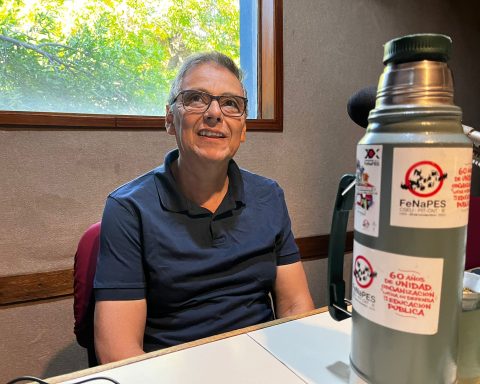
“Later, another disease that worries men a lot is erectile dysfunction, the decrease in what is linked to male sexuality, which is not a minor issue and which alters a man’s quality of life, often hitting very hard on the psychological side.” he pointed out. “We men do not admit that we have an expiration date, women have already assumed that.” Perdomo specified. “Over time this andropause thing is going to gain strength” he said during the live interview of THE PROFESSIONAL Radio this Tuesday, November 18.
As established by the Ministry of Public Health, in the area of men’s health, health providers and medical professionals must focus on the early diagnosis of prostate cancer. “We are not talking about prevention, we are talking about early detection” he emphasized. “Prostate cancer cannot be prevented, there are no demonstrations in the literature that it can be prevented. What we should do is detect it early” he insisted.
He said that, if detected in time, it is a pathology that is curable in most patients. “That is based on a fundamental pillar: control” he remarked. “The awareness and control that all men know that some begin, the most fearful, around the age of 40, and that in Uruguay it is done from the age of 50” he remembered.
This control basically has as its starting point the analysis of Prostate Specific Antigen, a tumor marker that is specific to the prostate. “If we have an alteration in this parameter, it means that we may be having a prostate problem. This does not mean that we have cancer, we are having a prostate problem.” reported.
“We have to detect and capture those patients who have a malignant disease” he stressed. “In Policlínicas this consists of the PCA in addition to the prostate examination. As we are looking for a tumor that is not very expressive, we probably will not find much in the rectal examination, which is another of the fears that men have. This binomial is still more or less maintained. It can be complemented with ultrasound that can give us some information about prostate volume, weight, which can be things to take into account when evaluating. This can modify the PCA values many times, especially the volumes and very large prostates explained Dr. Waldemar Perdomo.