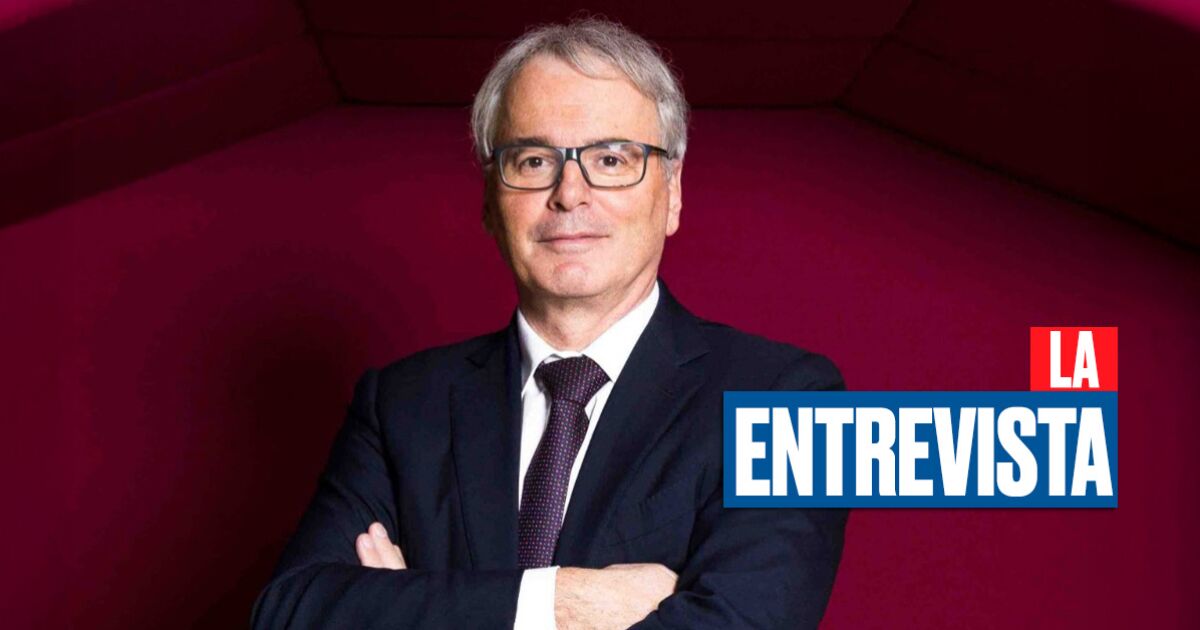
Sanchez explains in an interview with Expansion that the new tariff policies of the United States and the tension with China reduce the certainty of traditional chains. For France, the stability of access to the US market offered by the T-MEC makes Mexico a strategic partner.
Commerce no longer resolves environmental pressures. Direct investment yes. Local plants, installed engineering, technical personnel and after-sales services reduce vulnerabilities, increase competitiveness and allow exporting from Mexico to other destinations with less exposure to global risks.
France registers an accumulated foreign direct investment of more than 13,000 million dollars in Mexico.
The country already demonstrates the capacity to sustain that leap. There are 700 French companies present in Mexico, which generate between 180,000 and 200,000 direct jobs and 700,000 indirect jobs.
They operate in high value-added sectors such as aerospace, automotive, infrastructure and energy. Alstom successfully built the Mayan Train and now aspires to the Mexico Querétaro corridor. Safran and Forvia expand operations in Querétaro and El Bajío. Fives develops decarbonization technology applied to Cemex’s Tula project and prepares advanced circular economy processes that allow the recovery of concrete inputs and reduce costs of basic materials. A Memorandum of Understanding has already been signed with the purpose of establishing a cooperation framework.
The French bet is based on a little-known reality. Mexico is the main Latin American investor in France, far above Brazil. For Paris, this financial relationship creates a stable framework to accelerate round-trip investments and consolidate chains that maintain advantages in markets with increasingly intense regulatory pressure.
The critical element for the coming years will be the substitution of Asian inputs. The French industry recognizes that it can no longer operate with the same degree of exposure to China, both due to geopolitical decisions and increases in logistics, energy and regulatory costs.
France needs new suppliers and Mexico has a business base capable of integrating. Sanchez identifies four key sectors: aeronautics, automotive, agri-food and pharmaceuticals.
For example, Bimbo is one of the strongest companies in the world. It has developed its own supply chains. These chains can help the agri-food industry in France.
Mexico is not as competitive as China, but it is much more competitive than us (France), much more.
An inventory of suppliers that are already in Mexico with the potential to join French chains will be prepared and business missions will be organized to facilitate agreements and technical tests.
Claudia Sheinbaum’s industrial plan fits naturally with that objective. The president prioritizes decarbonization, technological modernization and circular economy projects. France dominates these areas and accumulates patents, industrial processes and regulatory experience. For the French sector, this convergence reduces adaptation costs and accelerates Mexico’s integration into European chains that are already moving towards low-emission industries.
Sanchez puts it in economic terms. Mexico does not compete with China on price, but on certainty, proximity and regulatory compatibility. In a world marked by tariffs, subsidies and geopolitical tensions, those qualities are worth more than any cost differential.
France needs reliable plants near the United States; Mexico offers qualified labor, macroeconomic stability and an industrial network that already operates with global standards.
The French leader concludes that the new cycle will be defined by the capacity of both countries to deepen investment. “We can no longer depend on Chinese supplies. We must work with Mexican companies. It is a necessity for France,” he says.
The phrase summarizes a vision that leaves traditional commerce behind and opens a stage where competitiveness is built from Mexican territory, with French capital and with a North American market that demands more solid chains.