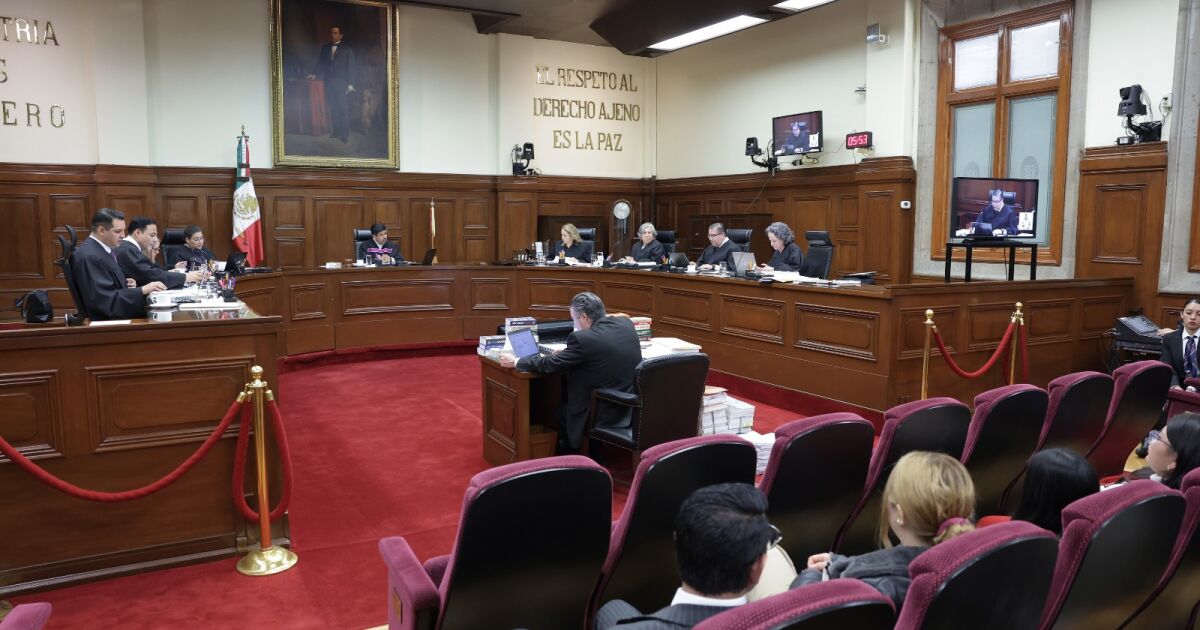
For the project to pass, six votes were necessary, but only five of the ministers Hugo Aguilar Ortiz, Yasmín Esquivel Mossa, Loretta Ortiz Ahlf, Giovani Figueroa Mejía and Arístides Guerrero García reached, since four voted against and they were Sara Irene Herrerías, Irving Espinosa Betanzos, Lenia Batres and María Ríos González.
The discussion focused mainly on whether this approval would revive the Comprehensive Aid, Assistance and Reparation Fund, where the resources for crime victims were located, and which was disappeared by Morena legislators and allies in 2020.
Minister María Estal Rios commented that the Aid Fund was managed as a private asset and it was decided “subjectively” who was given resources and who was not, but now, she said, with the reform the amount given to victims is already established.
“A progressive system was established so that a greater amount can be applied and more efficiently paid for the damages caused to victims of human rights violations,” he declared, maintaining that the modification to the General Victims Law was not unconstitutional.
Minister Arístides Guerrero maintained that he was in favor of unconstitutionality, but rejected the return of the previous article, as he maintained that this would return to the Fund model.
“I share the project in its terms until the unconstitutionality of the reform of November 6, 2020, but I do not share, as the ruling is indicating, in order to return to the text of article 132 and return to precisely the point of debate that has been established in this court and return to that to the previously established model of trusts,” he declared.
Meanwhile, Minister Yazmín Esquivel Mossa, Loretta Ortiz Ahlf and Giovanni Figueroa Mejía defended the unconstitutionality of the reform of article 132. The first maintained that it does not revive the Aid, Assistance and Comprehensive Reparation Fund, but rather ensures resources to care for victims.
“If our concern is that a trust be renewed that no one wants, that the Administration does not want and neither do we, we are not proposing that that fund be reclaimed, that the resources have been misused. Let’s remove it. Let’s put it in the effects and say that there are no such trusts.”
Along these same lines was Loretta Ortiz Ahlf, who defended the establishment of the principle of progressivity in the law; That is, a percentage of resources for the victims is mentioned, since he said that it cannot be left to the discretion of the deputies.
The above is because Minister Sara Irene Herrerías presumed that after this reform to 132 of the General Victims Law, legislators have allocated greater resources to .014% of the budget.
“We have the opportunity from this court, protector of human rights, to establish progressivity; progressivity is that it is granted, that it is not inferior, the resources increase every year. They must increase, but not increase at my own discretion, but rather based on the budgetary needs of the victims,” he declared.