The government of Rio de Janeiro presented, this Monday (17), the Operation Zero Barricade. The task force brings together state agencies and city halls to remove blockades installed by criminal factions at community entrances and reestablish safe circulationguaranteeing the right of citizens to come and go and the sovereignty of the state.
Planning will be guided by technical diagnoses produced using intelligence tools from the Public Security Institute (ISP), which mapped 13,604 blocking points spread across the state. Obstacles range from dumpsters, rubble and dumpsters to real engineering structures built to prevent access by security forces.
The initial schedule includes 12 municipalities in the metropolitan region: Rio de Janeiro, Belford Roxo, Japeri, Nova Iguaçu, São Gonçalo, Itaboraí, Duque de Caxias, Queimados, São João de Meriti, Nilópolis, Mesquita and Maricá.
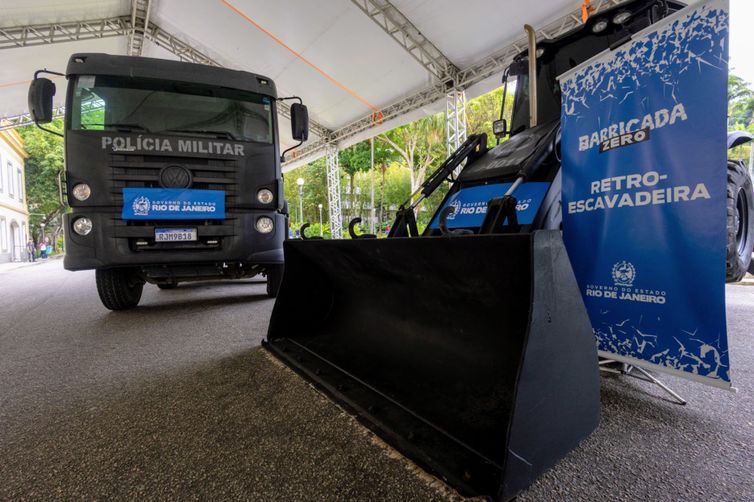
Launch of Operation Barricade Zero – Photo: Marcelo Regua
“The idea is that we can restore and reestablish, in one fell swoop, urban mobility. kits They are made up of high-performance tools and used to remove barriers and irregular structures. There will be hydraulic breakers, backhoes, dump trucks and also some items such as chainsaws and other specific items to be defined by region”, explained Governor Cláudio Castro.
According to him, “the barricades represent more than physical obstacles.” “They are forms of control that these criminal organizations exert on society and the local community. Where there is blockade and fear, the state, of course, has to arrive”, he stated.
The governor said that, after the obstacles are removed, if drug trafficking places new barriers, an operation by the state’s elite troops will begin, formed by the Special Police Operations Battalion (BOPE), of the Military Police, and the Special Operations Coordination (Core), of the Civil Police.