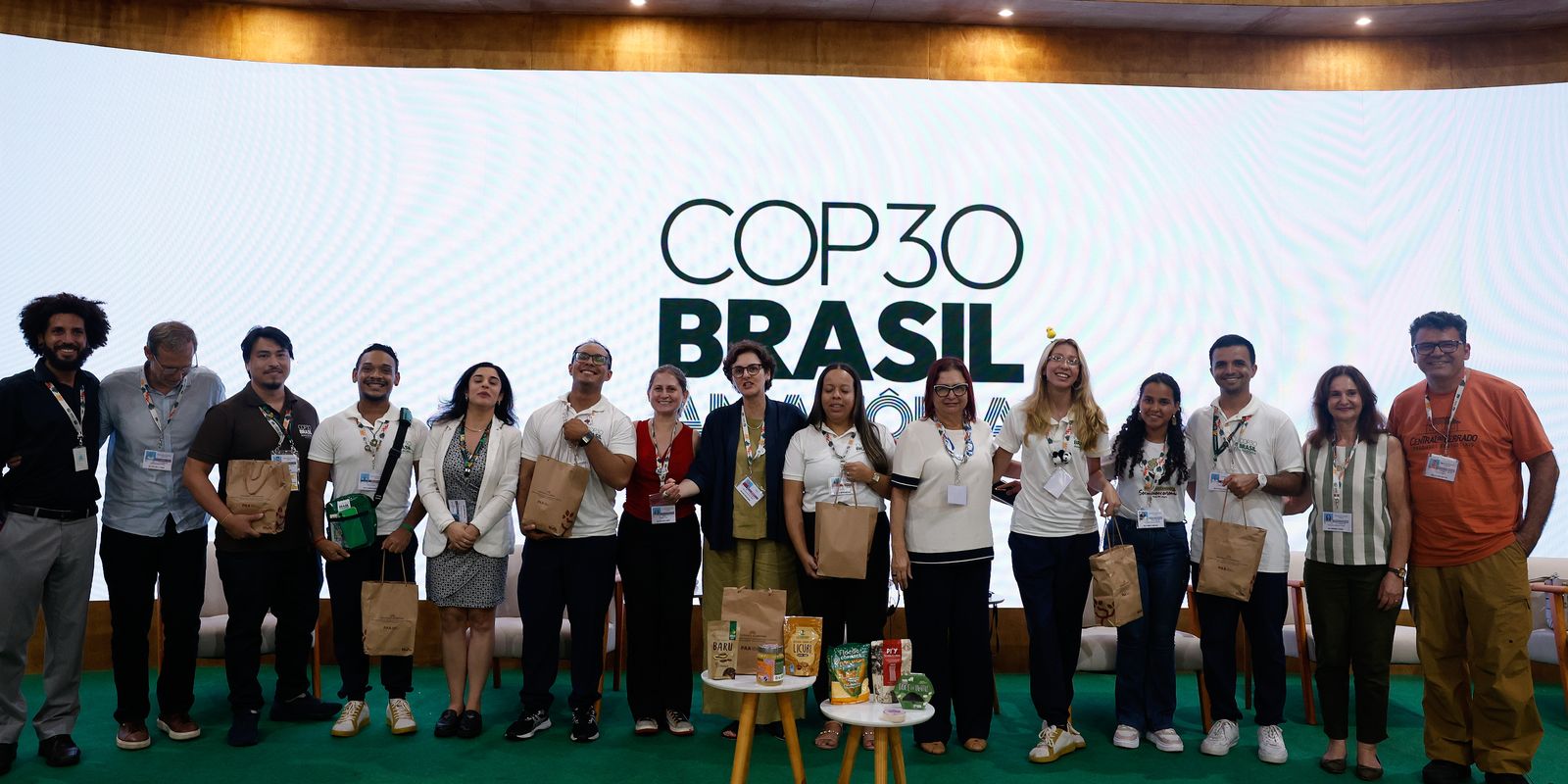
Volunteers working at the 30th United Nations Conference on Climate Change (COP30) are receiving kits with food produced by family farmers in Brazil. 
Delivery to the 1,300 volunteers began on Saturday (15) and, this Monday (17), another group received the food. Distribution will continue until the end of COP30, on the 21st.
In the basket, products such as umbu sweets, Brazil nuts, baru flour, corn flakes, baru nuts, licuri almonds, organic babassu coconut oil, among others.
Among the volunteers, many university students, such as student Gabriella de Araújo, who volunteered to work at COP30 helping with translation services.
“My intention here is to practice the languages I speak and also to be in contact with people, to help. I love this possibility of always being able to meet new people and they also ask about us, we ask about them. It’s an exchange of experience that we have here”, he stated.
THE Brazil Agency Gabriella said the basket is an opportunity to try real food and flavors from other parts of the country.
“I saw this as an extremely empathetic gesture, because there are many people who haven’t even tried this type of food yet, which is my case. I had never tried certain types of nuts that came, so I find this very interesting. It helps us to know and understand how food security works”, he said.
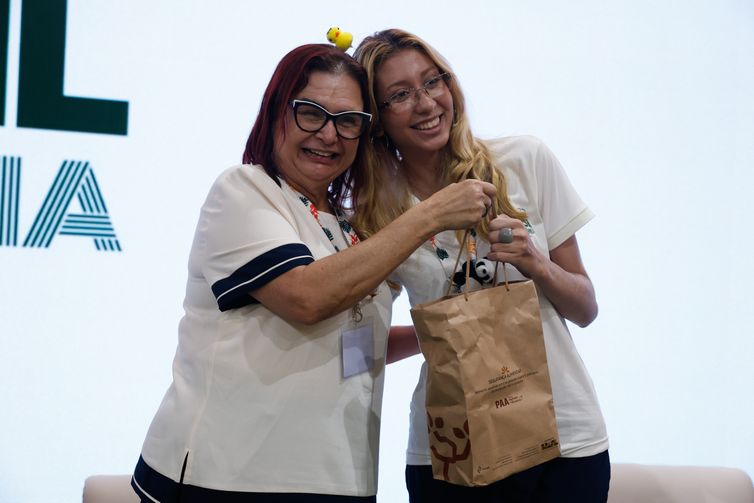
Belém (PA), 11/17/2025 – Volunteer Gabriella Araujo receives the kit during the symbolic delivery of Family Agriculture (PAA) kits to COP30 volunteers, at the Brazil Pavilion. Photo: Tânia Rêgo/Agência Brasil – Tânia Rêgo/Agência Brasil
The initiative is from the Ministry of Development and Social Assistance, Family and Combating Hunger (MDS), through the Food Acquisition Program (PAA), in partnership with the National Supply Company (Conab) and the Extraordinary Secretariat of COP30.
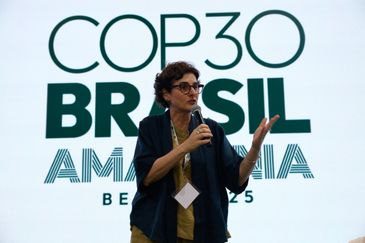
National Secretary of Food Security, Lilian Rahal, during the symbolic delivery of Family Farming kits to COP30 volunteers – Tânia Rêgo/Agência Brasil
The National Secretary of Food and Nutrition Security of the Ministry of Development and Social Assistance, Family and Fight Against Hunger (MDS), Lilian Rahal highlighted that The delivery is also a moment to value the country’s family farming production, also showing its contribution to mitigating climate warming.
“Family farming has a daily challenge of feeding our country with real food and it makes a lot of sense for us to be talking about family farming here, showing the food from family farming in the different biomes of the country, indigenous, quilombola, riverside, extractive”, he said.
In total, two thousand baskets will be distributed. In addition to the volunteers, other Climate Conference workforces will also receive the kits.