General Commission in the Meeting with Legislators
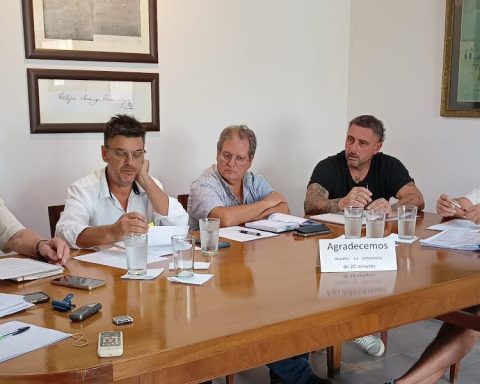
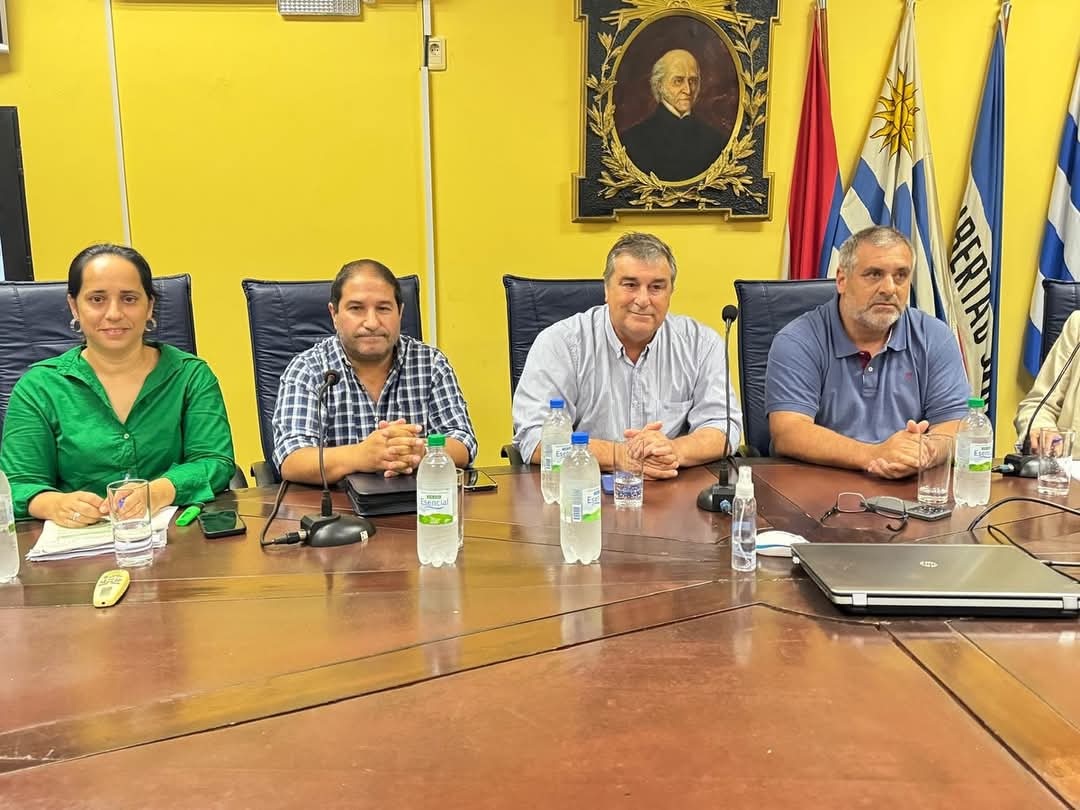
In a General Commission Session, the Cerro Largo Departmental Board addressed the situation of border workers on Friday, November 14.
On the occasion, the communal legislature received the three political leaders who today occupy seats in the National Parliament.
There were many coincidences, mainly about the lack of knowledge that exists in the south, where decisions are generally made, in relation to a border culture as old as the country itself.
“Maybe our first duty is to continue hitting together until we make them understand, until we shake their heads and make them see that this is the reality, that they have to understand it, and that what is there on the other side is a great source of opportunities, that it is a country that can demand everything of ours with which in the border area we can achieve stability” stated the Senator Sergio Botana.
“Why can’t we improve our health service if we do common health services, how much do we pay for bilingual education and we have the opportunity to do it for free and we get complicated by the centralist head that we have. We in Aceguá did a binational sanitation that in reality is not binational, they are two separate sanitations. We thought of it as simultaneous work and common financing, we couldn’t even do the work simultaneously” he remembered.
“Yes, we will have things to do in common, I would not mind starting to evaluate, to work, some Common Economic Zone regime between Río Branco-Yaguarón and Aceguá, some common economy in which people can be hired from one side or the other, in which inputs can be used from one side or the other, in which we can develop a model similar to the Free Zone in which we would have the advantages of much lower costs and we could have the obligation to pay some type of tariff when extra zone, just as when a product leaves a Free Trade Zone” raised the Senator of the National Party.
FIRST TIME SPECIFIC MEASURES WILL BE IMPLEMENTED
“The problem of the border and smuggling is something historic that responds to the genuine lack of work” expressed the Professor Yisela Araujo.
“We have to find a solution to everyday life, to people’s daily lives” he added.
The Frente Amplio Deputy reported that the operations by Customs are being carried out in all the departments bordering Brazil.
“There are excellent records of projects that were presented on what measures could at least mitigate reality or bring possible solutions. In the history of our country, this is the first time that a Ministry of Economy and Finance is going to execute specific measures for the border with Brazil and it will do so starting December 1” stood out.
“We know that these measures are not enough nor will they correct reality, that they can be improved and that they can be perfected, but that they have to do with the issue of regularizing, legalizing imports in amounts, some smaller and others not so much, which is on a scale” Araujo said.
IN DEFENSE OF THE QUILEROS
“In the capital they do not know the reality that exists here on the border. When we spoke at the Commission they said that the focus is Aceguá and they are wrong because the focus is Melo. The quileros that go to Aceguá employ 2,500 people, they supply 80% of the city’s businesses and if the quileros do not buy in Aceguá, Aceguá’s commerce collapses. That is clear, they did not know that” manifested Fernando Gamarra.
“The people from UDELAR who are going to carry out a study focused on Aceguá and Río Branco. They are two different borders” remarked the National Party Deputy.
“We defend the quilero, we defend the worker” he synthesized.