Guantanamo/In Guantánamo, the line in front of the La Fragancia store forms early. Some arrive with international cards, others carry the Classic Cuban card, but they all have something in common: they have dollars to buy everything from shampoo to soap. The arrival of currency stores in the city has been shaping domestic commerce and the economy, in addition to dividing opinions between those who applaud their proliferation and those who deny these state establishments.
On the outskirts of the central market, this Friday a dozen people were waiting to enter. From time to time, a customer would come out with a transparent bag containing some of those products that are barely available in Cuban pesos. “I have $8.70 left on the card and I have to manage it very well,” says a man who stops for a moment and presses his face against the glass to look at the shelves inside.
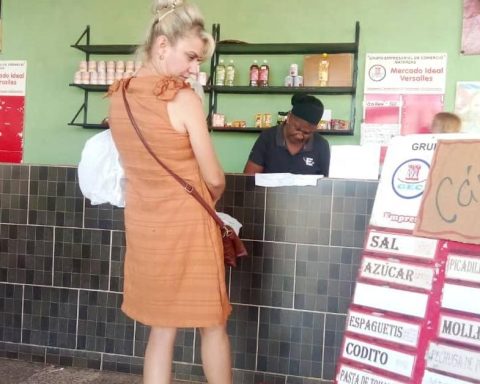
For months, the city has been experiencing a silent transformation: a proliferation of stores that sell exclusively in dollars, managed by Cimex, the powerful conglomerate under military control. So far this year, several of these air-conditioned spaces have been inaugurated, with organized shelves and products that are no longer seen in the dwindling stores in freely convertible currency (MLC): powdered milk, detergent, pasta, imported chicken and, with luck, some meat.
A few meters from one of these markets, a woman who identifies herself as a worker in the gastronomic sector sums up the feelings of many. “This is an abuse, we charge in pesos and here everything is in dollars.” The Guantanamera woman assures that she does not have a foreign currency card, she does not receive remittances and she depends on exchanging her Cuban pesos in the informal market to buy “from time to time a few squares of soup and some sausages.” “If someone from outside doesn’t send you, you won’t eat here. But what are we going to do? I still have to come, because in the stores in MLC sometimes there isn’t even oil.”
Miguel, an electrician, complains bluntly. “This hurts. It hurts because it reminds you that your salary is not enough to live in your own country.” His gesture is tired, not angry. He speaks with the serenity of someone who has already spent all his fury. “If there are older people who don’t even have a peso to buy ration bread, how are they going to have dollars to come to these types of stores?” he asks the stark question.
Beside him, an old woman with gnarled fingers holds a blue card where she places part of the remittance she receives monthly. “My son in Tampa helps me recharge it. If it weren’t for him, I wouldn’t even have coffee to drink in the morning,” she says. He acknowledges that these stores “save,” but he immediately lowers his voice, as if he were ashamed to admit it: “This is a blessing and an injustice at the same time.”
Foreign currency businesses also shape the informal market and the prices of private businesses that sell in national currency. “In the MSMEs in my neighborhood they are guided by the prices in these stores to put their prices at the exchange rate in pesos, if here the carton of eggs is six dollars or so, then they automatically set it at 3,000 pesos,” he complains.
That is the majority tone among Guantanamo residents: the resigned recognition of a “necessary evil.” People use dollar stores because there are no alternatives, but almost no one agrees with them. Those who do not have currency look from the outside; Those who have them buy, but with a hint of guilt, aware that the entire system pushes inequality.
In a nearby park, a group of young people agree that these stores are an “economic tightrope.” “Those who receive remittances are done,” says one of them. “The rest of us are toast.” Another adds: “Before there were difficulties, yes, but we all looked at the same shelf. Now there are full shelves for some and empty shelves for others.”
“Before there were difficulties, yes, but we all looked at the same shelf. Now there are full shelves for some and empty shelves for others”
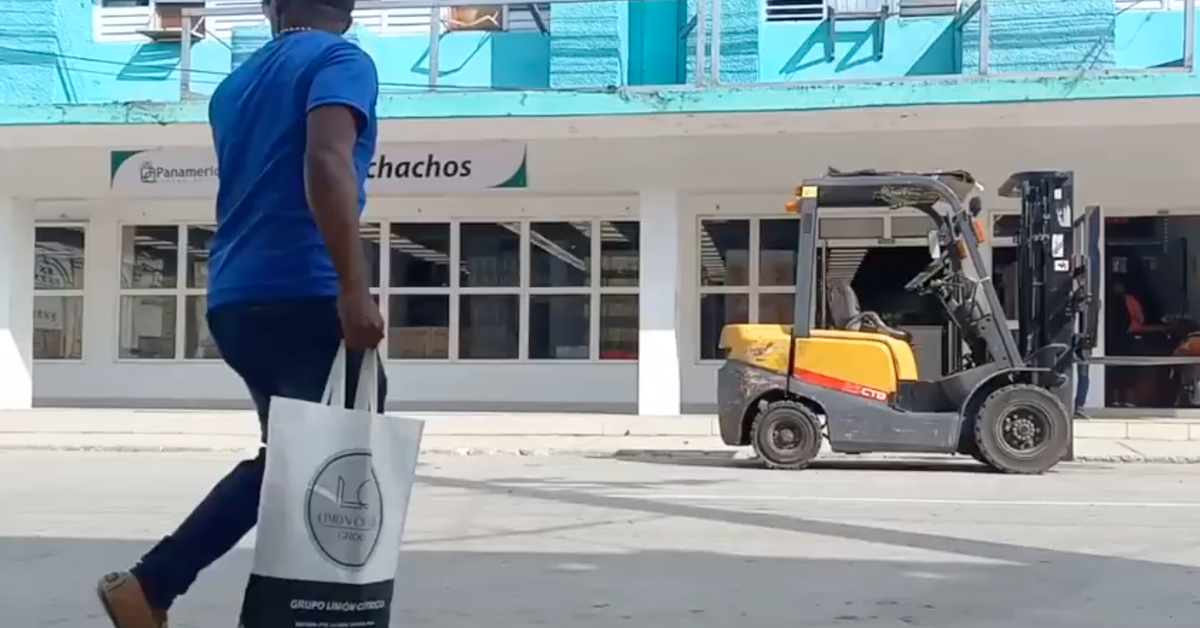
Dollar stores in Guantanamo City usually have good air conditioning, soft music, and uniformed employees. The Micro Caribe market, of the Panamericana chain, is one of those bubbles of comfort. A few meters from the premises, a middle-aged man launches his diagnosis: “This is not commerce, it is natural selection. Those who have families outside survive better; the rest of us invent.”
In the Pastorita neighborhood, the queue for the currency store has become a meeting place. People talk, exchange news and do mental calculations. “Do you think I can afford a package of chicken?” asks a mother who came with her young daughter. “I hope,” answers another. Some carry dollars in cash but they are the fewest.
“I prefer to put the currency on the card because they never have coins to give change and they give you back candy or soup squares,” another customer complains. The door to the store opens and a breath of fresh, clean-smelling air comes from inside. Card in hand, the next group of lucky ones with currency enter the room.