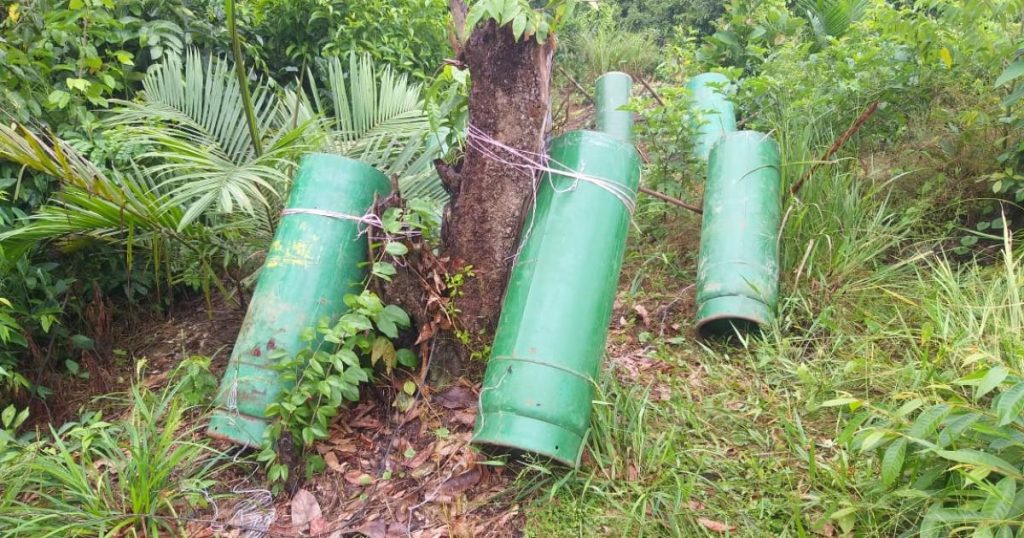
The Government of Iran sent 8.8 tons of rice that will be destined for the victims of the cyclone in the province of Granma.
LIMA, Peru – Several loads of donations from the World Food Program (WFP), China and Iran, arrived in Cuba this weekend due to the effects of Hurricane Melissa.
This last Saturday, a shipment donated by WFP and the United Nations Population Fund (Unfpa), was received at the Antonio Maceo international airport, in Santiago de Cuba.
The aid marks the beginning of a series of three humanitarian flights that will extend until next Monday and that seek to replenish items that the WFP had provided in advance for the early response to the hurricane.
At the air terminal, the member of the WFP emergency team in Cuba, Rolando Verdes, explained that this first flight brought six mobile warehouses, two lighting towers, two hundred layers and eight water tanks.
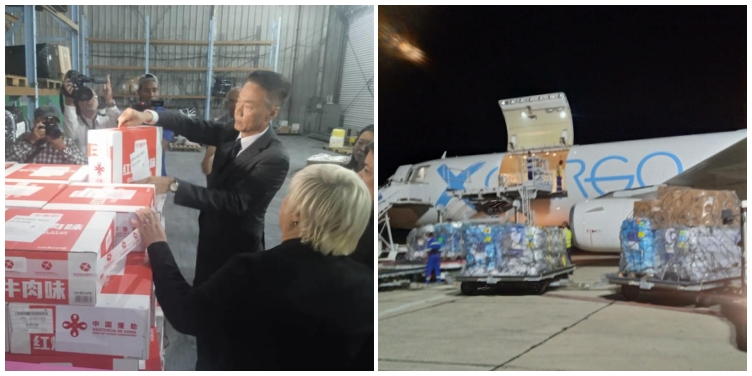
Likewise, this Sunday the state agency Latin Press reported on the arrival at Havana’s José Martí airport of a shipment of emergency humanitarian aid from the Chinese government, with 30 tons of food.
“The shipment constitutes the first of six scheduled air cargoes, whose supplies will be distributed quickly in the areas most affected by the phenomenon,” the official report states.
In addition to the six flights with food, Cuba will receive three maritime shipments with mattresses, lanterns, steel coils for tiles, photovoltaic systems and other supplies that will be unloaded in the port of Santiago de Cuba.
For its part, the Government of Iran sent 8.8 tons of rice that will be destined for the victims of the cyclone in the province of Granma, according to reported in X (formerly Twitter) the Ministry of Foreign Trade of Cuba (MINCEX).
Millions of dollars in aid for the regime
The United Nations WFP warned that around 700,000 people in Cuba, more than 7% of the population, require urgent humanitarian assistance following the devastating passing of Hurricane Melissa. The agency noted that the cyclone left serious damage to homes, crops and basic supply networks.
Although official figures have not yet been detailed, international aid amounts to millions of dollars. The UN allocated four million from the Central Emergency Fund, while UNICEF prepares to send medical supplies for about $500,000. China will also provide 1,000 family kits, valued at around $300,000.
Colombia offered to ship the ARC Victoria ship, with 240 tons of food, fuel and water, and Panama — together with PAHO — donated 2.6 tons of health supplies. Venezuela reported the delivery of between 26 and 46 tons of materials valued at nearly $600,000. Canada announced a contribution of several million.
Germany and Norway contributed $330,000 and $400,000, respectively, while the London-based Cuba Solidarity campaign gave $64,000.
The European Union approved a package of 21.5 million euros for the Caribbean. Of these, five million will go specifically to affected areas in Jamaica, Haiti and Cuba.
Meanwhile, the International Federation of Red Cross and Red Crescent Societies (IFRC) delivered another shipment of 20 tons of humanitarian aid to Santiago de Cuba, from the logistics center that the organization maintains in Panama. The assistance – cooking, rest and hygiene kits, tools, tarps, solar lamps and mosquito nets – is intended for around 1,500 people.
Added to these efforts is aid from India and the announcement of three million dollars in US aid, which will reach the victims through the Cuban Catholic Church.