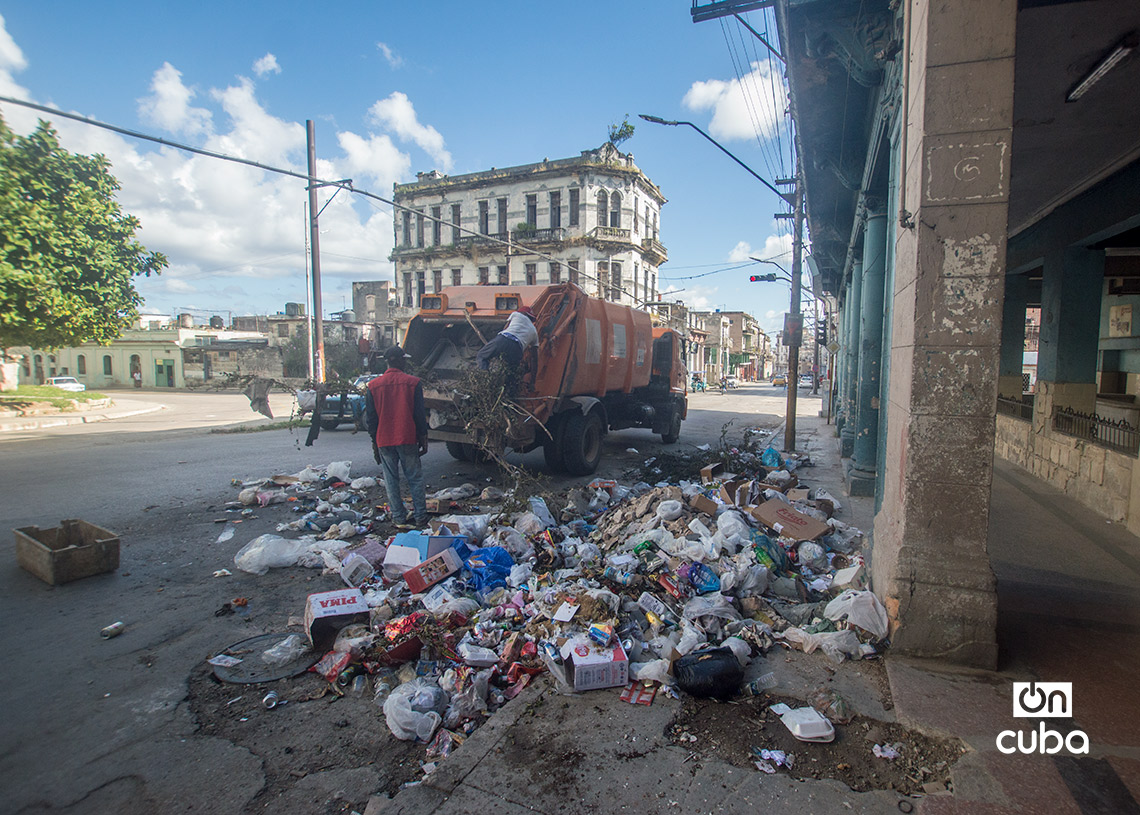
The Cuban Government formed 77 brigades of street sweepers in its strategy for the sanitation of Havana, the capital that reaches its 506th anniversary like the majority of the country’s cities, subjugated by garbage and the rise of diseases.
These brigades have “about 600 workers” each, and their activity prioritizes, “at first,” the main avenues of the 15 municipalities, squares and other areas relevant to traffic and social life, according to a report. report of Cubadebate.
The authorities of Havana held a meeting to evaluate the results of the collection of urban solid waste and other sanitation actions in the capitalhttps://t.co/PvVYbgXsei
— teleSUR TV (@teleSURtv) November 16, 2025
Despite reports of growing garbage dumps in all areas, for the Government, garbage collection is experiencing a “positive balance,” and “they are increasingly gaining in systematicity and sustainability, based on the more efficient use of means and fuels.”
“Emblematic job of the sweeper”
As for the street sweeper brigades, the information highlights “the recovery of the emblematic and necessary profession of the street sweeper,” a fact that “has been accompanied by the rehabilitation of their picturesque carts by industry entities,” according to a meeting this Saturday between national and local authorities.
At this meeting, to “check the work aimed at responding to the problems accumulated in the city”, “the revaluation of salary sheets” and the “dignification of the work” of the sweeper “with the assurance of food, uniforms, means of protection and cleaning instruments” were also analyzed.
Miguel Díaz-Canel demanded “that strict control of the collections be carried out” and that “which place was left behind in the removal of waste in one day be detailed, so that the next day we can start there.”
Confronting crime and containing diseases
They also mentioned the “actions to confront crime, illegalities and social indiscipline in large landfills,” among which they list the application of 1,159 fines, worth more than 500,000 pesos.
They also list measures such as “the detention of citizens illegally dedicated to the collection of raw materials in landfills and prosecuted for the spread of epidemics; the application of home searches and the demolition of shacks dedicated to the concentration of items extracted from the “boats.”
Regarding the epidemiological situation, they reported that this week a decrease in febrile cases and an increase in investigations was reported, while “anti-vector actions are growing, including an increase in personnel working in the campaign against mosquitoes and the availability of a greater number of bazookas, which will increase from about 450 to more than 750.”
In the week that begins, according to what emerged from this meeting, more than 1,500 campaign workers will take action with the aim of covering more than 82% of the universe of stores in the next two weeks.
Obituary services
The meeting also touched on the issue of Obituary Services, a critical issue with great complaints and horrifying stories in different parts of the country.
Regarding the matter in the capital, it was reported “the rehabilitation of the equipment in the crematoriums of Santiago de las Vegas and Guanabacoa and the operation of those in Berroa”, as well as “repair actions in 22 of the 24 funeral homes in the capital, among other actions, including the cleaning and sanitation in 16 municipal cemeteries.”
Garbage collection directly affects the spread of transmitters of diseases such as dengue, oropouche or chikungunya. Due to lack of fuel, fumigation has been reduced and garbage, which accumulates in the streets throughout the country, is not collected frequently.
The rebound in these diseases occurs in the midst of a severe economic crisis, which is reflected in a lack of all types of products, as well as prolonged and constant power outages.