Labels that tell stories
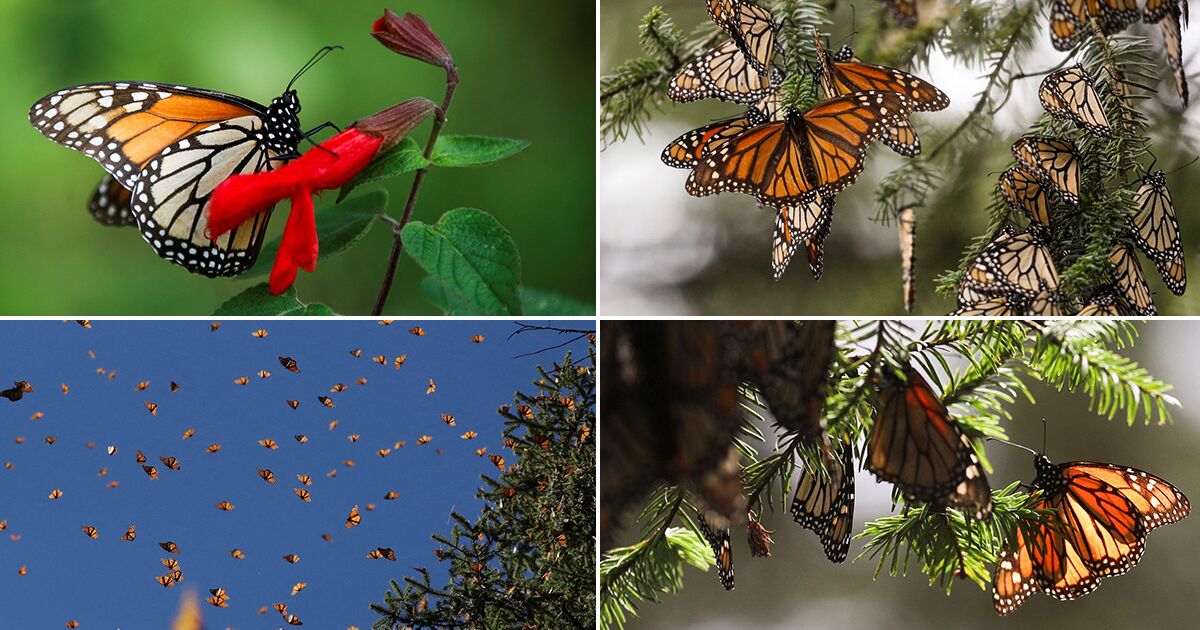
The tagging program involves placing a small sticker—about the size of a contact lens—on the wing of each butterfly. It does not damage it and allows you to know:
- The place where it was tagged
- The distance traveled
- Travel time
- Variations in the migratory route
In Mexico, butterflies cannot be tagged, so the role of Correo Real and its volunteers focuses on searching for and identifying tagged butterflies that arrive from the north. Reports can be made by anyone and can be sent through email or social networks, accompanied by a photo of the butterfly tag.
“We get one or two butterflies per season. When there are five, like this year, it is an extraordinary season,” explains Chávez.
(Photo: Facebook/ Royal Mail)
Although dozens can be found in sanctuaries, less than 10% of the butterflies tagged in the United States are recovered in Mexico, so finding one is literally like finding a needle in a haystack.
In addition to traditional paper labeling, an unprecedented project began this year: 500 butterflies travel with tiny 60 milligram transmitters, almost the weight of a grain of rice.
The Monarca Collaboration Project, headed by David La Puma and Cellular Tracking Technologies, seeks to obtain real-time data on speed, alternative routes, flight altitude and conditions during the journey.
One of those specimens, identified as LPM021, after 37 days and 2,362 kilometers traveled from Ontario, Canada, was detected on October 19 near the Amistad Dam, in Ciudad Acuña, Coahuila.