The president of the United States, Donald Trump, confirmed this Friday that he has already made a decision about his next military actions regarding Venezuela, although he refused to reveal details about the measures he will implement, according to statements collected by Bloomberg aboard Air Force One as it headed to Florida.
“I’ve already decided. Yes. I can’t tell you what it will be,” Trump declared to the press accompanying him on the presidential plane. “I can’t tell you what it is, but we made a lot of progress with Venezuela in terms of stopping the entry of drugs,” the president added, according to multiple US media reports.
White House meetings and military options
The statements came after two consecutive days of intense deliberations in the Oval Office. According to Washington PostSecretary of Defense Pete Hegseth and Chairman of the Joint Chiefs of Staff Gen. Dan Caine presented Trump on Thursday and Friday with “a variety of military options” for Venezuela, including possible ground attacks.
CBS News reported that members of the intelligence community also participated in Wednesday’s meetings, although the Director of National Intelligence, Tulsi Gabbard, was not present because she was traveling abroad. Secretary of State Marco Rubio also did not attend when he was in Canada participating in the G7 summit.
cnn reported that Trump has been given a wide range of options ranging from airstrikes against military or government facilities and drug trafficking routes, to more direct attempts to eliminate President Nicolás Maduro.
A senior official cited by the Post noted that Trump maintains a deliberate strategy of “strategic ambiguity” to not anticipate moves by adversaries like Maduro.
Operation “Lanza del Sur”: the framework of the offensive
U.S. forces have officially dubbed the military campaign in the Caribbean and Eastern Pacific “Operation Southern Spear,” Secretary Hegseth announced Thursday on social media, where he declared: “My advice to foreign terrorist organizations is: Don’t get on a boat.”
The most recent attack under this operation occurred on Friday, when Southern Command announced the destruction of a boat in the Caribbean with four people on board, whom Washington described as “narcoterrorists.”
Military deployment: an unprecedented presence in decades
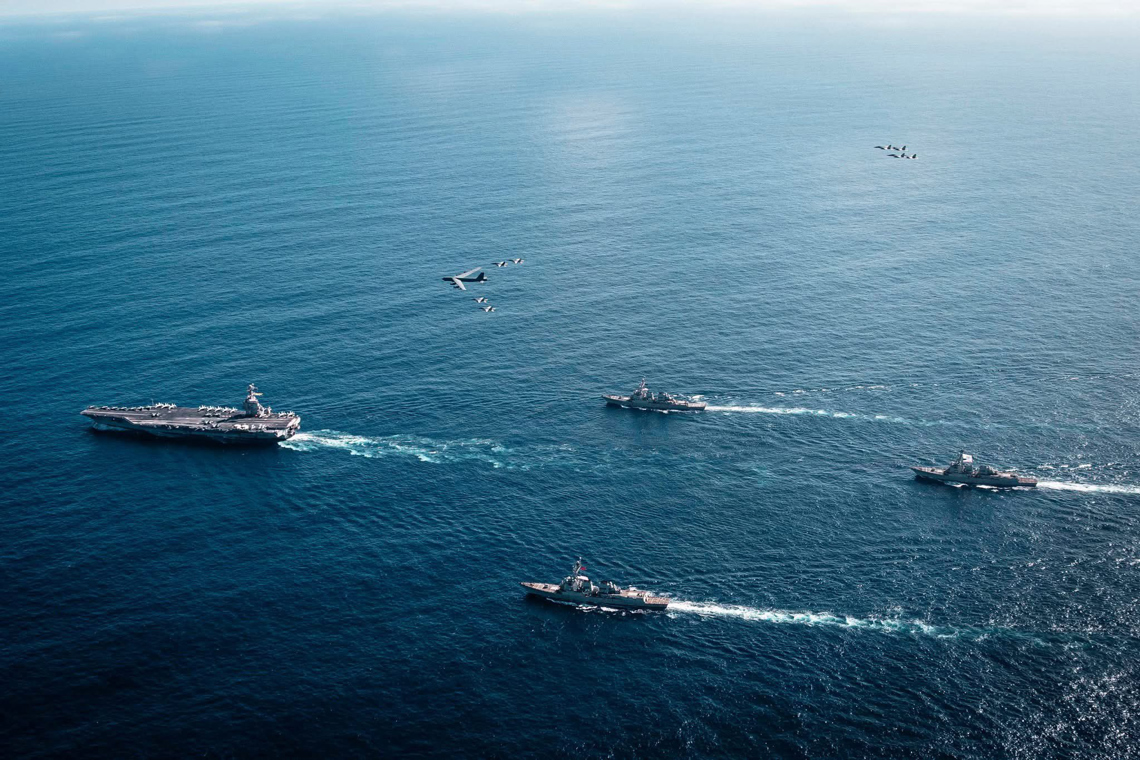
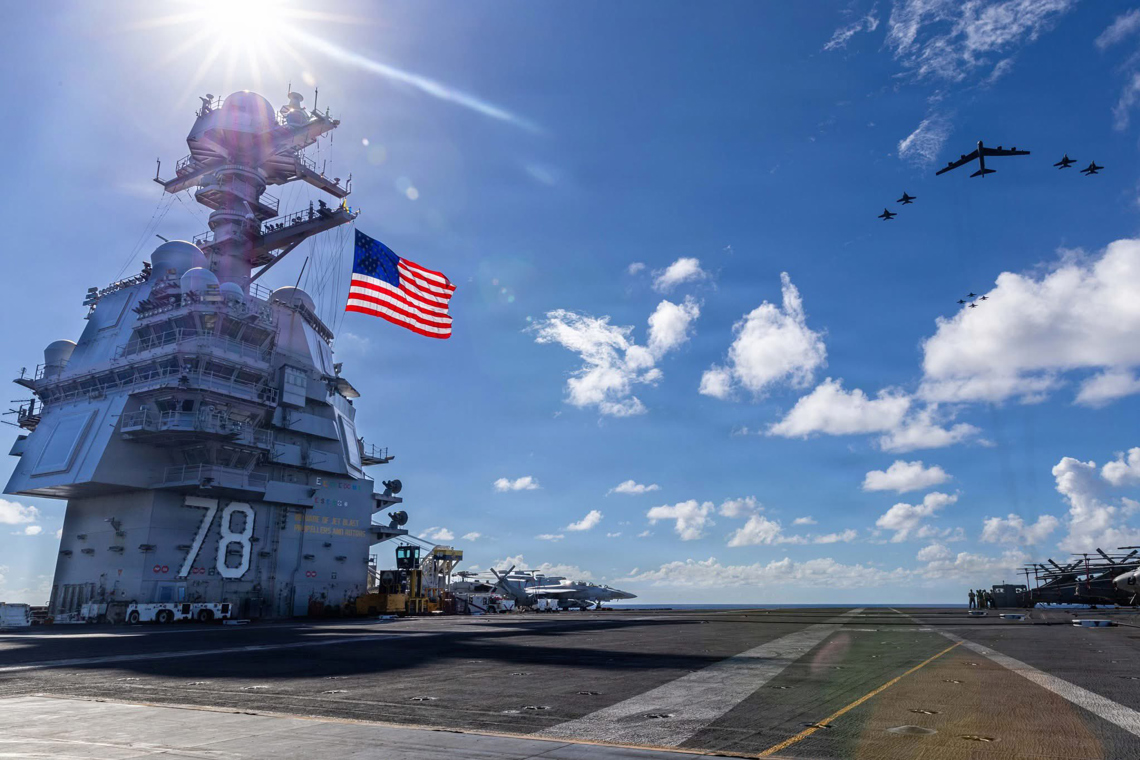
The United States has deployed the largest military contingent seen in the region in generations to the Caribbean. According to Washington Postthe current deployment includes:
- USS Gerald R. Ford: The world’s largest and most modern aircraft carrier arrived in the Caribbean this week, bringing with it approximately 4,500 crew members and 70 aircraft, including F-18 fighters.
- Iwo Jima Amphibious Group: Includes USS Iwo Jima, USS San Antonio, and USS Fort Lauderdale, carrying the 22nd Marine Expeditionary Unit (over 2,200 personnel).
- Missile destroyers: USS Gravely, USS Jason Dunham, USS Sampson and USS Stockdale.
- Guided missile cruiser: USS Lake Erie.
- Nuclear attack submarine: USS Newport News.
- special forces: Approximately 150 special operations troops from the 160th Aviation Regiment embarked on the MV Ocean Trader.
- Aviation: F-35 fighters deployed in Puerto Rico, P-8 Poseidon reconnaissance aircraft and MQ-9 Reaper drones.
cnn reported that by mid-October, the total number of US troops in the Southern Caribbean and Puerto Rico had reached 15,000 troops, an unprecedented concentration in decades.
Elliott Abrams, who was US special envoy for Venezuela during Trump’s first term, told CNN: “The military presence in the Caribbean is too large to just attack a few speedboats, although it is not large enough for an invasion of Venezuela. What’s in between, I think, is a pressure campaign aimed at shaking up Venezuela.”
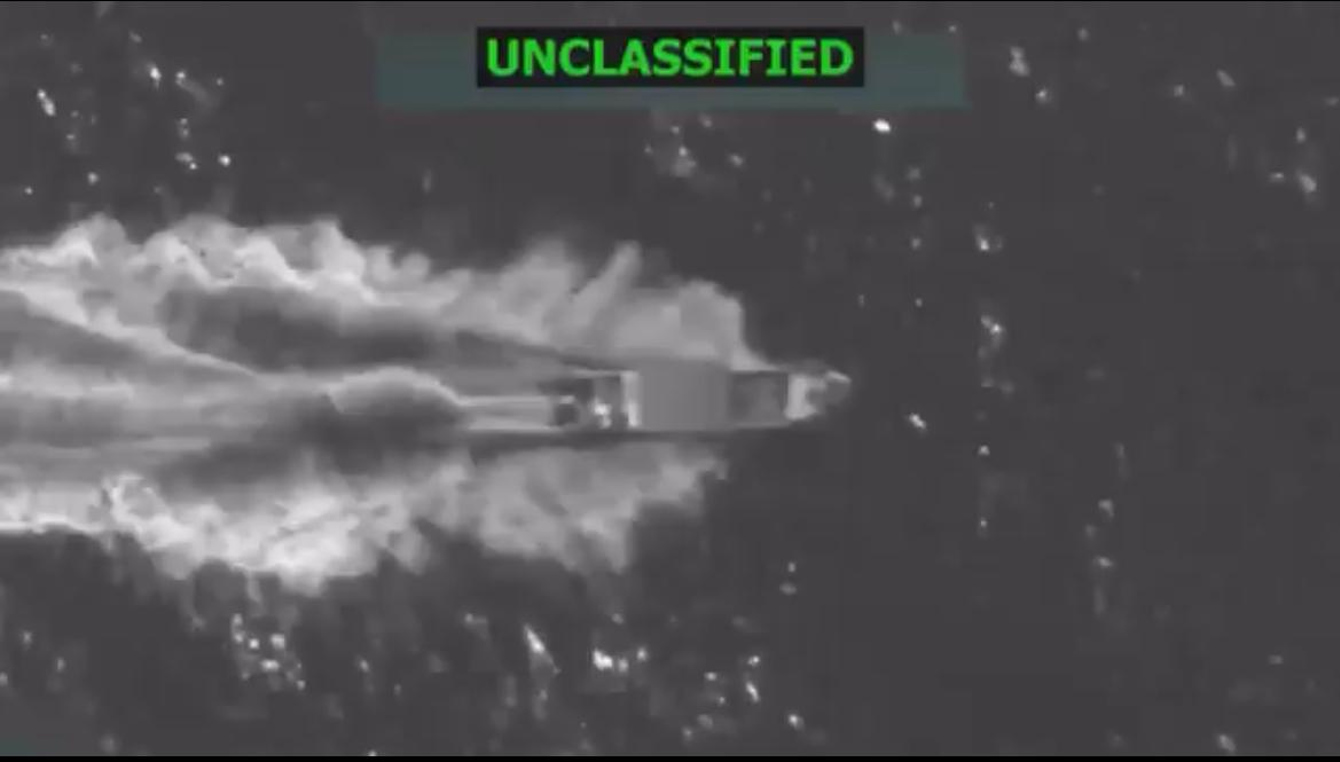
Narcolanchas: 80 dead in more than 20 attacks
Since Sept. 2, when the offensive began, the United States has carried out more than 20 deadly attacks on shipping in the Caribbean and eastern Pacific, resulting in at least 80 people killed, according to the US count. CNN in Spanish.
Chronology of the main attacks:
- September 2: First attack against a boat from Venezuela; 11 dead. Trump alleged that he was transporting members of the Aragua Train and drugs, although he did not present evidence. According to Wikipediathe boat came from the town of San Juan de Unare in the state of Sucre, and residents published tributes to the deceased.
- September 15: Second attack; 3 dead.
- September 19: Third attack with cooperation from the Dominican Republic; 3 dead. The Dominican Navy rescued 377 packages of cocaine.
- October 3: Fourth attack announced by Hegseth; 4 dead.
- October 14: Fifth attack; 6 dead.
- October 16: Attack on a semi-submersible; 2 dead and 2 survivors (one Ecuadorian and one Colombian), who were repatriated without charges.
- October 21: First operation in the eastern Pacific; 2 dead.
- October 27: Attack that destroyed two boats; 14 dead and one survivor.
According to Associated Pressseveral of those killed in the first attack were fishermen or poor workers from Venezuela, not drug traffickers, which generated criticism from human rights organizations.
United Nations He urged the United States to stop the attacks and criticized them as possible extrajudicial executions. The New York Times reported that “specialists in the laws of war and the executive branch” stated that Trump lacks legal authority to kill suspected drug traffickers without judicial proceedings.
On November 6, the US Senate rejected by 49-51 votes a bipartisan resolution which would have required congressional approval for military actions against Venezuela. Only two Republicans, Lisa Murkowski and Rand Paul, voted in favor along with all Democrats.
Reactions from Venezuela
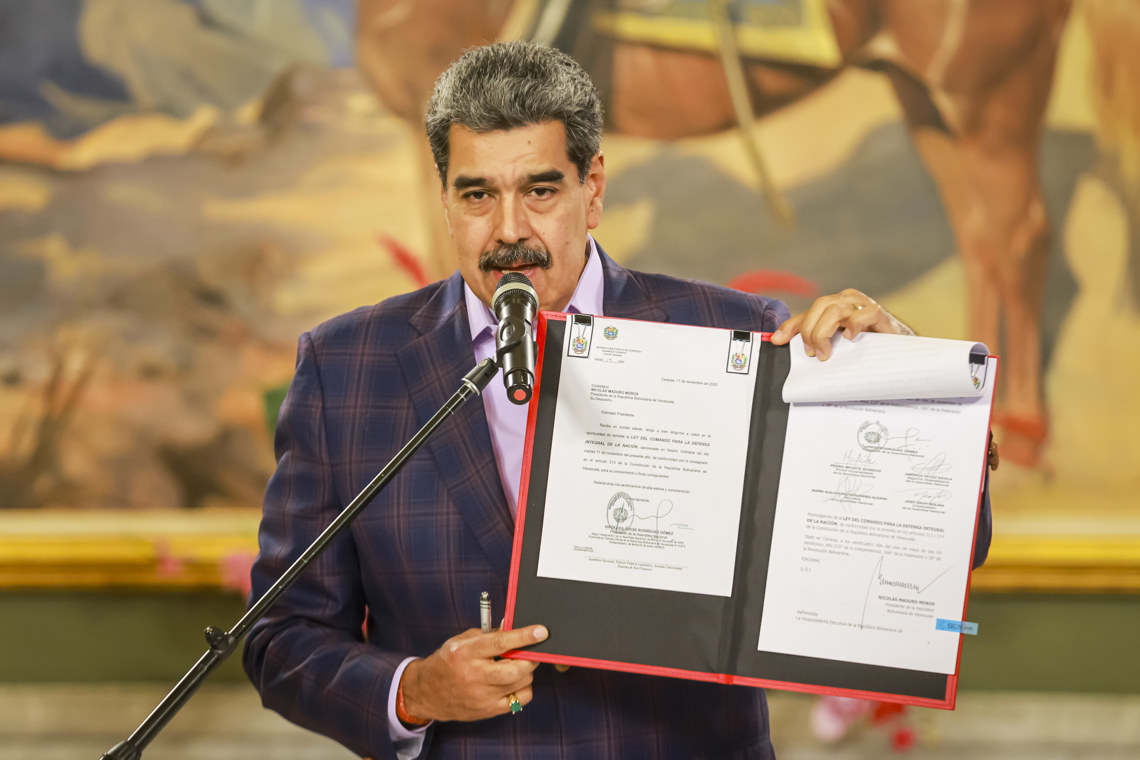
Venezuelan President Nicolás Maduro responded this Friday with a direct call to the American people, urging them to “stop the mad hand of those who order a war in the Caribbean.”
In a broadcast on the state channel Venezolana de Televisión (VTV), Maduro warned in English and Spanish: “The order is peace. War, no.” The Venezuelan president has accused Trump of being “manufacturing a new eternal war” and described the attacks as “serial executions.”
Venezuela announced the mobilization of more than 200 thousand military personnel under the “Independence Plan 200”, carrying out territorial defense exercises in 20 of its 23 states. Maduro declared that if his country is attacked, “we would immediately move to the period of armed struggle” and “I would constitutionally declare a republic in arms.”
Venezuelan Defense Minister Vladimir Padrino López denounced the US actions as “an undeclared war” and called for training to protect the country’s airspace, including the mobilization of troops, civilian militiamen, police and ruling party organizers.
Maduro stated last Monday that the US Navy assaulted a Venezuelan fishing boat in the Caribbean: “What were they looking for? Tuna? A kilo of snapper? Who gave the order in Washington for a missile destroyer to send 18 armed marines to assault a tuna fishing boat? They were looking for a military incident,” he declared, according to Euronews.
Venezuela deploys 200,000 soldiers to face the “threats” from the United States
Political context and legal questions
Trump’s offensive is part of a broader strategy against drug trafficking and irregular migration. The US government designated the Aragua Train in February and the Suns Cartel in July as terrorist organizations, directly linking the Maduro regime to drug trafficking.
However, the legality of the actions has been widely questioned. Administration officials told lawmakers last week that the U.S. had no legal justification for strikes against ground targets, although cnn reported that “it is possible that they could generate one.”
Trump formally declared to Congress on October 1 that the United States was in a “non-international armed conflict” with “illegal combatants” linked to drug cartels.
According to The Country and The Diary, The main ideologues of the operation are Undersecretary of Political Affairs Stephen Miller and Secretary of State Marco Rubio, both the most influential figures in the Trump Administration’s policy towards Latin America.
NBCNews reported in September that U.S. officials were disappointed that the military escalation did not appear to have weakened Maduro’s grip or provoked a significant response, prompting the White House to reconsider its next steps.
María Corina Machado applauds Trump’s military strategy with Venezuela; the Pope calls for diplomacy
Regional implications
cnn warned that if Trump orders strikes aimed at toppling Maduro, he could face serious challenges with fragmented opposition elements and a military primed for insurgency, plus a political backlash in the U.S. from a president who has vowed to avoid costly entanglements abroad.
Experts consulted by CNN noted that Maduro’s sudden departure could create a power vacuum that triggers additional instability, with Colombian insurgent groups, pro-government militias and criminal organizations linked to drug trafficking competing for control.
“The American people did not vote for Trump to involve the US in a sustained conflict in Latin America,” warned an analyst cited by CNN, pointing out the contradiction with Trump’s electoral promise to keep the United States out of foreign wars.