He general blackout that affected the Dominican Republic on Tuesday and which caused confusion in the population, it seems that it has also affected the official agency that handles the country’s energy issues.
On the one hand, the vice minister of Innovation and Energy Transition of the Ministry of Energy and Minas, Betty Sotoexplained yesterday that the official report of the Foul Committee concludes that the event originated from a “operational human error“.
As detailed, the failed occurred during a changeover procedure on a power line, which caused the output of the 138 KV line from the San Pedro de Macorís substation. That incident triggered the disconnection of several key generation units located in the eastern part of the country.
Soto specified that the institutions of the electricity sector are already working on the identification of corrective and in strengthening the supervision protocols to prevent similar situations from affecting the stability of the system again.
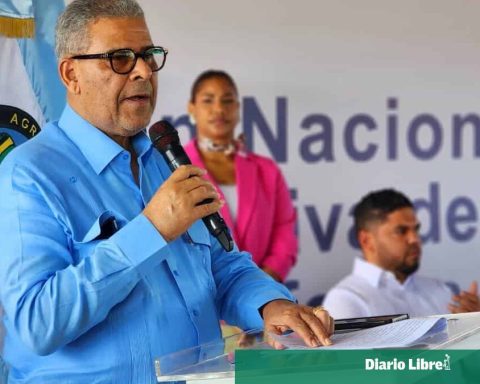
However, hours after his statement, the Minister Joel Santos He denied his official and said that the reasons for the blackout were still under investigation.
“It is not true broadcast version in some media communication and networks social, which ensures that the technical committee The technical report on the event that occurred in the national electrical grid would have been completed last Tuesday,” the official said.
“He technical committee will meet again tomorrow, Friday the 14th, the date on which the detailed review of the information requested from all SENI participants will continue, to advance in the construction of the report,” he emphasized.
He indicated that the investigation is ongoing and that, as it is a rigorous investigation, it must cover all the agents involved, including transmission, distribution, generationsystem operation and technical staff in the field, as well as all the protection elements of the national electrical network, could have been associated with the event.
He then said: “The rigor of this report is vital to ensure that each event, maneuver, equipment and protocol be evaluated precisely, so that the final conclusions allow not only to determine the exact origin of the blackout“but also strengthen the protection and response mechanisms of the national electrical system,” he said.
He Minister Santos He added that, as established after Wednesday’s meeting, the technical committee continues working on two priority lines investigation: verification of compliance with field operation protocols, to determine if the event was associated with human intervention, as well as the compilation and analysis of technical information.
The Metro’s 40 Mv plants were undergoing checks
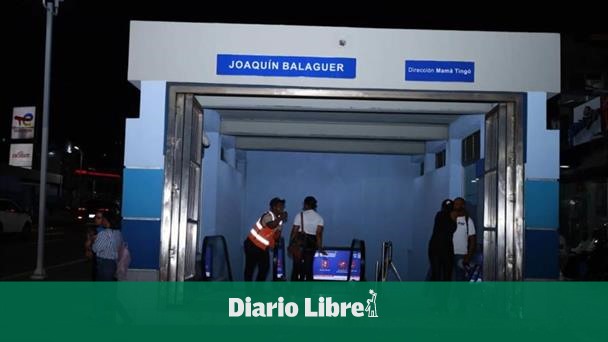
The director of the Office for Transport Reorganization (Opret), Rafael Santosexplained why the Santo Domingo Metro did not immediately activate its electricity generation system during the blackout that affected the service on Tuesday, and directly clarified the statement of former president Leonel Fernández, who assured on social networks that the institution has “40 megawatts” of backup that could have been turned on immediately.
“That is technically poorly expressed“Said Santos. “There are not three units or 40 megawatts. It is a single emergency unit made up of 18 floors of 2.2 megawatts each,” he pointed out.
He explained that the Metro did not immediately activate this backup unit because the plants were in “deep maintenance” just when the power outage occurred.
As detailed, the institution had taken advantage of the decrease in cyclonic activity to intervene in the system, including the replacement of 10,000 gallons of fuel that had been stored for 11 years and had been damaged.
![[object HTMLTextAreaElement]](https://resources.diariolibre.com/images/2025/11/14/imagen-charlie-mariotti-padre-6c6a567e.jpg "General blackout and the contradictory versions of Energy and Mines")
The former secretary general of the Dominican Liberation Party (PLD) and presidential candidate, Charlie Mariotti, demanded the immediate resignation of the director of the Office for the Reorganization of Transportation (OPRET), after confirming that the Santo Domingo Metro operated without energy backup during the national blackout.
Mariotti described the situation as “an unforgivable failure in a critical infrastructure” and denounced that OPRET’s management has been “improvised, without foresight and without minimum security protocols.”
He pointed out that the public recognition of the director of OPRET, who admitted that the emergency system was under deep maintenance during the crisis, evidences a lack of planning, supervision and institutional responsibility.
“In any country, with a serious and responsible government, an official who admits such a failure resigns immediately.”