A government program that aims to mobilize private capital for sustainable projects, Eco Invest Brasil will focus exclusively on the Amazon in the next round. The notice for the program’s fourth auction was launched this Friday (14) in Belém, during the 2025 United Nations Conference on Climate Change (COP30).
Scheduled for the beginning of 2026, the program’s new auction aims to mobilize up to US$4 billion, combining public and private resources through a blended finance model. Through catalytic capital, the government and private financial institutions contribute resources in a philanthropic manner, with greater tolerance to market risks.
In this system, catalytic capital considers not only the market return, but the social return of projects. This money can leverage resources for conventional investments.
Coordinated by the Ministries of Finance and Environment and Climate Change (MMA), with support from the Inter-American Development Bank (IDB) and the United Kingdom Embassy, the program is part of the Ecological Transformation Plan, a strategy that seeks to position Brazil as a leader in the low-carbon economy.
Focus on the “standing forest”
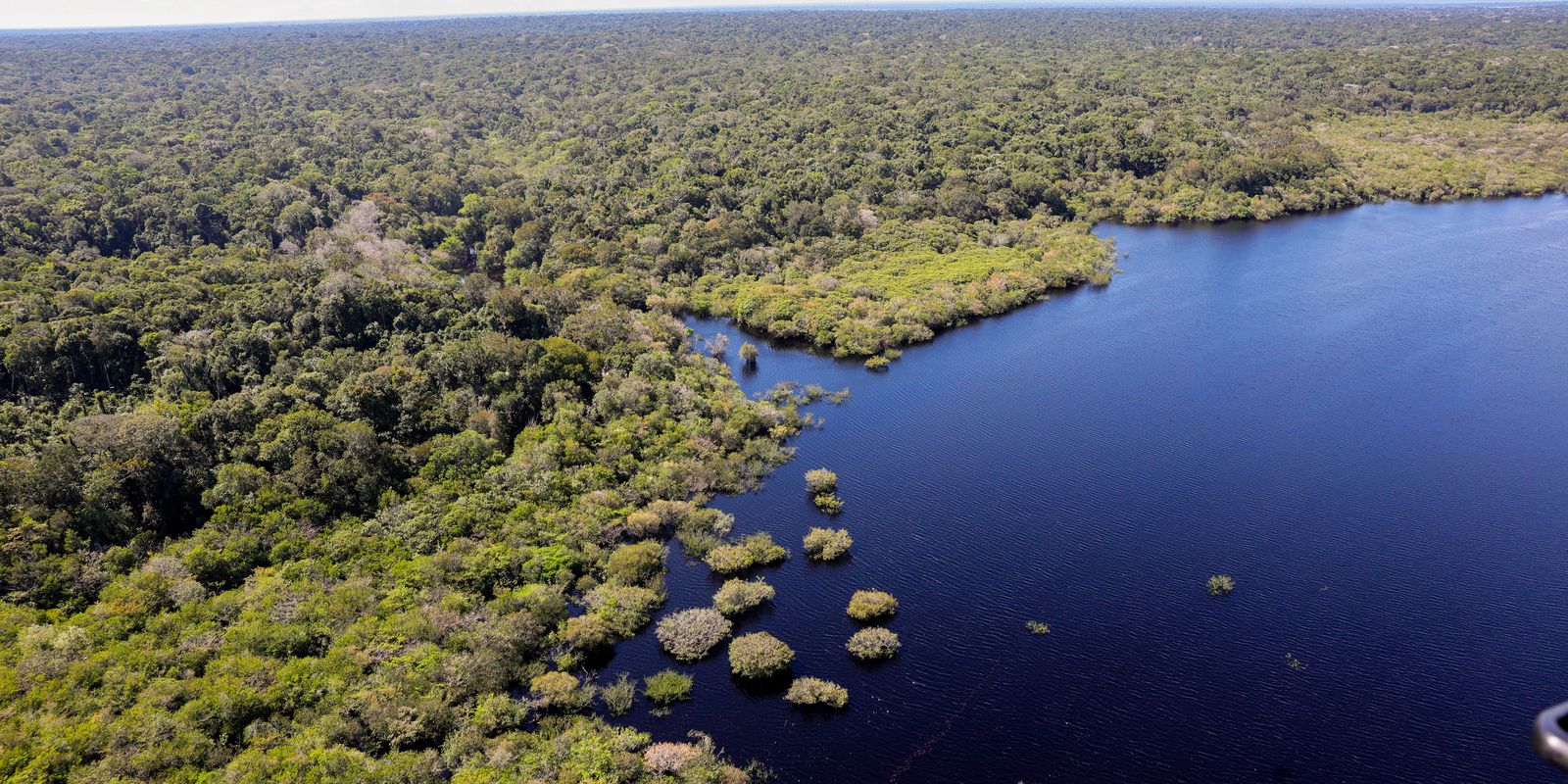
For the first time, Eco Invest Brasil will allocate resources exclusively to the Amazon region. The fourth edition of the program aims to reinforce sustainable production chains that generate income, social inclusion and competitiveness in the face of activities associated with deforestation.
The next round of Eco Invest Brasil was designed to reach small companies, cooperatives, traditional communities and local producers, segments that usually have difficulty accessing larger financing.
Projects must be presented in three priority sectors:
- Bioeconomy: includes socio-biodiversity chains, bio-industries, sustainable inputs and ecological and productive restoration;
- Sustainable ecological tourism: ecotourism initiatives aimed at attracting international visitors;
- Enabling infrastructure: investments in decentralized renewable energy, digital connectivity, transport and logistics to support local production chains.
Financial model and extra incentive
The National Treasury will lend resources to the winning financial institutions at interest of 1% per year. In return, these institutions must raise a volume of private capital four times greater than the amount received, with at least 60% of foreign origin.
Resources can be transferred to projects through direct credit or via funds, always combined with instruments designed to reduce the risk for financiers.
This edition has an innovation: an additional incentive from the Treasury equivalent to 20% of the amount raised. The money must be applied to specific purposes, such as technical assistance and training in more complex and risky projects, with a focus on small producers.
The program will also feature a hedge exchange rate (protection). The Inter-American Development Bank (IDB), through the Central Bank, will offer US$3.4 billion in derivatives (futures market instruments) to reduce risks of exchange rate variation, such as excessive rise in the dollar, with operations scheduled to begin in the first half of 2026.
Goals, schedule and criteria
The government’s expectation is to mobilize up to US$1 billion in public resources, including the Climate Fund and the IDB, and up to US$3 billion in private capital. Auction documentation will be published in the coming days. Proposals should be presented at the beginning of 2026, when the winners are also expected to be announced.
In the event of a tie, criteria such as leverage capacity (ability to raise values beyond the amount received), bioindustrialization potential (industry that converts renewable raw materials into other products) and volume of foreign capital will be considered.
History and previous results
Created at COP28, in 2023, Eco Invest Brasil is part of the Ecological Transformation Plan.
The program held three auctions, the first in 2024. Together, they mobilized more than R$75 billion (around US$13.16 billion), of which R$46 billion (US$8 billion) came from foreign investors. According to the National Treasury, the program has already generated US$14 billion in international funding commitments.
Repercussion
Representatives from the government and international organizations highlighted the strategic role of the new round. Through video participation, the Minister of Finance, Fernando Haddad, stated that the auction shows that “the standing forest generates more value and more opportunities than devastation”.
The Minister of the Environment, Marina Silva, highlighted that the initiative strengthens socio-biodiversity and sustainable tourism chains, “creating opportunities that generate income, inclusion and forest conservation”.
For the president of the IDB, Ilan Goldfajn, the new auction completes the “architecture” designed for the program, by bringing together mixed financing, liquidity, project preparation and exchange rate hedging.
The UK’s special envoy for climate, Rachel Kyte, stated that Brazil demonstrates global leadership by “converting natural heritage into sustainable prosperity”.
The government predicts that, in 2026, the pace of the program will be slower, with one or two auctions. The priority, informed the Ministry of Finance, will be to improve the governance of the benefited projects, with a public portal for transparency of results.