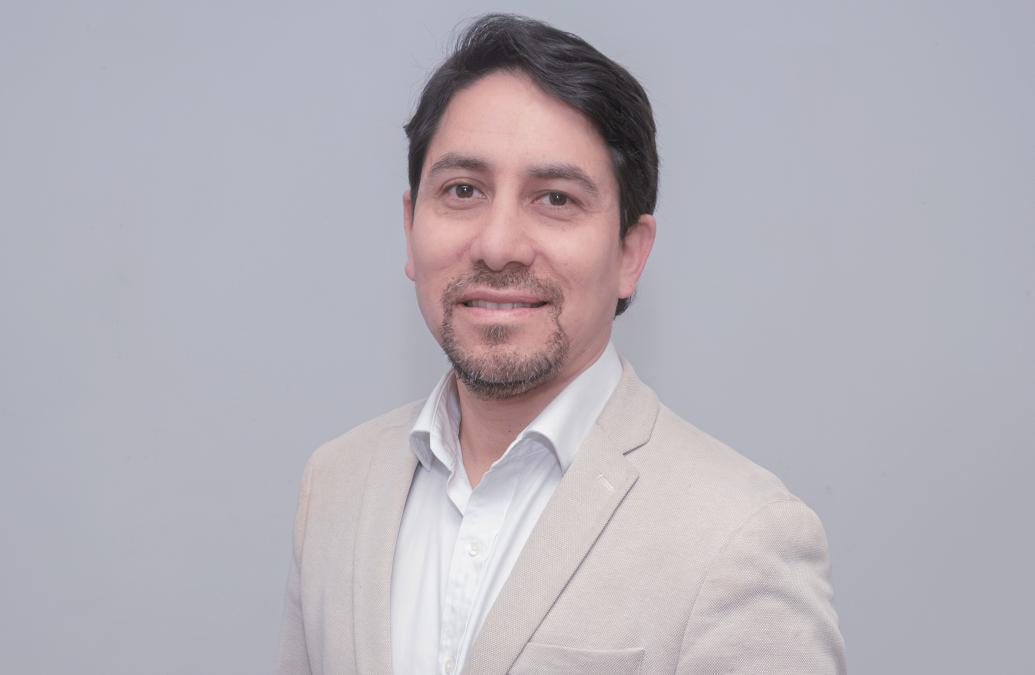
The INFRA Summit 2025 organized by the University of Lima and Latac Business will take place next Monday, November 24 at the University of Lima (Auditorium O – Building 1), from 2:00 pm. Carlos Chau, executive director of the INFRA Summit 2025, analyzes the challenges of PPPs and G2G, and proposes how to strengthen the management of PPP projects. infrastructure in the country.
What are the main problems that will be discussed at the INFRA Summit 2025?
The forum was born from the need to provide greater clarity to the discussion on the convenience of Government to Government (G2G) agreements and Public-Private Partnerships (PPP) to finance large infrastructure projects. The University of Lima is committed to promoting best practices for the development of these projects and, together with Latac Business and other organizations, seeks to bring this debate closer to the public. The purpose is to provide better foundations for the proper use of both models.
What have been the findings in the use of G2G and APP mechanisms?
In the case of G2G, there is a clear focus on speed and efficiency. It’s like having the best project manager in the world advising you to finish quickly and with high quality, although the financing is still entirely state-funded. However, the speed with which they are executed has meant that key aspects such as operation and maintenance are not foreseen. That is a pending point
And regarding the PPP modality?
PPPs have been a pillar in the development of large concessions. They have made it possible to transfer investment risk to the private sector, generating an important fiscal boost. But we must also be humble: behind its advantages, there are cases of delay, such as Metro Line 2. The cause is not necessarily the model, but failures by the State, such as delays in the delivery of land, which cause delays and arbitrations.
Can fiscal sustainability be a limitation when choosing between these modalities?
Yes. The G2G depend on the fiscal capacity of the State and do not solve problems such as expropriations, land or permits, which are their responsibility. PPPs are also vulnerable to defaults, which can generate fiscal spending. Furthermore, the G2G do not yet include operation and maintenance contracts, which represents a risk to the sustainability of the project.
The role of the Comptroller’s Office is important, but some experts point out that it can create disincentives. How to set limits?
You have touched on an important point, although the G2G model was born to accelerate investment, we cannot forget that we live in a period marked by distrust derived from the Odebrecht and Lava Jato cases. This mistrust has been transferred to the public sector and affects the execution of
projects.
So how do we achieve balance?
The call to conscience that you raise is because we do not fully understand that the system of large projects does not depend only on investment neither from the MEF nor from the private sector, but on the coordinated participation of all actors. Each one plays an essential role in closing gaps. If they do not work together, the cycle is broken. This coordination requires leadership from the Government, which must convene the institutions of the ecosystem and encourage them to assume their responsibilities.
Many projects have been delayed in the regions due to political interference. How to reduce it?
Subnational governments have a very important role, but they lack sufficient capabilities. Decentralization stalled: it transferred functions, but not powers. Thus, many regional governments have multiple responsibilities, but little preparation.
A mistake has been to evaluate them only by their budget execution. The impact of a project is not measured only by how much is spent, but by public satisfaction: if the works are completed on time, if they provide quality services and timely attention. That should be a better management measure.
RECOMMENDED VIDEO