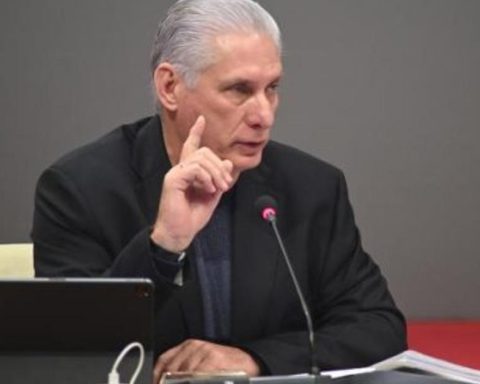
Madrid/President Miguel Díaz-Canel traveled to Santiago de Cuba to verify on site How the situation is going two weeks after the passage of Hurricane Melissa. A meeting of the National Defense Council was held there was broadcast on the television program Round Table. Paradoxically, few people from Santiago could find out, since almost 60% of the province is still without electricity. And whoever has it, receives its corresponding blackout.
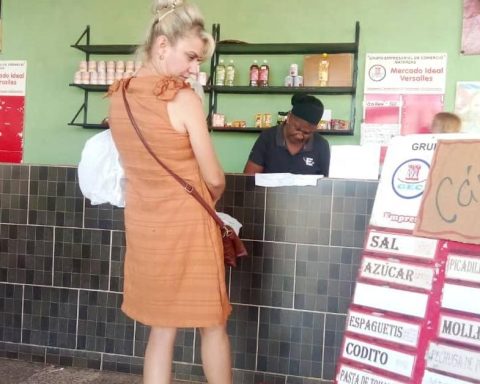
“There are many localities without electricity and without drinking water service. There are hundreds of evacuees and the greatest work remains to be done in all the areas that were under water,” said the president, whose prime minister launched himself into the task of containing criticism for the sale of supplies, including water. The donated products are “completely free,” said Manuel Marrero, “while others must be paid for, which sometimes generates confusion in the population.”
The official explained that “the community group is the one who decides” who to hand over, since it knows “the situation of each family.” This process must be done “with transparency, with popular control, people have to know what is coming, and to whom it is being delivered.”
The official explained that “the community group is the one who decides” who to hand over, since it knows “the situation of each family.”
The matter was well brought up, in a week in which questions about donated and subsidized aid begin to circulate on social networks. On Wednesday, the director of Commerce and Gastronomy in Granma He said that water was being sold in the 10 Zone Defense Councils, at a price of 40 pesos per bottle per core. “This resource comes from the state reserve for disasters, it is not a donation, and it covers logistical costs with a symbolic price,” he said in an official message. It didn’t take long for reproaches to multiply among those who considered it shameful to have to buy a basic necessity in the midst of a catastrophe.
The sale of mattresses has also been on everyone’s lips, to the point that also in Granma the authorities have had to present an argument that not many share. In a note from Department of prevention and social work There is talk of two types of mattresses, so that “the victims receive the necessary support in an equitable manner, considering their economic situation.”
This is how we talk about the “cameros”, which are an external donation and are given free of charge, and the “personal ones”, which the State has acquired for emergencies. These have a cost of 911 pesos, but are subsidized by 50% for those who have “economic solvency.” The note adds that the State finances 100% of the mattresses for vulnerable people and mentions the “payment facilities” that families in need can avail of, although details about these credits have never been given. Regarding the mattresses, by the way, it was learned at yesterday’s meeting that more than 8,300 were lost or damaged, so production in Jíbaro had to be increased and donations had to be made.
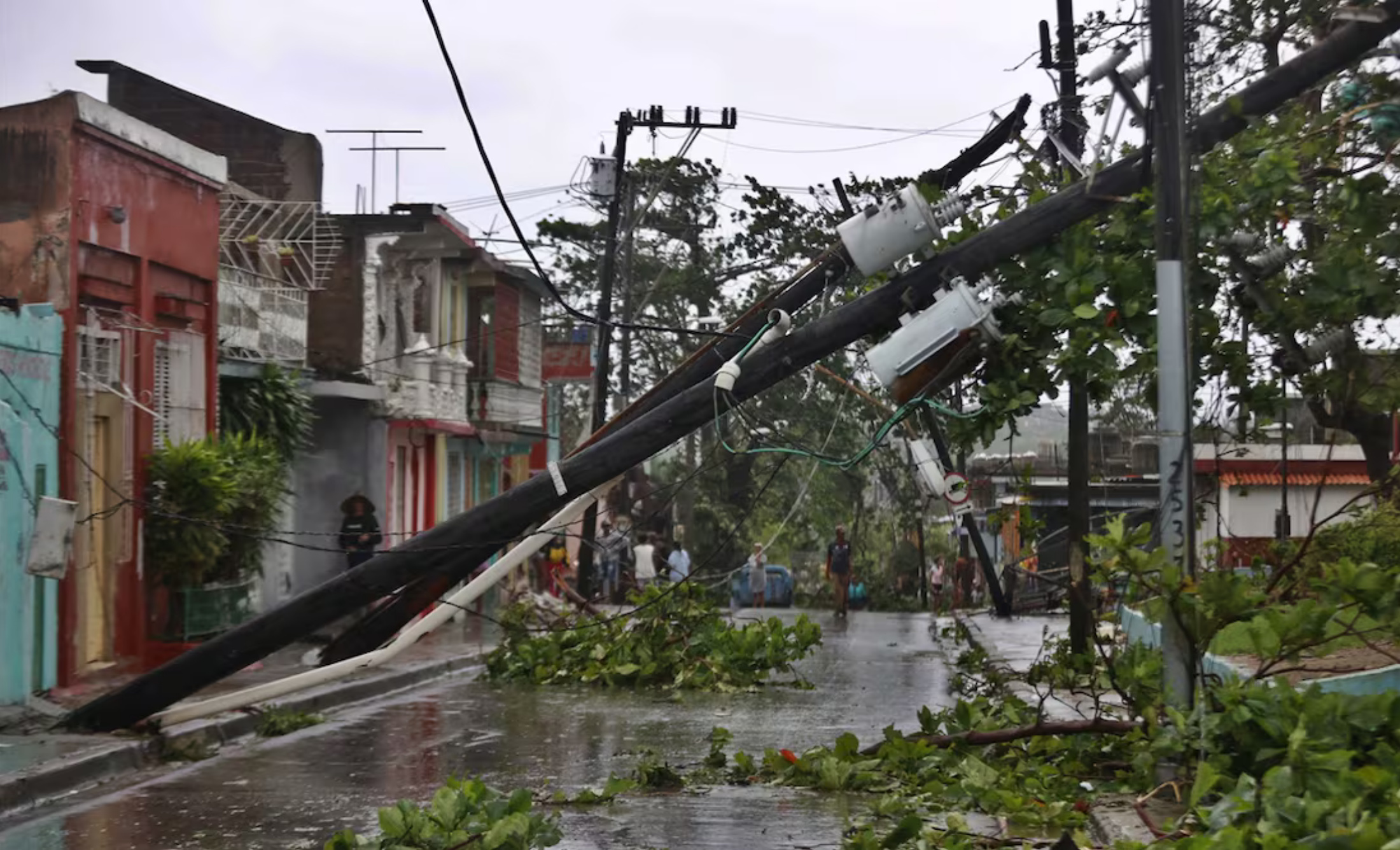
Díaz-Canel admitted that the situation in the affected area is “extremely difficult” and Marrero added that more than 149,000 homes and 158,000 hectares of crops are affected. This, along with the recovery of the electricity sector – which is at 98% in Guantánamo, 86.2% in Granma and 44% in Santiago de Cuba, without this meaning more than the return to the planned power outage – and the epidemiological situation are the main concerns.
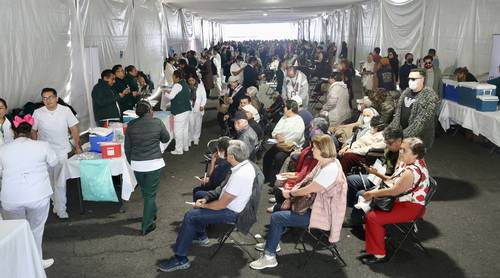
Palma Soriano, Songo La Maya, San Luis and Santiago have been identified as municipalities with an epidemic, the same one that shakes the entire country
Palma Soriano, Songo La Maya, San Luis and Santiago have been identified as municipalities with an epidemic, the same one that shakes the entire country, mainly dengue and chikungunya. Given this, they stated, fumigation protocols have been reinforced.
The president of the Provincial Defense Council of Santiago de Cuba, Beatriz Johnson Urrutia, said that 43% of the main city has already been cleaned – an ideal breeding ground for the mosquito – and she expects that 100% will be reached on the 28th. The official recognized in her own way the failure of the Government, by admitting that there are still 6,900 centers without housing solutions since the passage of Sandy in 2012, and to which there are now more than 2,300 total collapses and more than 19,000 partial or total roof damages. More than half of the 1,244 schools are affected and students have had to be relocated.
In Granma, Yanetsy Terry Gutiérrez highlighted the progress in recovery, but acknowledged that many homes were damaged (more than 8,000), in addition to 52,000 hectares affected. Holguín is somewhat better, which despite everything has more than 900 total collapses and half of its educational institutions damaged. The secretary of the Party, Joel Queipo Ruiz, said that the province focuses on the psychological damages of the population. But not only that: there were more than 4,700 seizures from those who took advantage of the situation to set abusive prices. “There are people who have not interpreted the moment we are living in,” he snapped.