After 43 days of partial paralysis, or “shutdown,” Donald Trump’s administration and Congress agreed to reopen the federal government with a funding patch that only lasts until the end of January 2026. But the danger of it happening again is just around the corner. Here we explain why it happens and its implications
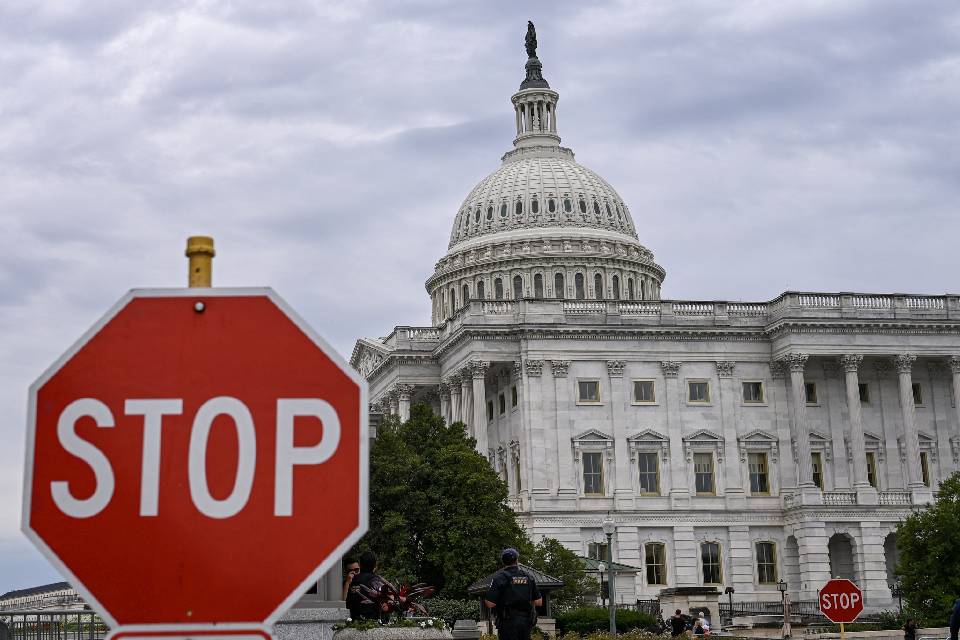
In the United States, Congress must pass budget laws each year that authorize how much money each federal agency can spend. If legislators and the White House do not agree in time, part of the State is simply left without legal permission to spend: offices close, programs are stopped and hundreds of thousands of employees are sent home or continue working without pay.
That is a shutdown: it does not mean that the country “turns off,” but it does mean that an important part of the federal apparatus is paralyzed. Certain payments are not processed, economic statistics are postponed, museums are closed, flights are delayed and services such as assistance in Social Security offices operate at half capacity.
In this case, the shutdown lasted 43 days, the longest in American history. According to review Washington Post and The New York Timesthe origin was in a political clash over the extension of subsidies linked to the Affordable Care Act (known as Obamacare) and the Trump administration’s agenda to reduce the size of the public sector.
The core of the conflict: health and spending power
The conflict that triggered the shutdown is also not resolved.
Washington Post remember that the initial dispute was over the renewal of Affordable Care Act subsidies, which expire on December 31. Without those supports, premiums for insurance purchased through the public platform Healthcare.gov could rise about 30% on average next year.
Republicans say they are willing to “discuss” the issue, but have not promised to put it to a vote. Several Democrats, for their part, already warn that they would be willing to assume the political cost of another closure if their health demands are not met.
In parallel, legislators are seeking to better tie down the use of already approved resources, after the Trump administration moved, frozen or canceled billions of dollars, redirecting them to its own priorities. Democratic Senator Patty Murray, responsible for accounts in the upper chamber, welcomed that the first three bills included stricter instructions to prevent “Trump and [el director de presupuesto] Russ Vought” unilaterally decide how to spend taxpayer money, he cited Political.
What Congress approved and when it will arrive
On the night of Wednesday, November 12, Trump signed a law that immediately reopens the government and funds it, in most agencies, only until January 30, 2026.
According to the analysis of Washington Postthe text:
-
Maintains federal spending at current levels.
-
It covers some specific sectors until September 2026, such as the Department of Agriculture, Veterans Affairs, part of military construction and Congress’ own operations.
-
It leaves the rest of the government running on a temporary budget (a “continuing resolution”) until the end of January.
As you remember Politicalthat means that only about 10% of the $1.8 trillion in annual discretionary spending was stably resolved. The remaining 90% are still on a kind of “autopilot” and will need new spending laws before the new deadline.
A Congress with the most difficult task ahead
What for citizens seems like a respite, for Congress is the beginning of the most complicated part.
According to Politicalthe agreement that reopened the government only fully resolved three of the twelve spending bills that are passed each year to distribute money between agencies. They are also the easiest politically: resources for veterans, farmers, food programs and the functioning of the Legislature itself.
The other nine laws are still pending and cover much more sensitive areas:
-
Defense and public health programs.
-
Education, Work, Commerce, Justice, Transportation, Interior and Housing.
-
Energy, National Security, State, Treasury and the tax service (IRS), among others.
In some cases, such as the Homeland Security budget, a formal project was not even presented due to clashes between Democrats and Republicans over Trump’s immigration policy and the use of funds to expand detentions and deportations.
To complete the picture, neither the House nor the Senate have agreed on an overall spending ceiling for fiscal year 2026, with the Republican Party divided internally over how deep the cuts should be. Leaders like Steve Scalise recognize that “the real negotiation” comes now, once “the lights are back on,” in reference to the reopening.
What changes for ordinary people
For those who live in the United States, the end of the shutdown translates into a gradual recovery of services. Washington Post and The New York Times They detail several fronts:
federal workers
-
Around 670,000 employees were sent home without pay and another 730,000 worked without pay.
-
The new law reaffirms a 2019 rule that guarantees retroactive payment (back pay) to those who were affected.
-
In other closures it has taken about a week to process those salaries; This time, some agencies are talking about starting to pay in the next few days, but there is no single schedule.
Flights and airports
-
To reduce risks, the Department of Transportation had ordered gradual flight cuts at the country’s busiest airports, while air traffic controllers worked without pay.
-
Now that cut has been frozen in 6% of flights, and the Federal Aviation Authority will evaluate whether it can gradually lift the restrictions.
-
Experts cited by both newspapers estimate that it will take several days to rearrange itineraries and rotate crews, with a view to normalizing the operation before the Thanksgiving season, one of the most intense of the year in the country.
Social programs
-
The SNAP food stamp program, on which some 42 million low-income Americans rely, is once again fully funded. During the shutdown, the White House litigated to avoid paying the full benefit with contingency funds.
-
The new law allocates money for SNAP through September 2026, which should dissipate uncertainty for at least a year, he noted. Washington Post.
-
Educational programs such as Head Start, which offers early care to children from vulnerable families, could take up to two weeks to fully reopen some of their locations, according to spokespersons consulted by The New York Times.
Cultural life and economic data
-
The museums of the Smithsonian Institution and the National Zoo in Washington, financed largely with federal funds, will reopen in a phased manner, as happened after the 2019 closure.
-
Statistical agencies that produce key employment, inflation and consumption data had suspended surveys and publications. The New York newspaper warns that, although some delayed reports could be released relatively quickly, others, such as the consumer price index for October, could not be published, leaving gaps in the economic diagnosis.
Why this matters outside the United States too
-
Global economic impact: The United States remains the largest economy in the world. When your own government is forced to paralyze services, delay key statistics and cut operations, uncertainty grows in the markets and the reading of the global economy becomes difficult.
-
Services that touch the diaspora: Many people outside the US interact with the federal apparatus, from those who process visas and asylums to students, scientists or beneficiaries of binational programs. Each closure accumulates additional delays in embassies, consulates and agencies, and these effects are felt in countries like Venezuela, where a significant part of the population has family members in immigration or reunification processes.
The human toll: debts, stress and precariousness
Behind the numbers, the shutdown left a deep mark on the lives of hundreds of thousands of workers and their families.
The New York Times includes the case of Jessie Holwell, an employee of the Department of Veterans Affairs in Arizona and mother of five children. During the shutdown, the family had to make late-night food deliveries through apps, rack up credit card debt, take out a personal loan and postpone plans to have another child.
“The exhaustion, stress and constant uncertainty have taken their toll mentally, emotionally and physically,” Holwell told the newspaper. Even with back pay, he anticipates they will spend months “playing catch up” with their bills.
Similar stories are repeated in Social Security offices and other agencies, where many workers with modest salaries saw their cars repossessed, suffered power outages or faced evictions. Unions like the American Federation of Government Employees describe lines of federal staff at food banks and are already organizing food baskets for Thanksgiving.
Added to this is the feeling of job instability. The Trump administration has pushed for layoffs, retirements and resignations in the public sector for months. During the closure, the government even sent dismissal letters to some 4,000 workers in various departments, remembered by Washington Post.
The new law now requires those notifications to be revoked and those who received them to be reinstated in five days, in addition to prohibiting new mass layoffs until January 30. But the damage in terms of trust has been done: as summarized by an official cited by The New York Timesmany feel that public service is no longer a stable job.
Why the storm has not passed
The United States “reopens”, but the underlying crisis remains latent. Federal workers are beginning to receive the money they were owed, but they are left with debt, emotional exhaustion, and the feeling that their employment is no longer secure. Agencies are recovering capabilities, but they are doing so with reduced workforces and the constant threat of new cuts.
On the political level, the agreement is a short truce: if by January 30, 2026 there is no consensus on the complete budget, Congress will have to choose between keeping the State operating with figures from two years ago or allowing another partial closure. And the fight for health and spending control remains open, with a White House that has shown that it is willing to use closures as a pressure tool.
That’s why, even though museums reopen, airports ease their queues, and food aid cards are replenished, no one in Washington is talking about the end of the cycle. What there is, for now, is a precarious respite before the next budget battle.
*Read also: A US federal judge orders hundreds of undocumented migrants released on bail
*Journalism in Venezuela is carried out in a hostile environment for the press with dozens of legal instruments in place to punish the word, especially the laws “against hate”, “against fascism” and “against the blockade.” This content was written taking into consideration the threats and limits that, consequently, have been imposed on the dissemination of information from within the country.
Post Views: 87