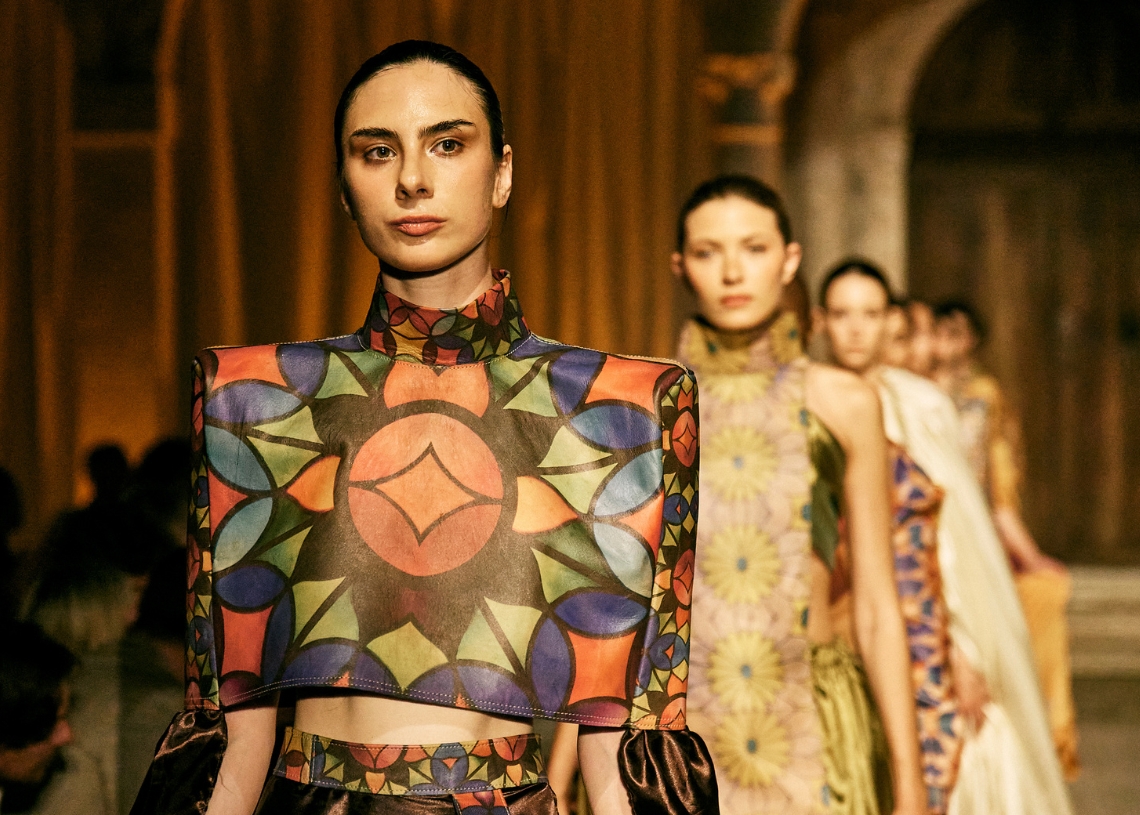
They are the only ones in Cuba to use the leather printing technique, taking a material that is an important part of Cuban artisan traditions and taking it to a new level. After seven years of work, Fairings It is, without a doubt, Cuban haute couture.
In front of his pieces, the design, good taste, sensitivity, and concept are impressive. One could imagine that behind it there is an industry with a robust infrastructure. But not.
Carenas resides in a small workshop with Singer machines from the 1920s, with less than five workers, but a lot of passion, dedication and a perspective very well drawn by the hands and minds of Raisa Cortina and Manuel Olivera, despite the fact that neither of them has basic professional training in design or any branch associated with fashion.
A dozen collections have already come out of that small workshop and its art since they launched the brand in 2018. With a name already earned in the emerging field of fashion in Cuba, they have reached catwalks in France, Geneva and Italy, and in 2024 they won the International Award for Best Collection at the Venice International Fashion Concert.
“The idea of Carenas arose from the need to find a product, a fashion, that spoke in a language closer to our times. We began selling at the craft fair of the Cuban Association of Artisans and Artists (Acaa), in Obispo, and there we found for the first time a material as rich as leather,” Manuel Olivares tells us.
“Carenas started with just the two of us making the pieces, we worked all night, we didn’t even have a workshop, we only had a sewing machine, it took us an entire morning to make a wallet” —remember Raisa—. “We began to learn a little, to nourish ourselves on the topic of fashion, also on what the techniques were to be able to work, and we perfected all of that. We have been everything in Carenas, from community managers to directors, we have covered absolutely all the plans, but we have already managed to have a work team that really complements each other well, and we have been transforming all this, professionalizing the brand.”
everything changed
Carenas’ first collections, presented in 2019, play with shapes and geometries. It was clear that there was a specific language with leather, and above all a search to attract attention and show that leather could be freed from that “traditional” dedication that was assumed in the Cuban market for this type of products.
The doors then began to open and with them the challenges. Thus came the technique and concepts that changed the entire aesthetics of the brand and have provided the correct path until today.
“In 2019, the 500 years of Havana were celebrated, and we were going to open an exhibition at Estudio 50 as part of the Art and Fashion event. We had to share a design space with a professor from Parsons The New School for Design in New York, who also has a bag brand. We had to do something representative from the work of each artist who was part of Havana,” says Raisa.
“When they made us the proposal we decided to create something unique. We wanted it to be a look at Havana, but from a conceptual point of view. Not so descriptive, not so basic,” explains Manuel.
Thus the idea of approaching Havana architecture was born. Looking for a way out of those usual postcards, they arrived at the Hotel Inglés and its Mudejar-style mosaics.
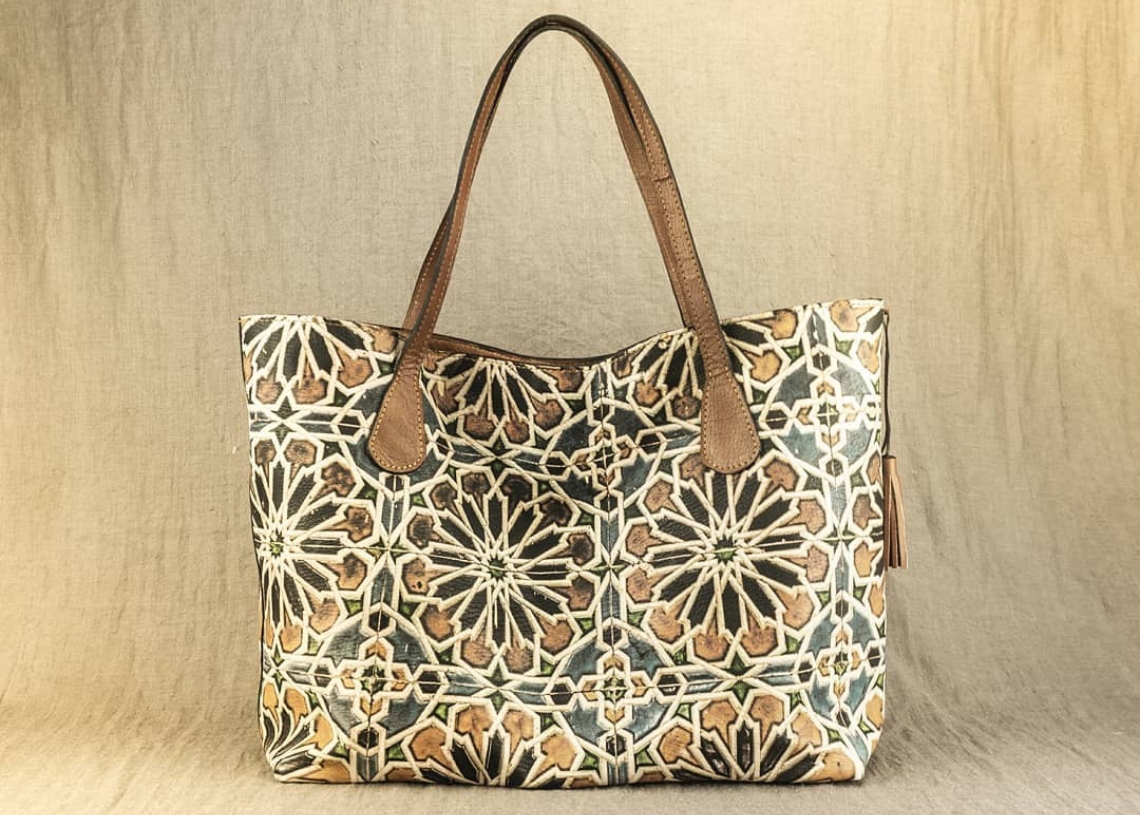
“Fashion, like all art manifestations, is trying to communicate your vision, but also from a concept. We also like that people have to decipher,” details Manuel.
Likewise, “we tested on a machine if we could print the leather and it worked,” says Raisa. They came to stamping, a technique that is used in many places around the world, but until that minute no one had dared or achieved it on the island.
For that collective exhibition called “Global Visual” they then presented five bags. The public’s acceptance prompted them to expand the proposal to a complete collection that was called “Grand England”, but by the time it was ready it was 2020, the world stopped.
“We brought out a collection of 12 bags, and the pandemic just started. We had to show it the weekend they closed everything, and in July we decided to bring it out on-line. A whole photo shoot was done, and from there they began to get to know each other,” says Raisa.
The seal
“Grand England” gave Carenas a good part of his artistic essences. The mosaics and stained glass windows in various parts of the city have been the inspiration to mix architecture and fashion to this day. But vision and clear lines to follow have completed the key that has given the brand its current positioning.
Manuel tells us about these aspects, which obviously have not been linear paths either.
“At first it was a more artisanal brand, and now we are more linked to fashion, but the mission has always been the same, to be able to offer, not only to our generation, but to the general public, a product of Cuban design, handmade, and to rescue the richness of a material as ancient as leather.”
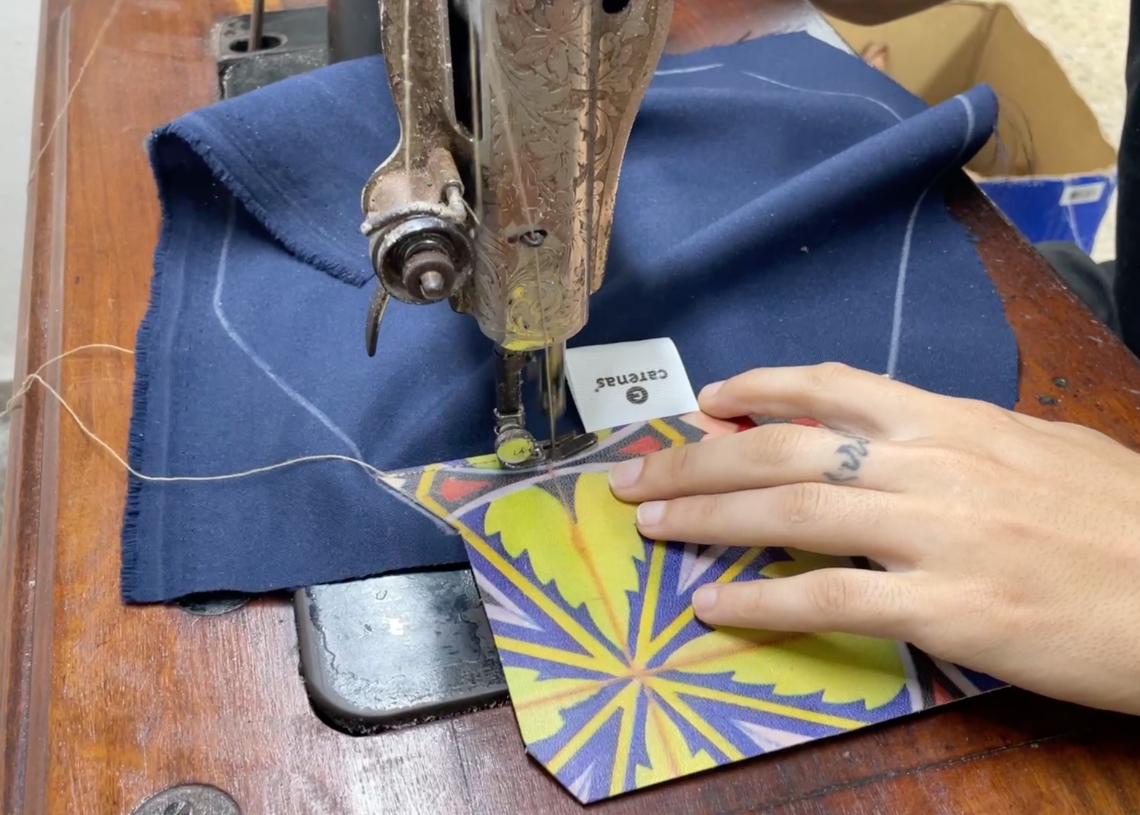
However, the brand does not renounce the artisanal concept when conceiving its productions. “Carenas is a brand that produces on a low scale, that is, it does not produce wholesale and that is one of the things to maintain as a seal of quality that cannot be lost,” explains Raisa.
“Each piece passes through our hands, it has hours of work and it tells a story and carries a little of our spirit,” Manuel reaffirms.
All the material used in Carenas is one hundred percent Cuban. The leather comes from other artisanal hands, those of the tanners, who in turn work with the surplus skin from meat processes intended for food. Symbiosis and sustainability are obviously other important values of the brand.
Its leaders also talk to us about “the look and vision of our times,” and that is where the structural designs of each piece come into play as a hook to connect with the fashion and tastes of today’s public.
“In a world that moves so fast, in which every day we consume and consume, we are committed to the values that leather has in terms of richness and durability,” says Manuel.
“It’s not just a bag, it’s everything that’s behind that bag: people who are working, who are making an effort, who are studying. It carries a burden behind it that costs more to discover and for people to begin to accept that there can be something of great quality, that is made here, that you don’t have to go look for it outside,” says Raisa.
Until today the brand only markets on-line, for orders. They maintain a catalog of more than 70 designs from all their collections and at the request of each client, each piece is made within a maximum period of 15 days and delivered personally.
island
In June of this year Carenas participated again in the International Fashion Concert in Venice, Italy. After the success and award of their presence at the event in 2024, they felt the need to be able to explore more diverse concepts and aesthetics.
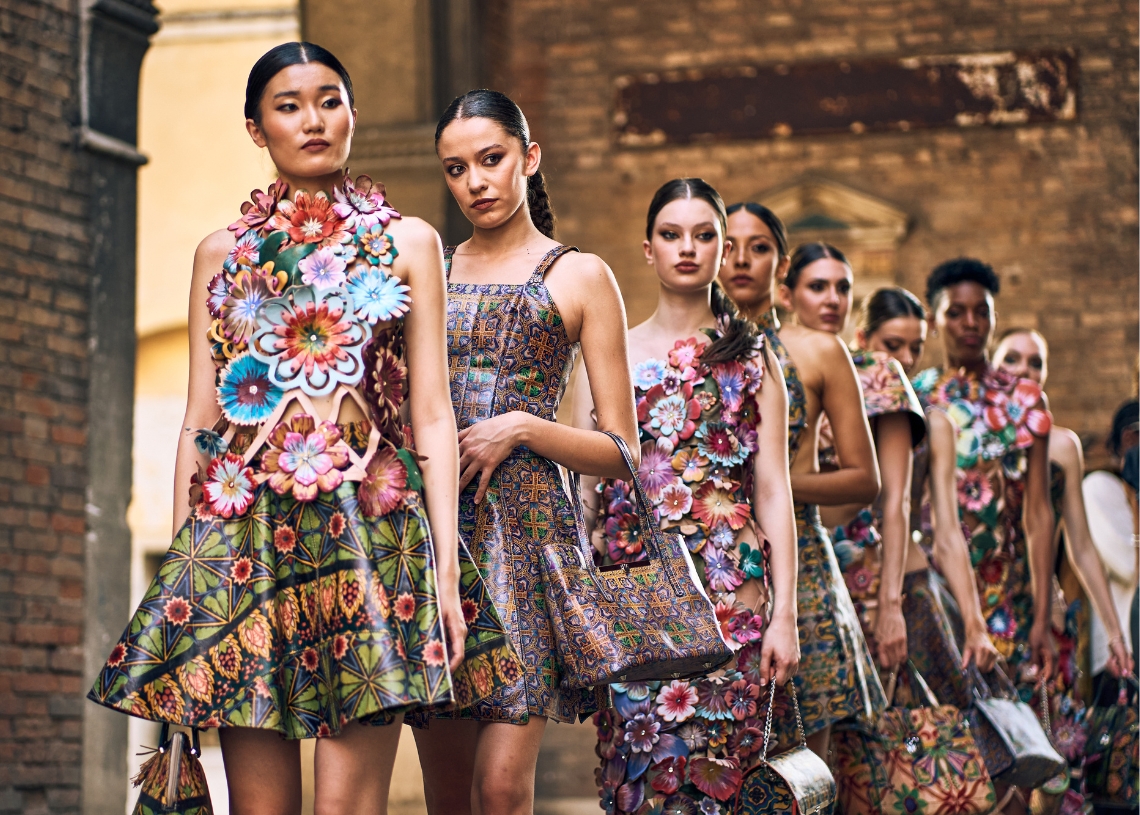
Likewise, three years of experience in foreign events has given them the tools to understand in other dimensions the concept of what it means to create and present a collection.
“When you are going to participate in an international catwalk you have to go a little further and not just wear an accessory. We have tried to create wardrobes every year with each collection, not focused on being utilitarian, —although they are because meet the requirements to be—but in taking a look at the maximum artistic expression of the collection.
“It is to capture on the catwalk all that study that we do about the history of art, architecture, why we are going to choose each mosaic, why each area. We want the people who attend the shows to leave feeling something. That it is not just that I saw a pretty bag or I saw a piece, but also that they see and feel the narrative that it tells,” says Manuel.
This is how “Island” was born, the most recent of his collections and which no longer only talks about Cuba, but about the geographical region we inhabit. Thus the floral was added as a new aesthetic and artisanal element.
Carenas proudly boasts the creation of three thousand flowers completely manually to build the true works of art that were paraded at the presentation of this collection in Venice.
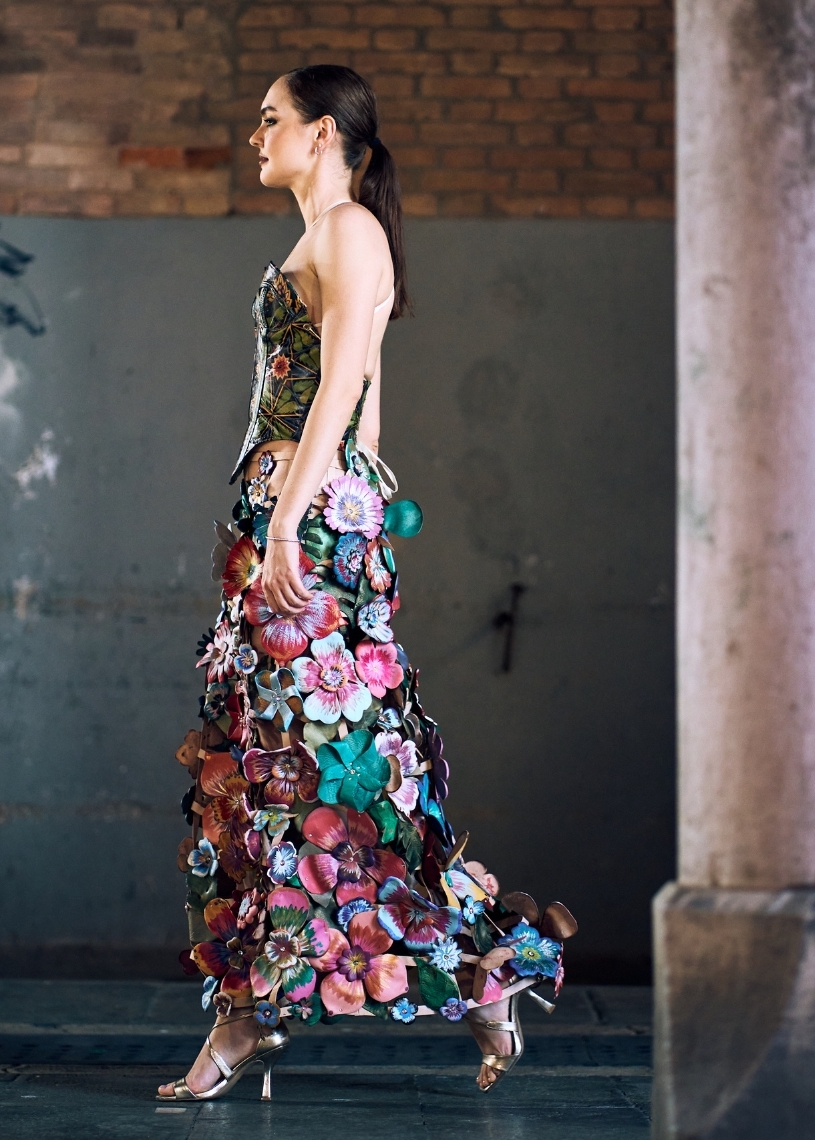
“We looked for four mosaics that had a very strong load on the colors of the tropics and very floral, very vegetative shapes. With the flowers we wanted to rescue that very manual tradition, but at the same time from a very artistic side. The pieces were conceived almost as sculptures because the meshes were made, then they were molded on top of the mannequins to be able to make the shape of the body with all the flowers and we chose flowers that were from the Caribbean.
“We had always talked in all the collections about this process of transculturation, about how the different cultures were nourished. We are from the old continent, the old continent of our colors and in this one it was like saying purely ‘we are the Caribbean, we have this richness and we are going to enhance it’. Highlighting what our own essence means,” Raisa clarifies.
Creators cannot choose one of their collections as a favorite. They feel each one of them as a new step that has been outlining or redirecting their path, and that is the only way to grow.
Changes in techniques, inspirations, languages, breadth in the types of pieces to be created, games with different materials without ceasing to give total prominence to leather, in short, what it means to evolve, and that is only possible when there is a clear vision and objectives.
“The key will always be to pursue your dreams above all else, in any context,” summarizes Manuel.
“An entrepreneur does not rest. You always have to have new ideas, you always have to reinvent yourself with everything, with your surroundings and with your own essence, with your own work. It is the most important thing. And never stop dreaming so that when you get there you need to go further. That you know and are identified with what you really want to be and teach the world. That is the essence of everything and from there all the ideas come, everything arises and takes off,” is Raisa’s advice.