Madrid/The peso collapses in the informal currency market at the same speed as the offensive against The Touchwhich this Wednesday regained momentum with a new accusation, now of “financial terrorism.” Humberto López’s program, Razones de Cuba, broadcast a “investigative” report in the Noticiero Estelar in which he points out that the platform is part of a “currency trafficking and tax evasion scheme in Cuba” within a subversive project organized and financed by the United States to promote a social outbreak.
The minutes that the report occupies are a new suit for an old story: that the US Government pays for Cubans to act against the Revolution in the name of a “false democracy.” The video mentions the great classics – the National Endowment for Democracy (NED), the United States Agency for International Development (USAID) and the State Department – as promoters, once again, of “subversion”, although the data provided on the alleged subsidies seems ridiculous to fulfill the mission they attribute to the platform.
The novelty in this case is in the fact that the promoters of the projects are linked to two economic crimes. The Touchwho are presented as people – mercenaries – who have become rich without caring that the rest of the population became poorer, since – the report argues – the way to “overthrow communism” involves financing the opposition, but also sinking the economy by artificially raising the price of the dollar and collapsing the purchasing power of citizens.
The report points directly to José Jasán Nieves Cárdenas, director of The Touch –and who they accuse of having bought a home in the United States valued at more than 700,000 dollars– of attracting remitters and owners of MSMEs with accounts abroad to deliver physical money to projects contrary to the Government, through two companies, Media Plus Experience and Colectivos Más Voces. “Documentary, expert and testimonial evidence continues to accumulate against the broad spectrum of the subversive scheme of The Touch. The acts committed could classify the crimes of currency trafficking and tax evasion,” the video highlights.
The report directly points to José Jasán Nieves Cárdenas, director of El Toque – and who is accused of having bought a home in the US valued at more than $700,000 – of attracting remitters and owners of MSMEs.
Rodolfo González Guevara, identified as a “remittancer for The Touch“, which tells Nieves to give him instructions to deliver money to a list of people. He, in turn, had another intermediary who speaks without his face being seen. “My mission in this operation was to receive and transfer the cash based on what they told me. Everything was done through WhatsApp. In most cases, once the location was reached, a call was made. He confirmed that it was a person with whom they had discussed the matter and the delivery was authorized,” he says.
González Guevara intervenes again to emphasize that the mystery with which everything was done seemed “strange” to him, as well as the variety of people and quantities. However, it seems to be very clear now that “these operations carried out by José Jasán had their backs turned to the national banking system, giving rise to currency trafficking on their part.” According to their confession, when they realized that there was “a legal process,” communications were interrupted and the conversations were deleted.
Beyond that, there is nothing in the report, which alternates statements by Nieves Cárdenas himself with those of other economists who collaborate with the medium, such as Eloy Viera and Pavel Vidal speaking about the volatility of currencies in the informal market with those of a former collaborator – Thalia Rosa Alfonso Gómez – who claims to have been called directly by two officials from the US Embassy who explained to her how she could collect through different methods.
Between statements, Razones de Cuba sneaks statements such as that El Toque uses a “false algorithm” to alter currency values or that, when prices change, “they say that the system may have some problem.”
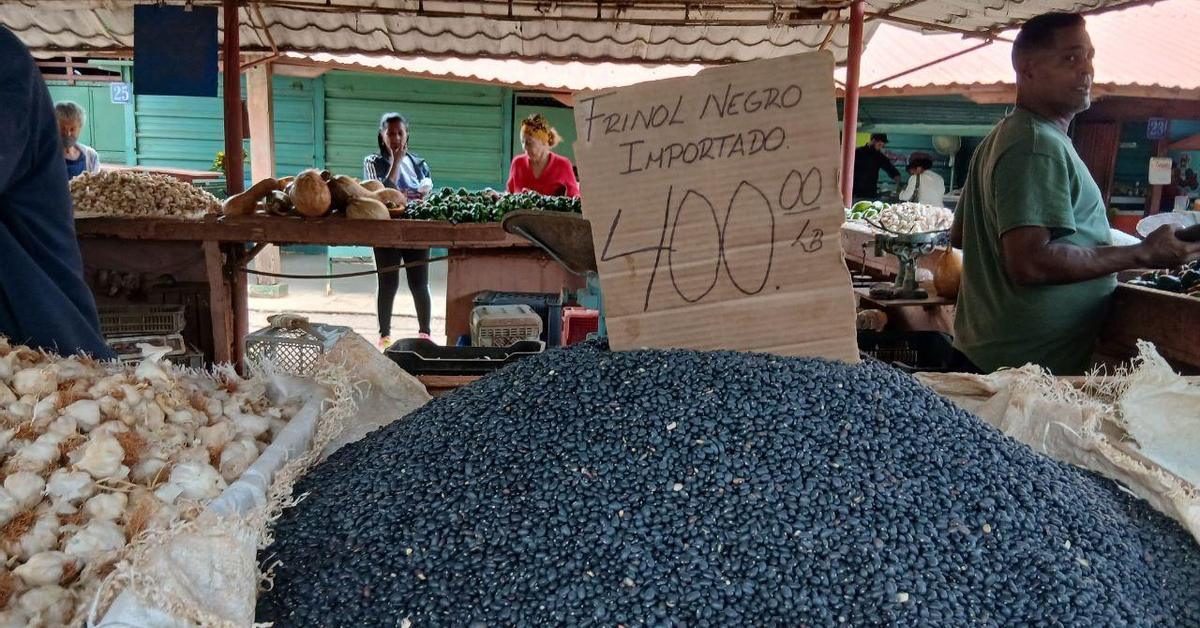
In May of last year, when the dollar exchange rate reached unprecedented highs (400 pesos) until this October (when it has touched 500), the ruling party launched one of its first major campaigns against the medium. According to economists, a combination of factors including the new package of measures against private businesses, the shortage of foreign currency on the street or the fear that the Government would intervene by printing more national currency, caused the greenback to retreat to around 330 pesos, a price that remained very stable for many months and that Razones de Cuba attributes to “the loss of credibility of The Touch”.
Although the platform did not change its working method and continued as if nothing had changed, the offensive was stopped. The Government no longer blamed the platform for manipulating the rate while it was stable, but with the rise, the rhetoric has returned.
The Government no longer blamed the platform for manipulating the rate while it was stable, but with the rise, the rhetoric has returned
“Profits from currency exchange rate manipulation The Touch and their subversive activity has served as a way of life for those involved, while the people suffer the effects of their manipulation,” states the report, which closes with the statements of several normal citizens who regret the high prices, how inflation does not stop rising and salaries do not pay for anything, how stores cannot avoid charging more for imported products for which they pay more and even point directly in the indicated direction. “The Touch “It is a job of the enemies to increase enormous inflation,” says one interviewee.
The opinion has permeated part of the population, who send heated comments online. “I think it’s easy to put them on the list of terrorists and also prohibit everyone from entering Cuban territory. Because, be careful, this is state terrorism,” says one. “Below The Touch. Its director should be prosecuted for mercenarism,” says another.
Meanwhile, the Government has announced that until the end of the year it will submit to “study and analysis” in the nuclei of the Communist Party and other mass organizations his announced “program to eliminate distortions and re-boost the economy.” The year will probably end without the regime setting the announced (for 2025) floating exchange rate to replace the two official quotes (24 pesos for companies and 120 for individuals) that do not reflect the real value of the national currency.