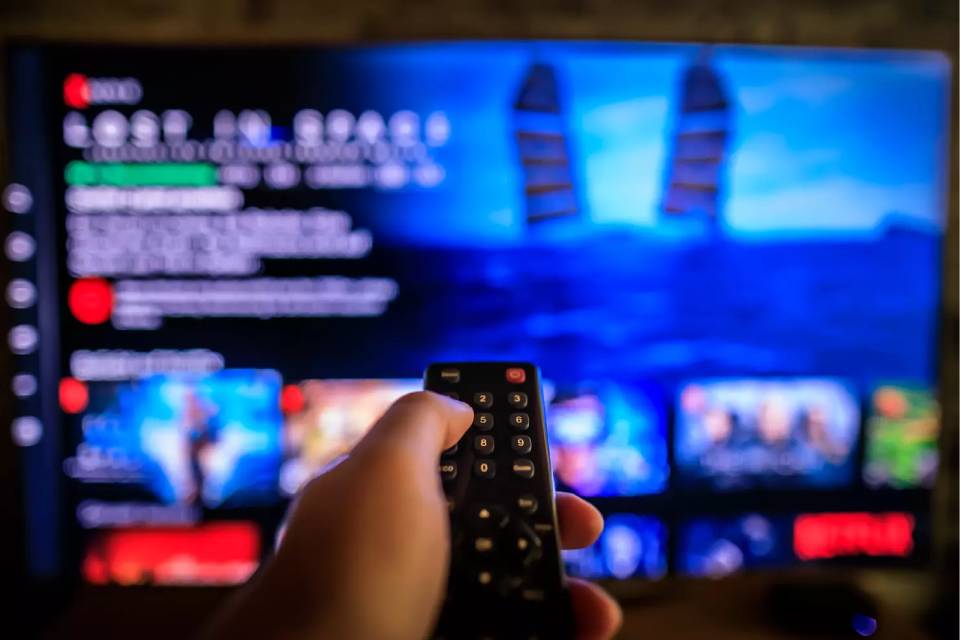
Digital television and streaming platforms are the main sources of entertainment for Venezuelans, while in-person cultural activities – such as cinema, theater or concerts – are limited to minorities.
The National Cultural Consumption Survey 2025prepared by the Information and Communication Research Institute (Idici) of the Andrés Bello Catholic University (UCAB), reveals the predominance of screens and the progressive loss of spaces for live culture.
The study, carried out in July on 800 adults in 23 states of the country, with technical support from the firm Delphos, analyzed the cultural habits and practices of Venezuelans. Its objective was to offer a panorama of how technology, time and economics shape forms of cultural consumption today.
TV and streaming dominate leisure
According to the survey, 71.8% of Venezuelans watch television and 56.8% use streaming platforms almost every day. Netflix (59%) and MagisTV (57.9%) – the latter a pirate platform – lead digital consumption, well above HBO Max (18.9%) and Disney+ (16.5%).
Smart televisions (86.3%) and cell phones (41.7%) are the most used devices to access online content. On subscription television, which covers 82% of homes – 56.6% by cable and 25.4% by satellite – the favorite genres are action series (42.9%), news programs (40.4%) and comedies (37.3%).
Professor Jesús Lovera, a member of the research team, considers that “Venezuelans look for an escape valve from the economic crisis in culture; “Whoever does not consume is not for lack of money, but for lack of time.”
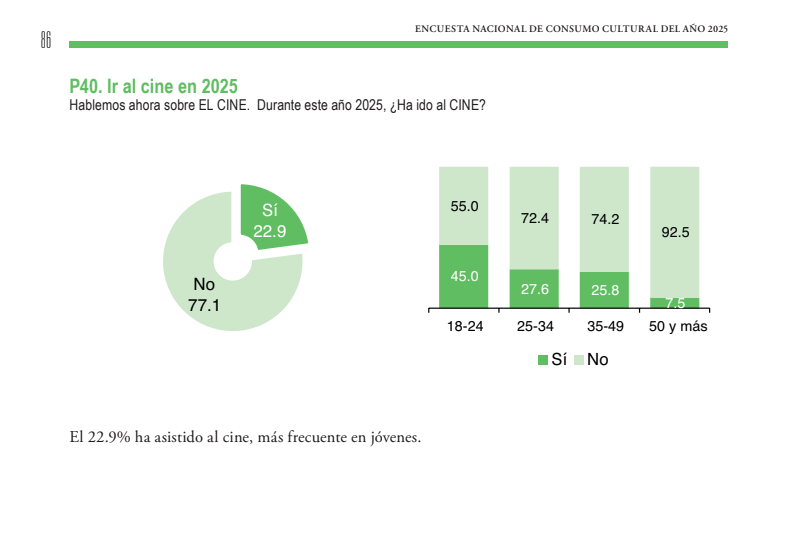
But in-person cultural outings are drastically reduced: Only 22.9% went to the movies this year, 16.5% attended concerts, 12% visited museums and only 7.9% went to the theater. The main reasons are the cost of tickets (28% to 32%), lack of time and the preference to stay at home.
The radio resists between the screens
Despite the rise of digital content, radio retains its place. More than half of those surveyed (55%) listen to it, and 54.6% do so daily, especially on FM (90.9%). Musical programs (81.4%) and news programs (60.3%) are the most searched.
Podcast listening remains limited: Only 36.8% of the population will have heard one in 2025, mainly young people between 18 and 24 years old (55%) and people from the middle and high socioeconomic strata. The most popular content is entertainment (62.1%) and interviews (31.1%).

WhatsApp reigns, X falls
Social networks are an essential part of the Venezuelan cultural ecosystem. Nine out of ten people use WhatsApp dailyfollowed by TikTok (52.4%), Facebook (44.4%), YouTube (43%) and Instagram (36.3%).
The X network, formerly Twitter, barely reaches 4.8% of daily usea very low figure after the blockade ordered by the Nicolás Maduro administration in 2024.
The study also shows that users turn to networks mainly to communicate (62.8%) and share content (39.5%). Almost a third use them to follow publications from public organizations (28.8%).
Gustavo Hernández, director of Idici, explained that “this is a phenomenon of fragmented consumption that extends to the digital world, where everyone chooses what they want to see and when, like a mosaic.”
News and reading: habits in tension
Despite the crisis of the media ecosystem, seven out of ten Venezuelans read news frequently. The majority (89.2%) do so from social networks and almost all (95.3%) from their cell phones. Only 4.8% consult printed newspapers.
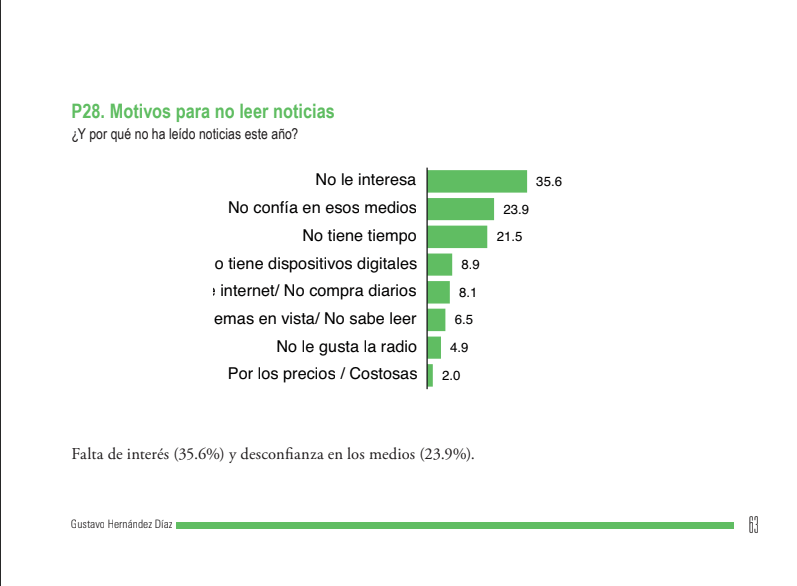
Among those who do not read news, the most common reasons are lack of interest (35.6%), distrust of the media (23.9%) and lack of time (21.5%).
Book reading, on the other hand, remains at low levels. Only 45.9% read at least one in 2025; Four out of ten non-readers say that “it bores them” and 27.1% say that they never acquired the habit. The most searched topics are religious (35%), novels and stories (27%) and historical texts (24%).
Music, a common passion
Music continues to be the most universal cultural product: 90% of Venezuelans consume it, and more than half do so daily. Latin rhythms (68.5%) lead the preferences, followed by cumbia or vallenato (44.1%), llanera music (36.6%) and reggaeton (34.3%).
The mobile phone is the main device for listening to music (70%), followed by YouTube (59.6%) and the radio (44.2%).
For Gustavo Hernández, director of Idici, the survey “offers a portrait of the 21st century for cultural industries, creators and public policies.”
The results will be officially presented at the 10th Western Caracas Book Fair (Floc UCAB) at the end of November, and in April 2026 a book with interdisciplinary analyzes on the country’s cultural transformations will be published.
“The objective is to provide useful data for artists, communicators and institutions that seek to understand how the cultural identity of Venezuelans is constructed today,” added Hernández.

*Read also: Venezuelans deported to El Salvador were tortured, international NGOs claim
*Journalism in Venezuela is carried out in a hostile environment for the press with dozens of legal instruments in place to punish the word, especially the laws “against hate”, “against fascism” and “against the blockade.” This content was written taking into consideration the threats and limits that, consequently, have been imposed on the dissemination of information from within the country.
Post Views: 631