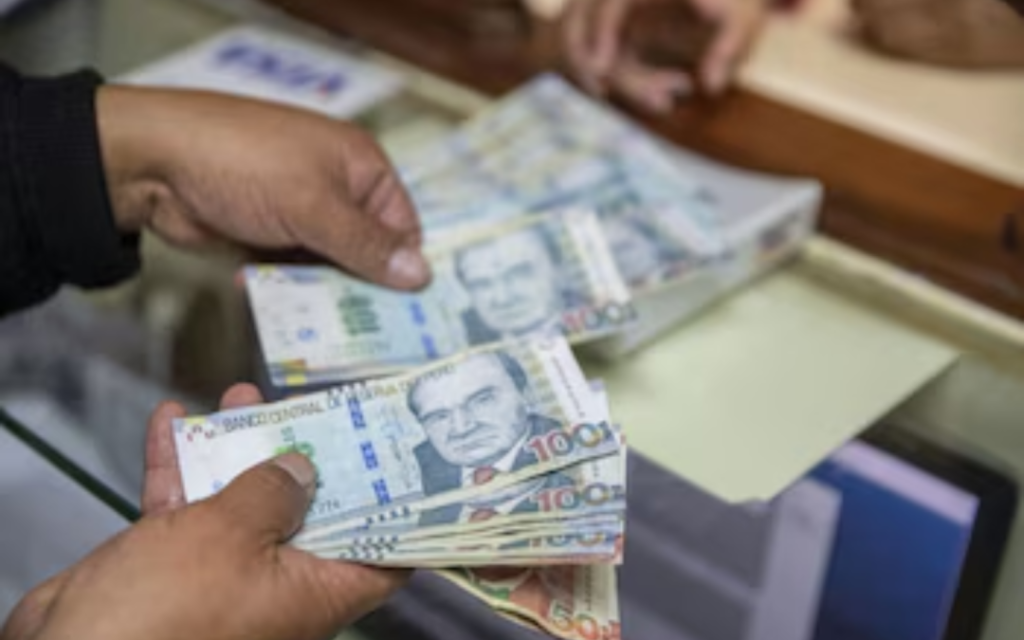
Santo Domingo.-The allocation of 4% of the gross domestic product (GDP) to the Ministry of Education substantially improved the income of public teachers, but did not change the harsh reality of thousands of teachers in the private sector.
Under the principle of free enterprise, schools set their salary scales without state regulation, generating structural inequality that affects teachers’ pockets.
The testimonies collected in Santo Domingo Este, Los Alcarrizos, San Cristóbal and the National District reveal the discrepancy in monthly payments between both sectors despite performing the same work, with notable differences in benefits and facilities for teaching classes. According to data from the Ministry of Education, a public teacher earns an average of RD$65,578 after an increase of 10%.
Meanwhile, private teachers receive between RD$18,000 and RD$35,000 per month, without incentives for seniority or contractual stability.
In Los Alcarrizos, a mother with two children enrolled in a private community school pays RD$1,800 a month for Primary and RD$2,500 for Secondary.
A semi-private center with an evangelical orientation charges RD$8,000 annually, not including additional services.
In San Cristóbal, parents pay between RD$4,000 and RD$5,000 per month in traditional schools, while in Santo Domingo Este, a mother reported paying RD$7,000 per month in Secondary School.
In the National District, a mother with two children at the initial level pays RD$16,000 a month; In a high-level bilingual center, the annual tuition reaches RD$240,000.
Even so, the teachers interviewed confirm that their salary does not exceed RD$30,000.
In popular neighborhoods, rates vary depending on the economic capacity of the families and the type of institution.
The disparity is also geographical: “A school in Villa Juana is not the same as in Piantini,” says Antonio Ciriaco Cruz, economist and dean of the Faculty of Economics at the UASD.
Teacher flight
The absence of regulation causes a constant flight of teachers from the private to the public sector, in search of stability and better income. A note from this newspaper on May 4, 2022 reported this “leak of teachers”, generating crises in private centers.
The publication explains that the teachers who won the Teaching Competition Contest of the Ministry of Education are appointed by the State with better salary conditions and stability.
Meregildo de la Rosa, leader of the ADP, states: “Private teachers do not have a teaching career; they are annual contracts, without incentives or stability. They should organize to negotiate fairer conditions.”
the same job
A private teacher with more than ten years of experience commented: “We do the same work as those in the public sector, but we are paid much less; we must provide private tutoring to survive.”
Free enterprise
Juan Valdez, president of the Citizen Collective for Educational Quality, points out that the root of the problem is structural: “In the private sector there is no fixed rate or regulation. Schools operate under the logic of supply and demand”, which allows entrepreneurial freedom, but deepens inequalities between teachers from different social strata.
Proposals
Ciriaco Cruz proposes that, in a tax reform, tax exemptions be limited to schools with higher incomes, preventing tax benefits from favoring the richest. He explains that the Educational Expenditure Law allows formal families to deduct educational payments from income tax, but this benefit mainly reaches middle and upper class taxpayers, leaving out popular sectors and community colleges.
Exemptions should be conditioned by income level and type of institution, so as not to widen the gap between elite and low-cost schools.
ADP leaders suggest creating a union figure for private teachers, establishing base salary agreements and minimum working conditions supervised by the Ministry of Labor and the Ministry of Education.
Free enterprise will continue to be a valid principle in private education, but, since there are no minimum limits, inequality persists.
Regarding public policies, the Senate approved in first reading the modification of Law 86-00, which would allow the Ministry of Education to regulate fees for re-enrollment in private schools, but does not contemplate salary regulation, which opens the debate on the role of the State in the face of educational inequality.
Record
119 thousand teachers.
It has the public educational system, of which 76,000 are active in the classrooms teaching classes.