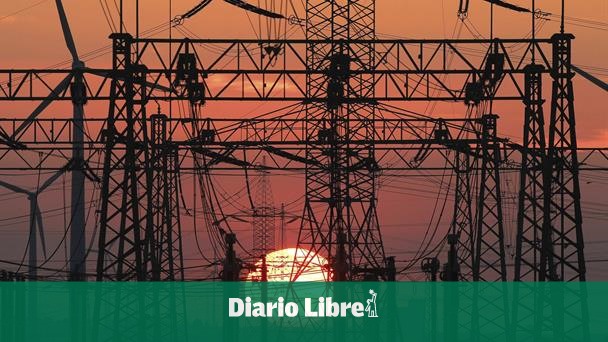
Determine the origin of the failure that shut down the entire Dominican Republic on Tuesday will take a indeterminate time which will depend on the complexity that the technicians encounter.
He Failure Committee of the National Interconnected Electrical System (SENI) is in charge of the investigation and held a first meeting yesterday with the purpose of following up on the incident that occurred, as reported by the Superintendence of Electricity (SIE).
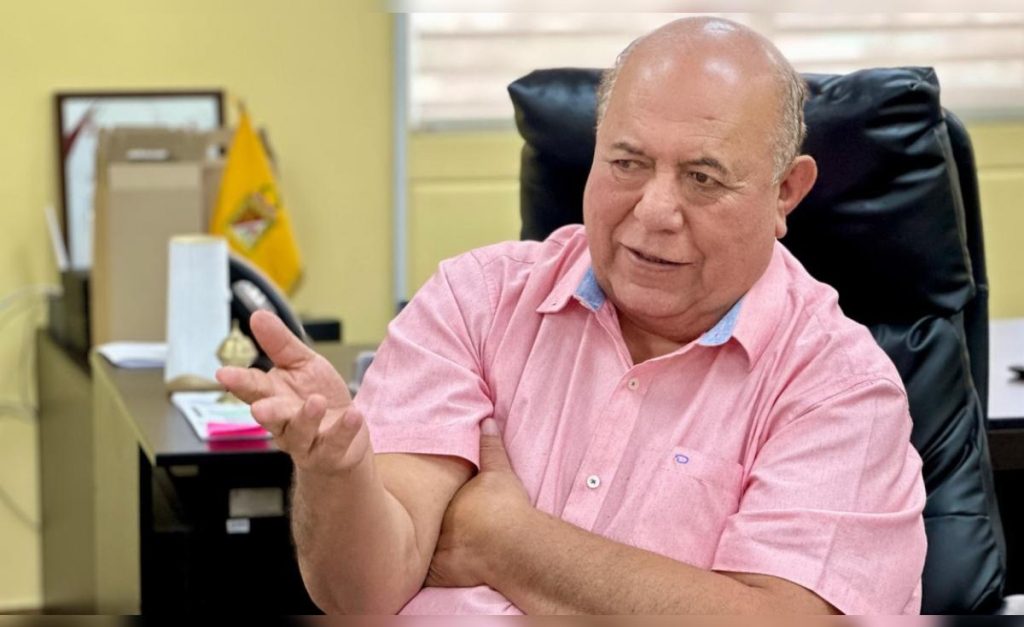
The head of this last institution, Andres Astacioindicated that cannot be specified the time the process will take because it will depend on the reality that the experts encounter.
The official story indicates that the cause was a breakdown in bus 100 of 138 kilowatts (kW) of the San Pedro I substation “while they were taking place maintenance work“, but it is still not known what caused it.
“The first thing is that is rigorous with the maintenance. These situations can occur when the system frequency is compromised. “I prefer to wait for the investigation to be completed because only a complete and rigorous review will allow us to reach conclusions and find a way to prevent it from happening again,” he said. Joel SantosMinister of Energy and Mines.
The match Power of the People (FP) maintains that it was a human error “by manually operating blades at the 138/69 kW San Pedro de Macorís (SPMI) substation, which resulted in a failure not adequately contained by the infrastructure.
He also stated that the cascade output of 591.7 MW The system should not have collapsed, given that on other occasions the SENI has suffered losses exceeding 1,400 MW.
“However, the lack of coordination between generators, the absence of primary and secondary frequency regulation, and the operational inexperienceprevented the recovery of the system,” they accused.
The opposition parties accuse of negligence to the authorities and the president of FP, Leonel Fernandezalso questioned why the Santo Domingo Metro plant did not come into operation to generate your own energy in the face of events like this.
The Office for Transport Reorganization (Opret) has not offered any explanations in this regard.
The investigation
The Presidency issued a statement in which it details that in the second meeting of the Failure Committee The technical information of the different elements of the electrical system will be collected and analyzed in order to determine whether they acted in accordance with the parameters established before the occurrence of the event.
“In this meeting we have seen the sequence of events occurred. (…) We are requiring the information on all elements so that they can be analyzed by the technicians of this committee,” said Astacio.
Once completed the verification process and evaluation of the information, they will prepare the technical reports corresponding, whose results will be communicated to the citizens as they become conclusive.
“We will wait for the results of the technical researchwhich will be rigorous and objective. The important thing is to learn from this event and reinforce measures to prevent something similar from happening again,” he stressed. Joel Santos.
The recovery
The system recovered its normal capacity around 10:00 in the morning of the Wednesday, November 12when actual generation reached 4,644 MW, its highest level since the event. The figure exceeded the daily average generation, estimated at 3,200 MW,
Santos highlighted the importance of hydroelectric plants during the recovery processnoting that they were essential to reactivate the system.
“Hydroelectric plants played a fundamental role, since they provided the initial energy needed to create tension in the transmission lines and allow the gradual entry of the rest of the generating units“said Santos.
The minister explained that in these cases, the reconnection process must be done in a manner technical and orderly to guarantee the system stability.