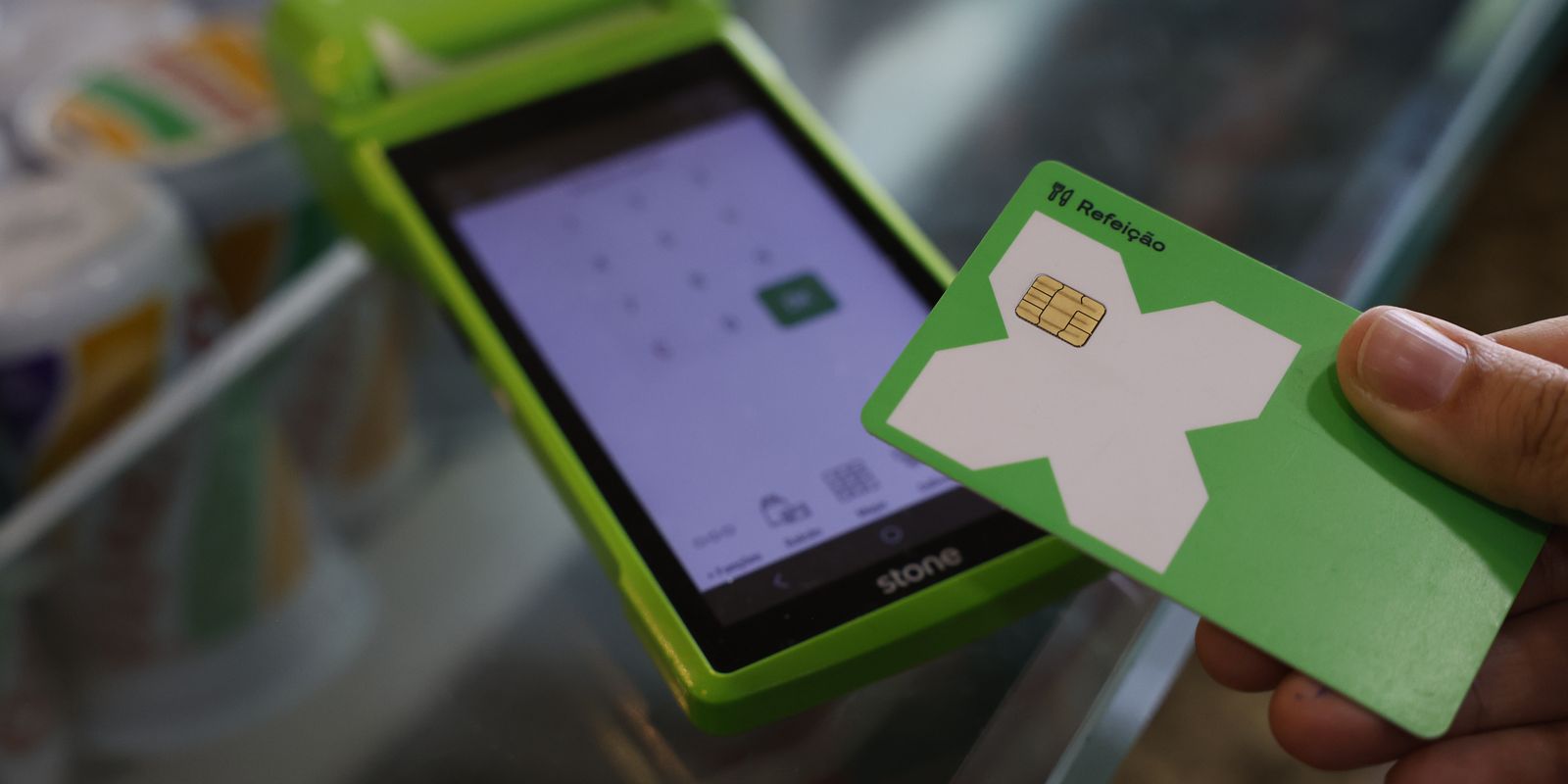
The main promise to liberalize the meal voucher and food voucher market, the interoperability of the brands has one year to come into effect, the Ministry of Finance clarified this Wednesday (12). The networks have this deadline to adapt the systems so that the card is accepted at any establishment, regardless of the brand.
The novelty is in Decree 12,712, edited on Tuesday (11), which reformulates the Workers’ Food Program (PAT). The measure aims to increase efficiency, promote competition and reduce costs in the sector.
“This increases convenience for workers and expands sales opportunities for commercial establishments”, informed the Secretariat of Economic Reforms of the Ministry of Finance, in a note.
The ministry encourages R$7.9 billion per year savings for supermarkets, bars and restaurants, through cost reduction and increased competition. The government hopes that these savings will be passed on to consumers.
“This value [R$ 7,9 bilhões] This is mainly due to the reduction in the high profit margins practiced by companies issuing food vouchers and meal vouchers, which will be passed on to establishments such as bars, restaurants and supermarkets. With the reduction in these costs, a drop in the final prices of meals and food is expected, directly benefiting workers. The estimate is an average gain of approximately R$225 per worker per year”, explained the Secretariat.
Estimated annual savings with the measures
| Measure | Estimated savings |
| 3.6% cap on tariffs |
R$2.9 billion |
|
Reduction in the transfer period (15 days) |
R$0.7 billion |
| Opening of arrangements |
R$ 1.6 billion |
|
Interoperability between brands in food aid |
R$2.7 billion |
| Total | R$7.9 billion |
Source: Ministry of Finance
In relation to the tariff ceiling, the decree establishes a maximum value of 3.6% for tariffs charged to commercial establishments and a deadline of 15 days for the transfer of the amounts to the accreditors (machine companies).
According to the Ministry of Finance, the measures reduce intermediation costs and create conditions so that restaurants and supermarkets can offer lower prices without compromising their margins.
End abusive practices
The text also prohibits discounts and discounts on contracted values, in addition to preventing transfer deadlines that mischaracterize the prepaid nature of the instruments and the payment of funds not linked to healthy eating.
According to the Treasury, the government seeks to avoid market distortions and ensure that the benefits of PAT and food assistance are effectively directed to the worker.
Opening arrangements
Regarding the opening of arrangements, the decree determines that meal and food voucher payment networks with more than 500,000 workers adopt the open model. In the open system, the brand (institutor) creates the rules, but the issuance of cards and the accreditation of establishments can be carried out by any institution that meets the system’s requirements.
This measure, according to the Treasury, should reduce entry barriers, increase competition and expand the acceptance network. The model follows the standard introduced in 2010 by the Administrative Council for Economic Defense (Cade) in the credit and debit card sector.