Havana/“There is more funeral activity these days.” The phrase, from a worker at the Colón cemetery, in Havana, once again contradicts the Government’s reassuring messages about the epidemic. arbovirus that plagues the country. A simple walk through several of the island’s necropolises confirms the situation.
At ten in the morning this Monday, the chapel located inside the main cemetery of the Island, in El Vedado, was full of people, and the parking lot of the place was full of cars. Already in the cemetery, numerous burials were also observed. The same was observed in Regla. All this movement is consistent with what can be seen in the funeral homes in the capitalwhich have also increased their activity these days.
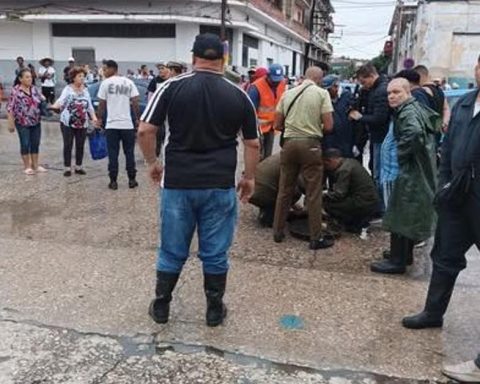
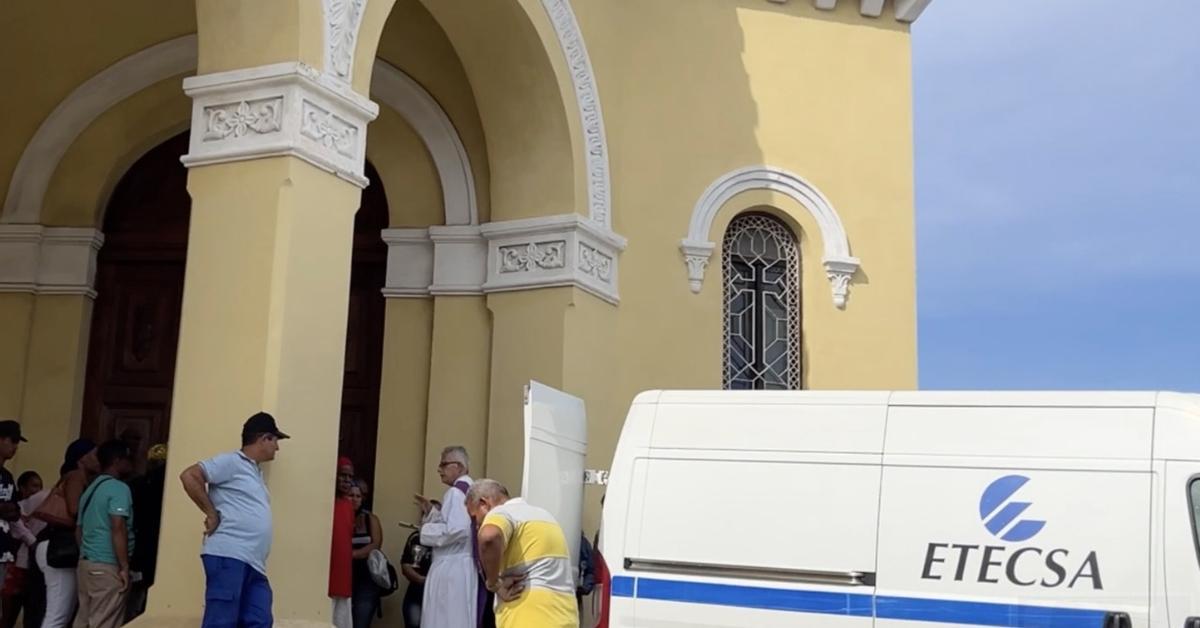
The most striking thing, however, is the unusual transport that is being used to transport the coffins: vans from the Telecommunications Company (Etecsa). In Colón, one of them was waiting at the doors of the chapel for the service to end. In Regla, a telephone monopoly car slowly led a funeral procession. The image of the mourners was shocking, crying behind the state vehicle.
/ 14ymedio
One of them, however, congratulated himself: “Thank goodness at least these Etecsa carts are there, because I don’t know what happened to the hearses.” The man says that five years ago, when his mother died, having suitable cars “was already complicated.” “I don’t know if they are sending these cars because a lot of people are dying and the funeral cars can’t cope or because Comunales simply no longer has those cars,” ventures this Havana resident, who wonders if the “diversion” of the use of the vans of Etecsa will not be affecting the telecommunications service.
Although they did not mention the cause of death of the deceased about to be buried, all the conversations in both Havana cemeteries revolved around “that virus” from which “everyone is sick.”
This is the second consecutive week in which the number of infections of what the Government now calls “non-specific febrile syndrome” has decreased, as indicated by the Ministry of Public Health in a government meeting this Tuesday, but the accumulated number is beginning to scare.
There are eight provinces in which the amount is beginning to decrease – Havana, Matanzas, Villa Clara, Cienfuegos, Ciego de Ávila, Granma, Santiago de Cuba and Guantánamo –, from which it can be inferred that in the rest it is at least stable, if not increased. The territory where the highest rate remains is Sancti Spíritus, according to a text published this Wednesday in the newspaper Escambray. The data on dengue, the most dangerous of the arboviruses circulating on the Island this year, however, were very non-specific.

/ 14ymedio
The authorities have been reluctant to give an absolute figure, but figures from the Pan American Health Organization (PAHO) show that a total of 9,602 people have already been infected. compared to the 6,519 that totaled on October 23. This means that the incidence amounts to 87.79 cases per 100,000 inhabitants, when three weeks ago it was 59.6 per 100,000. The numbers represent a small part of reality, since the population is reluctant to go to health centers.
Chikungunya also continues to rise. As of this Tuesday, there was a cumulative total of 21,681, compared to just over 20,000 last week. Regarding oropouche, experts stated that there have been no confirmed or suspected cases since last September 26.