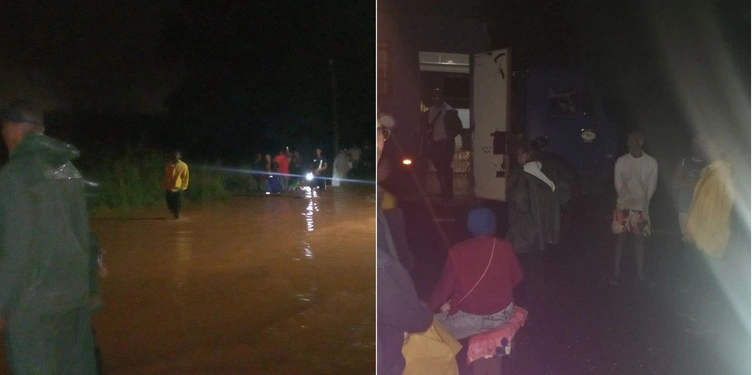
The rains are once again hitting an area devastated by Hurricane Melissa, with communities that remain without electricity or drinking water and severe damage to homes and crops.
MADRID, Spain.- The persistent rains in the province of Holguín caused a new flood of the Sagua and Cabañas rivers in the early hours of this Wednesday, which forced evacuation operations to be activated in the municipalities of Sagua de Tánamo and Moa, just two weeks after the passage of the Hurricane Melissa through eastern Cuba.
According to the official Newspaper Now, In Sagua de Tánamo the Municipal Defense Council “began a rapid evacuation and house to house notified the residents of the low areas due to the rapid rise of the Sagua River caused by prolonged rains in the territory.”
The media added that “the entire population is instructed to proceed with immediate evacuation” and asked for collaboration from those who could spread the notice.
Shortly after, the same media published that the Municipal Defense Council was also activated in Moa due to a new flood of the Cabañas River, where the evacuation of the ECRIN neighborhood was ordered.
“The vice president of the CDM, Alexei Martínez Mora, together with members of the Ministry of the Interior, as well as members of the Defense Zone 32-14-03, are currently transferring the residents to the protection center located at the Ñico López Pre-University School,” indicated the official note.
In Moa 116 millimeters of rain were recorded until midnight on Tuesday, which caused the opening of the diverter gates and an increase of more than three meters in the level of the Cabañas River. In Sagua de Tánamo, around 2,500 people self-evacuated preventive after the warning of river flooding.
Meanwhile, in the neighboring province of Granma, several dams—including Corojo, Paso Malo and Yao—opened their discharges as a safety measure. In this province, the families of the town Yara’s Screamin the Río Cauto municipality, face a situation of extreme precariousness after the passage of Melissa. Residents have been without electricity or drinking water supply for more than 14 days.
The terrain in the eastern region remains saturated by the rains associated with the hurricane, which increases the risks of new overflows and soil instability.
The meteorological phenomenon, which hit eastern Cuba on October 29, left extensive damage to homes, crops, electrical networks and water supply systems.
The United Nations System in Cuba reported this week that More than 90,000 homes were partially or completely damagedand that some 100,000 hectares of crops were affected by the hurricane.
According to preliminary official reports, damage is recorded in some 600 state medical facilities and more than 2,000 educational centers, in addition to damage to bridges, roads, railways, dams, telephone antennas and, especially seriously, to the National Electric System (SEN).
To address the emergency, the United Nations System presented an initial Action Plan for 74.2 million dollars, intended to cover the basic needs of around one million severely affected people, within an estimated total of 3.5 million victims.
Cuba faces this crisis after more than five years of economic deterioration, marked by shortages of food, medicine and fuel, sustained inflation and prolonged daily blackouts, factors that limit the country’s capacity and speed of recovery.