The coordinator of the Citizen Security Program of the Ibero-American University (IBERO CDMX), Ernesto López Portillo, explained that international scientific evidence from the last 40 years demonstrates that the best security results are achieved by local governments, through institutions close to citizens.
“Municipal authorities are the only ones with the capacity to build security, coexistence and justice because they are in direct contact with the people, street by street,” he stated.
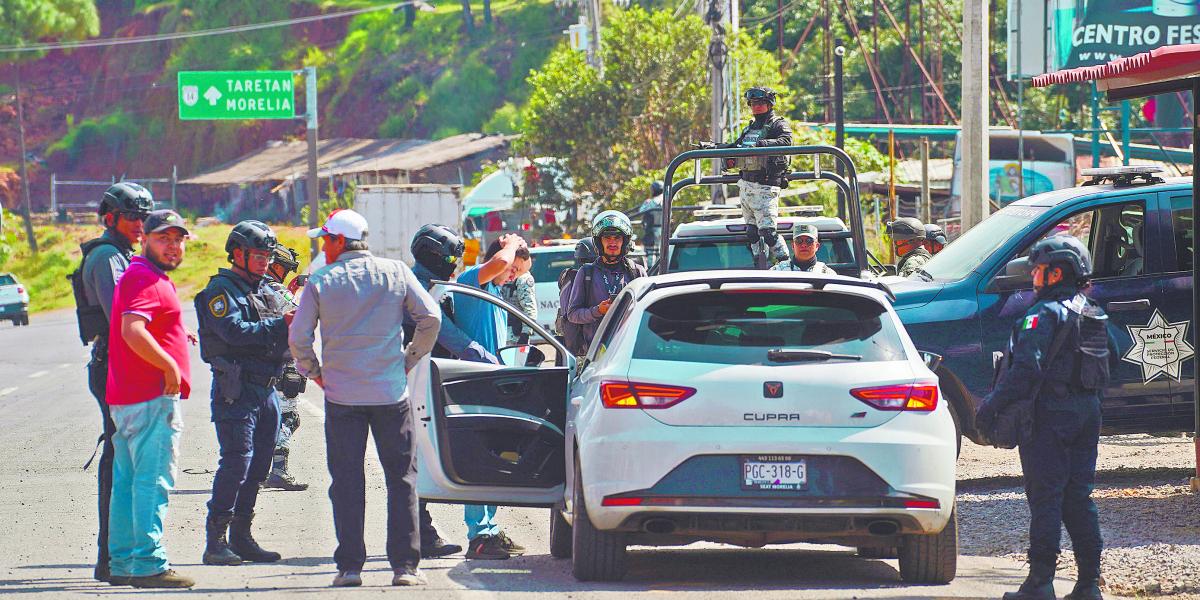
The specialist insisted that military or federal deployment will never achieve an effective presence in the territories and that, on the contrary, investment must focus on strengthening municipal police, civic justice and family, school and work violence prevention services.
“Each federal intervention ends up evading the creation of long-term State policies that strengthen municipalities,” he said.
Yesterday the Citizen Security Program, headed by López Portillo, presented a document with 15 recommendations to build “legitimate, sustainable and effective” security, coexistence and justice policies, in response to the question recently asked by President Claudia Sheinbaum of “what do you propose?”, after the murder of the mayor of Uruapan, Carlos Manzo Rodríguez.
The implementation of public citizen supervision entities with legal powers and their own budget, similar to those that operate in countries such as the United States, Canada and the United Kingdom, was proposed. These organizations, López Portillo explained, would have mixed governing bodies—with officials and citizens—and would be independent of the institutions they supervise, particularly the police.
Also, he mentioned the strengthening of citizen observatories made up of universities, churches and social organizations, inspired by experiences in Colombian cities such as Cali, Bogotá and Medellín, where academic and community participation has contributed to reducing homicides and improving accountability.
Crime penetration
When asked about the risks of transferring more responsibilities to municipalities where organized crime maintains political or territorial control, López Portillo warned that “there is also criminal contamination of unknown magnitude in state and federal governments.”
For this reason, the academic raised the need for profound reforms to guarantee the political, technical and budgetary autonomy of the Attorney General’s Office, and called for considering international transitional justice mechanisms, such as those implemented in Colombia and Guatemala.
“Mexico needs a Truth Commission and temporary international collaboration to investigate macrocriminality. The new Global Organized Crime Index confirmed that the main actors who favor crime are State officials. The State is part of the problem that must be investigated,” he warned.
SNSP failures
Through its approach, Ibero criticized that the National Public Security System (SNSP) has failed for three decades to promote, evaluate and replicate good local practices.
“The crisis of violence, crime and impunity will not stop as long as this liability is not resolved,” the document stated.
Given this, it was proposed to create an independent scientific advisory council that identifies and evaluates good local practices to be replicated at the national level under the coordination of the SNSP and the Municipal Public Security Conference.
Proposals from the Ibero
- Prioritize municipalities as the central axis of security.
- Replicate good municipal security practices.
- Create an independent scientific advisory board to evaluate local policies.
- Develop municipal diagnoses.
- Strengthen civic justice and community prevention.
- Consolidate regional rapid response networks between municipalities.
- Establish municipal coordinating offices.
- Promote independent citizen observatories.
- Abandon centralization and militarization, and replace it with a model of local proximity.
- Strengthen the professional and budgetary autonomy of the FGR.
- Implement transitional justice and macrocriminality measures.
- Citizen supervision of the National Public Security System.