Congress is studying a proposal that could save headaches for thousands of drivers.
News Colombia.
The way vehicles are immobilized in Colombia could change substantially. According to the bill presented by Senator Alejandro Vega Pérez, of the Liberal Party, the current way in which vehicles are immobilized in Colombia needs a profound transformation.
The initiative proposes to adjust several articles of the National Traffic Code to make procedures fairer and more transparent.
According to the project, it is about restoring balance to the process and ensuring that sanctions do not become disproportionate punishments.
What the project is looking for
The legislative text aims to establish clearer rules on when a vehicle can be immobilized, who is responsible for its custody and what rights the owner retains during the process.
But beyond the legal part, the project introduces a more human perspective: it prioritizes the presence and performance of the driver before resorting to extreme measures such as tow truck transportation or paying for yards.
If the driver is present, there will be no tow truck
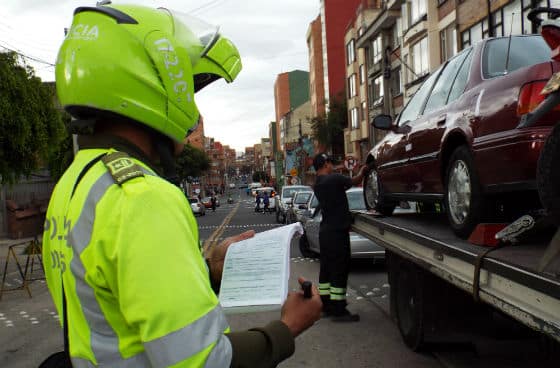
One of the most striking measures is direct: “If a vehicle is detected for improper parking, but the driver or person responsible is present at the scene (or arrives before the tow truck leaves), the traffic authority must limit itself to imposing the summons and ordering the immediate mobilization of the vehicle, without moving it to the yards.”
With this provision, the simple fact that the owner is on site will be enough to prevent the car from being taken away, which would reduce conflicts and unnecessary charges.
Goodbye to charges for “attempted towing”
The reform also prohibits one of the most controversial practices: charging for attempted towing. According to the proposal, “if the vehicle was already hitched or loaded onto the tow truck, but the driver arrived on time, no charge may be made for the attempted towing service.”
In other words, if the citizen manages to present himself before the vehicle is transferred, he would not have to pay a single peso for that procedure.
An opportunity to correct: Preventive Retention
Another novel figure that the project introduces is “Preventive Withholding”.
According to the articles, “in the event of an infraction that requires immobilization (for example, lack of SOAT or mechanical technical inspection), the authority may retain the vehicle on site for up to 120 minutes (two hours), giving the driver time to correct the cause of the immobilization without having to take it to the yards.”
This will allow many violators to resolve the problem directly, without having to go through costly and delayed processes.
Emptier patios and more agile processes
The reform also focuses on solving a problem that affects all transit agencies: vehicles abandoned in yards. The text indicates that “those who have been immobilized for more than one (1) year, without being claimed or paying fines, may be declared administratively abandoned and the transit agency has the power to sell them to settle the debts. The remainder of the sale, if any, will be delivered to the owner.”
This measure seeks to decongest the yards and allow the resources collected to be used to offset outstanding debts.
Although the proposal has initial support, the bill is still under discussion in the Senate of the Republic and must pass regulatory debates before becoming a norm.
You can also read: