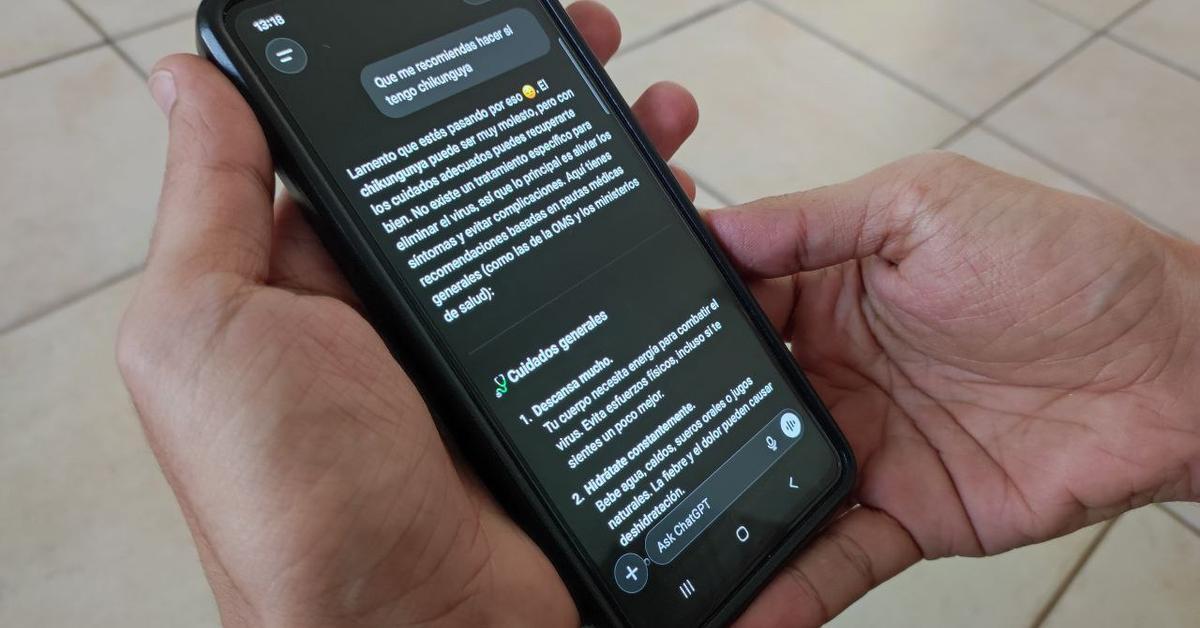
Havana/“Rest and drink plenty of fluids,” Dorothy reads on her phone screen before the fever and joint pain force her to close her eyes to try to sleep. Like thousands of Cubans facing one of the viruses that sweep the island, this 29-year-old Havana native consults ChatGPT in search of relief and guidance. “I don’t know what I would have done without this,” he confesses. “I’ve had severe pain for days and they told me that the Guard Corps is full of people with the same thing, without duralgin or anything.”
The scene is repeated every day in thousands of Cuban homes. In the midst of a health crisis and the collapse of primary care, artificial intelligence (AI) has begun to take the place of the old family doctor, the one who in the 80s knew all the neighbors by name and issued dozens of prescriptions every week. Today, in most doctors’ offices all that remains is an empty stretcher and a yellowish mural proclaiming the advantages of socialist health. A part of these premises they are closed or occupied by families who lost their homes in a hurricane.
ChatGPT, with its neutral tone and constant availability, has become a kind of “open consultation” for those who cannot find medicines, do not have access to a hospital or simply distrust the quality and resources available in public services. In Cuba, where the health system is experiencing its greatest deterioration in decades and the exodus has left thousands of medical positions empty, many turn to their mobile phone to obtain immediate answers.
“My daughter has a program installed on her phone that tells you what to take, how to make infusions or what natural remedies help you”
According to figures from the Ministry of Public Health itself, published in 2023, the Island lost more than 15,000 doctors in just five years, and the number of Family Doctor offices fell from 13,200 to just over 10,000. In provinces like Holguín or Granma, rural communities can go weeks without access to a doctor. The lack of personnel, together with the expansion of arboviruses – dengue, chikungunya and oropouche – have triggered the demand for health advice on the Island.
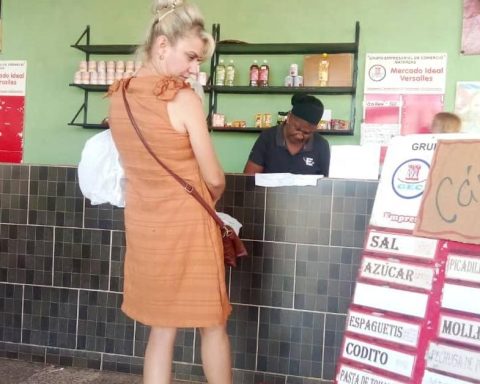
“The problem is that there is nowhere to go,” explains a retiree from Central Havana, who has also resorted to the chatbot to find out how to treat your persistent cough. “In the pharmacy there are no syrups, no aspirin, no antibiotics. Everything has to be found on the street, and the prices are through the roof. But my daughter has a program installed on her phone that tells you what to take, how to make infusions or what natural remedies help you.”
“Some AI services are blocked for Cuba, but since many people use VPN that is not a problem. Telegram bots have also become very popular that allow you to interact with ChatGPT fluidly,” Luis, a young computer scientist who is dedicated to installing applications on mobile phones in a workshop in Havana, explains to this newspaper.
The technician considers that the topics that people ask the AI most about on the Island are “solutions to everyday problems, regarding repairs to devices that have been broken, immigration procedures and health problems.” To this he adds “professional and financial training,” he explains, from what he has seen in the use of these tools by his clients and colleagues.
For its part, the shortage of medicines in Cuba – which is around 40% of basic drugs, according to the health authorities themselves – has created a lucrative black market. On the streets of Havana, informal vendors sell paracetamol, duralgin or ibuprofen tablets, as well as creams for joint pain and itchy skin. They are the same products as the chatbots They recommend for chikungunya, which is very widespread these days in the Cuban capital.
Before embarking on the adventure of locating and buying some pills, a tube of ointment or some syrup, questions to the AI do not wait long. “Will it be better to take ibuprofen or should I solve it with acetaminophen?”, “Do I need the cream for a few days or is it better to use it for more than a month?”, “Should the bag be for hot or cold injections?”, “Should I take the pill on an empty stomach or with food?”
“What it cannot replace is the ear, the look or the pulse, that analysis that we do when we have the patient in front of us”
“You look for what you can, but you are also afraid of taking the wrong thing,” says a resident of Cerro who says he has learned to combine ChatGPT’s recommendations with those of a friend who is studying nursing. “If the chat tells me not to mix two medicines, I respect it. At least that prevents me from making a serious mistake that could cost me my life or a scare.”
The use of AI is not limited to patients. “It helps us reach a diagnosis, find updated literature and question some conclusions,” acknowledges a third-year medical student who is doing her internship at the Calixto García hospital and who requests anonymity. “It has become part of the routine: if you have no connection or your data package runs out, you feel lost.”
The future doctor admits that her colleagues are no longer surprised when a patient arrives with a “digital” diagnosis. “Before they said: ‘Google told me this’. Now they say: ‘ChatGPT told me that I have dengue’. Sometimes they are right, other times they are not. The danger is in believing the phone more than the doctor.”
The phenomenon is not exclusive to Cuba. In countries with good connectivity and robust healthcare systems, users are already using AI to interpret laboratory tests, compare treatments or understand clinical reports. But in precarious contexts, such as Cuba, the tool has filled a much deeper void: that of lost trust in the public health system.
Although OpenAI and other companies warn that AI should not be used for medical diagnoses, in Cuba the warnings are diluted between urgency and the lack of alternatives. ChatGPT does not ask for an identity card or polyclinic number, it responds instantly and, above all, it does not demand a soap or a package of coffee as a gift to speed up the process of being treated for a consultation.
“I ask him as if he were my family doctor,” jokes a young engineer who says he has emerged from the chikungunya outbreak without any consequences thanks to the application’s instructions. “It tells you to drink fluids, rest, and go to the hospital if you feel very down or faint. Nothing out of this world, but in my case it was the only thing I had.”
There is no shortage of risks. The chatbots They can make mistakes, invent data or confuse symptoms. But even the most skeptical doctors admit that AI can be an ally if used with common sense. “It’s good for studying and for questioning ourselves,” says the Calixto García student. “What it cannot replace is hearing, looking or pulse, that analysis that we do when we have the patient in front of us.”
In a country where distrust in institutions and health emergencies go hand in hand, ChatGPT has found fertile ground. In the absence of doctors, medications and official answers, many Cubans have chosen to improvise a new type of consultation: a mix of science, intuition and digital dependence.
As Dorothy, the young woman from Havana, summarizes: “It’s not that I think ChatGPT knows everything, but at least he listens to me without rushing, he doesn’t ask me for anything and he doesn’t send me to do some tests in a laboratory that doesn’t have reagents.”
And while emergency rooms are overflowing and pharmacies remain almost empty of medicines, in thousands of Cuban homes some hand trembling with fever clings to a cell phone in search of answers: “What virus do I have? What can I do to not feel so bad?”