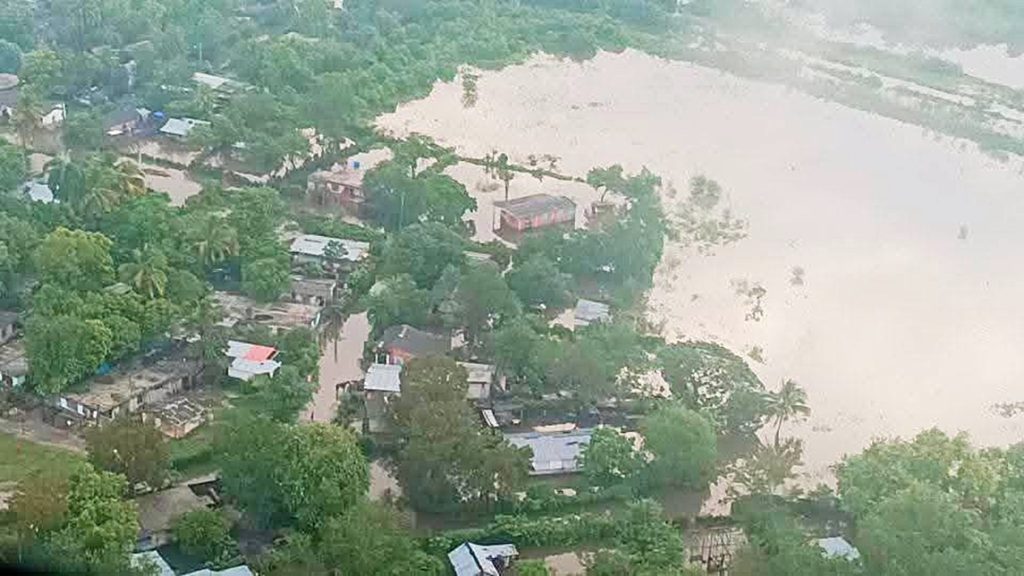
Madrid/The Cuban authorities admit this Tuesday that, after Melissa passed through the east of the Island on October 29, “the recovery grows“This recognition is a step, but still very far from the perception of the United Nations, which considers the magnitude of the catastrophe “enormous” and believes that the Government is “overwhelmed” by the needs of more than 3.5 million people.
This is the assessment of the UN coordinator in Cuba, Francisco Pichón, who told the Spanish agency EFE this Monday that the first assessments underestimated the extent of the devastation and that more than 90,000 homes were affected or destroyed, and some 100,000 hectares of crops were damaged.
“Although the authorities have carried out an enormous mobilization, managing to save lives – so far no deaths have been reported – and managing to evacuate around 735,000 people, national institutions are overwhelmed with the need to respond and produce the conditions for an early recovery,” he noted.
More than 90,000 homes are affected or destroyed, and about 100,000 hectares of crops are damaged.
According to new data provided by the UN, damaged homes are 15% more than previously believed, while in the agricultural area the number of actually affected areas increases by 22% compared to what had been estimated. In addition, some 600 state medical infrastructures and more than 2,000 educational centers suffered damages of varying degrees, as well as bridges, roads, railways, dams, telephone antennas, fiber optic cables for the internet and electric poles.
“There is an enormous commitment from the authorities to be able to proceed with this recovery, but the needs are enormous,” added Pichón, who asks for the support of the international community and “not to leave Cuba alone at this moment, to be able to respond satisfactorily and achieve the recovery of basic services for the population.” The official, who has traveled to the affected area to assess on site the situation, recalled that the UN “complements” the Government’s action.
The United Nations system presented last Wednesday an Action Plan to care for the population “severely affected” by Melissa and that attempts to mobilize 74.2 million dollars from multilateral funds and other donors, of which at least 11 million dollars have already been made effective.
Pichón, however, now believes that the forecasts fell short. “The Action Plan has underestimated the material damage,” he acknowledged, hence the new call to “support the country’s effort in responding to this hurricane that has brought the destruction of livelihoods and the interruption of basic services for the” Cuban population.
In addition to the aid that has already been detailed from different countries and organizations in recent days, this Monday the official press added news. Among them is the China shipment of 5,000 solar panels for rural areas that must facilitate the recovery of electricity in an area that, according to data updated by the Civil Defense Council this Monday, is still almost in darkness. The worst is concentrated in Santiago de Cuba, where only 29.23% of the electricity flow has been restored, said yesterday the Minister of Energy and Mines, Vicente de la O Levy.
The worst is concentrated in Santiago de Cuba, where only 29.23% of the electricity flow has been restored
The official stated that this week the system should be recovered, although the damage is enormous. In the capital city, 187,000 people are still without service due to severe damage to distribution lines, and although workers from other provinces have been sent to help, the situation is still complex. By this Tuesday it is considered that the energy will have reached all the substations, contributing at least a small amount to most municipalities.
In the rest of the provinces, the situation is more favorable and the service covers 99.95% of clients in Las Tunas; in Guantanamo, 96.45%; in Holguín, 79.76%, and in Granma, 73.44%. This indicates a return to normality of which the long blackouts and power outages that are now inseparable from the daily life of the population are part.
For this reason, the Chinese ambassador in Havana, Hua The lot was, however, planned for a long time as part of the China International Cooperation and Development Agency project; and it is the second part of another shipment of 5,000 panels that were delivered to the Island in 2021.
Also announced this Monday, from Caracas, was the sending of personnel to repair the power lines, in this case “22 professionals who are going to reinforce the equipment” and who, in addition to contributing to recovering the electricity, will carry out “diagnosis to continue sending aid,” explained the vice minister for Latin America, Rander Peña, in statements to the state channel Venezolana de Televisión (VTV). This is, he said, the manifestation of love from one people to another.
Other very specific support has arrived from India, which donated a mobile hospital –with the capacity to serve 300 people– equipped with a generator, medicines and food, which was destined for the badly affected municipality of Río Cauto. This Monday, finally, the recovery phase was decreed for this population, as well as for that of Cauto Cristo, both in Granma, after the worst danger has passed after the flooding of the waters that surround it.
Other very concrete support has come from India, which donated a mobile hospital – with the capacity to care for 300 people – equipped with a generator, medicines and food, which was destined for the badly affected municipality of Río Cauto.
The Indian Deputy Foreign Minister, Pabitra Margherita, was with Miguel Díaz-Canel this Monday, who thanked him for the “permanent support and solidarity” of his country, not only after the passage of Melissa, but in sectors such as energy and food, voting in favor of the resolution against the United States embargo and favoring Cuba’s entry into the Brics as a partner.
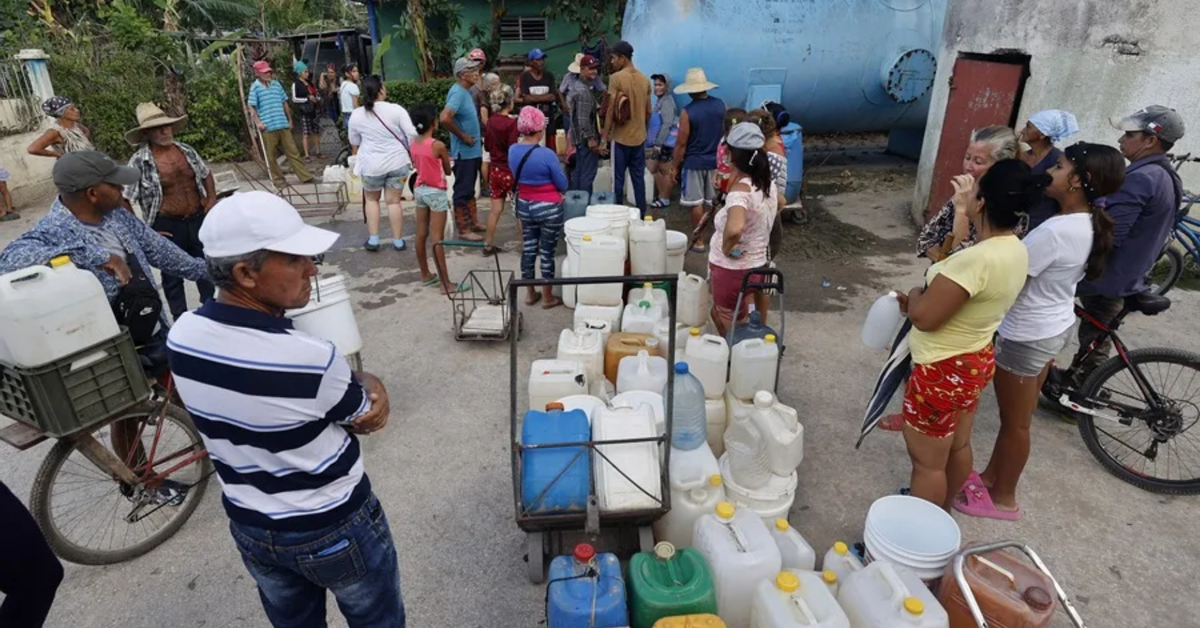
The authorities also evaluated the situation with respect to the water supply, which is of much greater concern than normal due to its concurrence with the outbreak of arbovirus that affects the Island. In Las Tunas, the infrastructure is already completely restored, they stated, but in the rest of the provinces the recovery is uneven, with Holguín at 83%, Guantánamo at 96%, Granma at 55% and Santiago de Cuba at 57%. At the moment, the work is focused on repairing some large conductors as well as sending tanker trucks to the most affected areas.
Lastly, there was talk of “securing food from the basic basket, such as rice,” which the population questions from the speaker he finds on social networks: “At the rate they are going in the distribution, more than half of the eastern population is going to die”