The international organization also estimates that 100,000 agricultural hectares were affected by the hurricane.
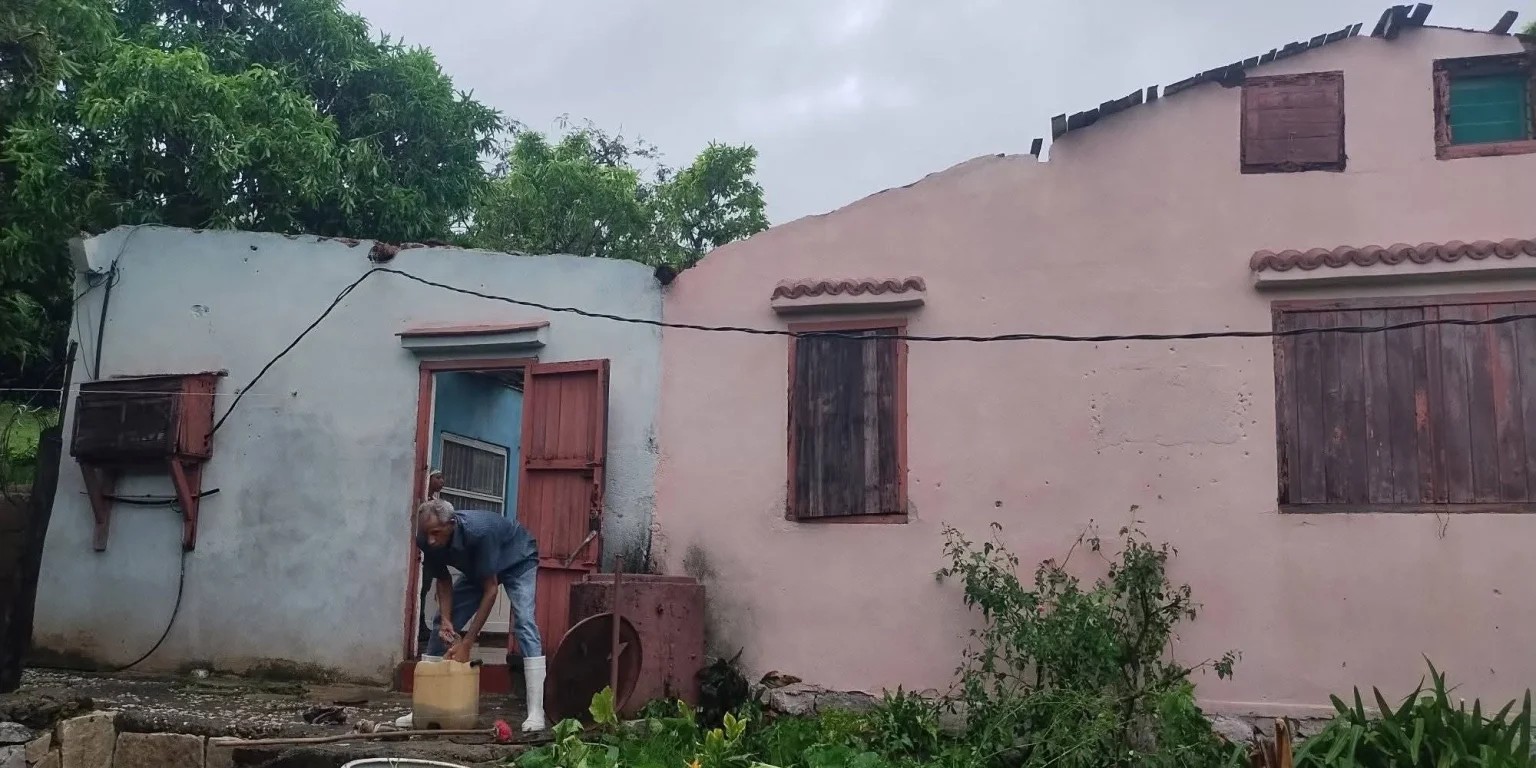
MIAMI, United States. — The UN System in Cuba raised the number of homes damaged (partially or totally) to “more than 90,000” and to “about 100,000” hectares of crops affected by the Hurricane Melissaan increase of around 15% and 22%, respectively, compared to the latest data from the Cuban Government, as reported by the EFE news agency this Monday.
A United Nations mission that toured the impacted areas described the devastation as “enormous.” “Although the authorities have carried out an enormous mobilization, managing to save lives – so far no deaths have been reported – and managing to evacuate around 735,000 people, national institutions are overwhelmed with the need to respond and produce the conditions for an early recovery,” declared the UN resident coordinator in Cuba, Francisco Pichón, to the aforementioned agency.
“The support of the international community is required, not leaving Cuba alone at this time,” he added.
According to EFE, in addition to the damage to housing and agriculture, preliminary official reports include damage to “some 600 state medical infrastructures” and “more than 2,000 educational centers,” as well as bridges, roads, railways, dams, telephone antennas and, in particular, the National Electric System (SEN). About a third of customers in the five hardest-hit provinces were still without service almost two weeks after the impact.
The UN update contrasts with the preliminary balance released by the Government itself last week: “76,689 homes affected (among which there were 4,743 total collapses)”, in addition to 47,833 agricultural hectares damaged.
In that televised meeting of the National Defense Council, the ruler Miguel Díaz-Canel warned that “any preliminary figure is below the real impact,” and admitted that now “the hardest stage” begins and “the recovery is going to take a while.” He also stated that up to that point “no loss of human life has been reported.”
To respond to the emergency, the United Nations system presented an initial Action Plan for 74.2 million dollars, intended to cover basic needs of around one million “severely affected” people within a universe of 3.5 million victims. Pichón himself later acknowledged that “the Action Plan has underestimated the material damage,” increasing after on-the-spot evaluations.
Hurricane Melissa crossed the east of the Island on October 29 as a category 3 on the Saffir-Simpson scale, after hitting Jamaica as an extreme cyclone. The most affected provinces were Granma, Santiago de Cuba, Holguín, Las Tunas and Guantánamo, with severe interruptions of electricity, telephone, roads and water supply. Days before, the state company Unión Eléctrica had already anticipated maximum cuts due to the combination of the energy crisis and the impact of the cyclone.
In parallel, Cuban authorities approved support measures for families with damaged homes and reported a mobilization of their own resources and international aid (among others, from Latin American countries and the European Union), while UN agencies—OCHA, UNICEF, WFP, PAHO/WHO and UN-Habitat—activated humanitarian and early recovery response. UN-Habitat stressed that the evacuation exceeded 730,000 people and that the UN plan seeks to strengthen local capacities for housing and basic services in the hardest hit areas.
The context aggravates the situation: Cuba reaches this emergency after more than five years of crisis with shortages of food, medicine and fuel, high inflation and long daily blackouts, which conditions the speed of recovery. “The needs are enormous,” Pichón summarized when asking for sustained international support.