The federal government continued to close the key to health spending in the third quarter of the year, amid the economic weakening and the effort to reduce the fiscal deficit this year.
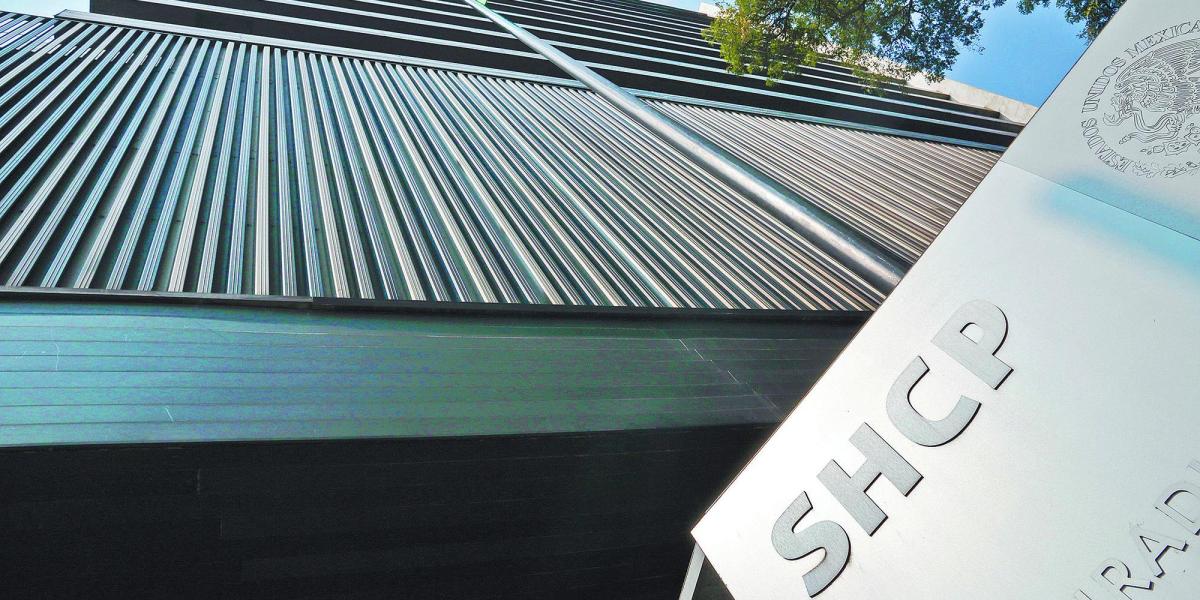
Data from the Ministry of Finance and Public Credit (SHCP), headed by Édgar Amador Zamora, showed that between last January and September, functional spending on health totaled 615,424 million pesos, which represented a drop of 4.1% in annual comparison.
The drop reported this year is the largest on record, for a similar period, since 2018, when spending in this area fell 4.2 percent.
However, the Ministry of Finance defended that the expenditure executed as of September is in accordance with the calendar, as are the falls that were observed in the same period in other areas, such as environment, security, culture, housing, among others.
“It is not just observing the health item, because we are also in a migration to achieve universalization in terms of health, and this also entails observing the social protection item. There is a very important expense that refers to the execution of the expenditure that the IMSS-Wellbeing has, which is the fundamental part where health services and care are going to be centralized,” said Agustín Rodríguez Bello, head of the Budget Design, Control and Expenditure Monitoring Unit of the Ministry of Finance.
The IMSS-Wellbeing expenditure is part of the resources that are considered in the health functionality, but there is also a smaller part that is considered within social protection. As of the third quarter of the year, 132,661 million pesos have been disbursed in the IMSS-Wellbeing, which represents an increase of 42.3% annually, in real terms.
“That is why it is important to observe that this variation (that of functional health expenditure) is complemented and it is important that from now on we can observe and measure in terms of health expenditure, always observing these two aspects (health and social protection),” added the tax official.
On the other hand, he indicated that one reason that has delayed the execution of health spending is the non-compliance that some medicine suppliers have had, which has been felt since the first half of the year.
The promise of universalization
Historically, health spending has been a pending issue for public finances and the governments that have passed, since it is far below the recommendation of the World Health Organization (WHO), which was not able to change even after the pandemic.
With data at the end of last year, health spending represented 2.7% of the Gross Domestic Product (GDP), while the WHO recommends that the level be 6 percent.
Given this, on several occasions there has been talk about the universalization of health, so that the Mexican population has better care and access to this right.
“We are going towards the universality of the health system. No more IMSS, no more ISSSTE, no more IMSS-Wellbeing, etc. We are going to create a universal health system where the total health problems are addressed, and not just one issue or another,” Bertha Gómez, Undersecretary of Expenditure, declared to legislators last October.
However, during her working meeting with the deputies to discuss the following year’s budget, and when questioned about when this health system would be achieved, she contradicted herself by saying that the IMSS and ISSSTE “do not disappear at all.” “It’s not about that at all. It’s about there being no restriction for a person to be treated in any medical unit of any of these systems.”
More for next year
For the following year, it is expected that the government will once again open the spigot of health spending. In accordance with what was approved in the Federation Expenditure Budget (PEF) 2026, 996,254 million pesos will be allocated.
The amount approved for 2026 will be 5.8% higher, in real terms, than what was approved for this year; However, it continues below what is recommended by the WHO, standing at 2.6% of GDP.
In this way, it will represent 9.9% of the total public spending approved for the following year, which amounts to a historic 10.1 billion pesos.