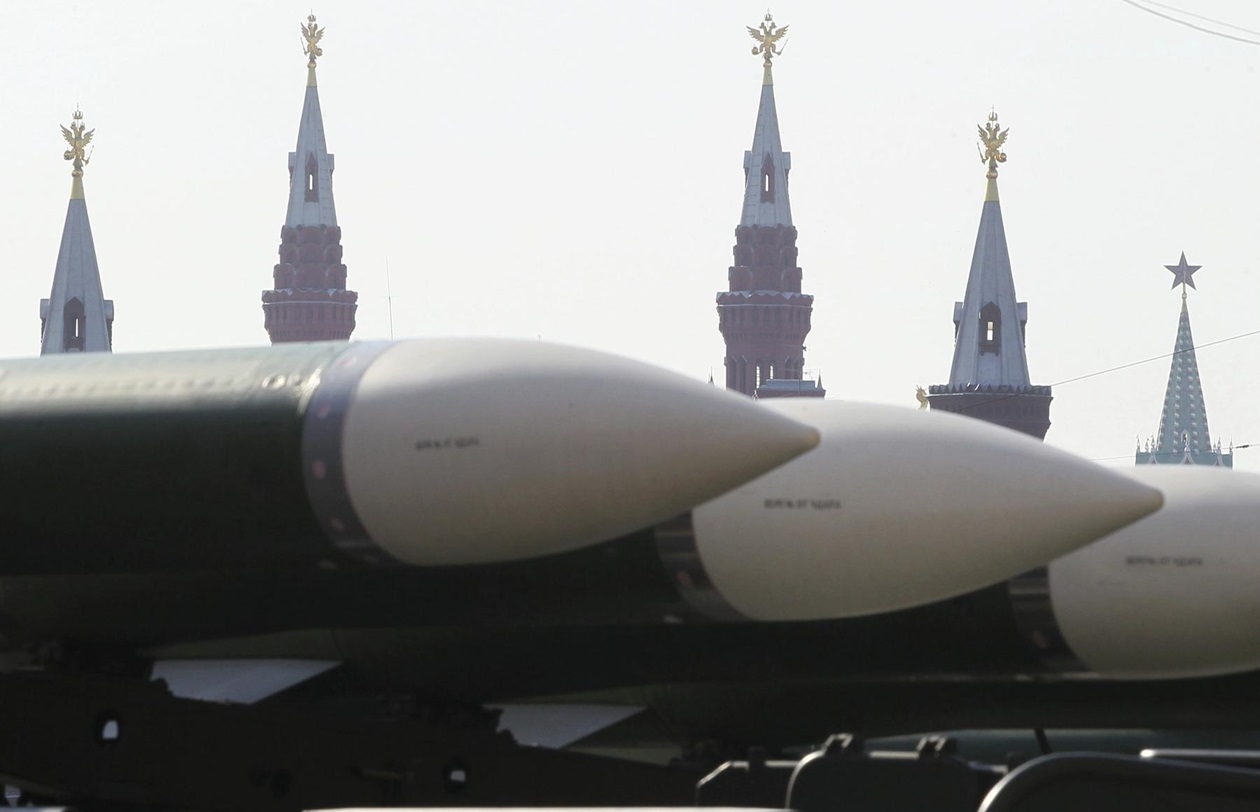
The Russian Government denied this Sunday that the president Vladimir Putin has ordered to begin preparations to carry out nuclear tests. At least, not yet.
This was stated this Sunday by Kremlin spokesman Dmitri Peskov in statements to Russian state television.
The spokesperson explained that before taking that step, “you first need to understand if it is necessary to do so,” which leaves the door open to possible tests if they are considered necessary by Moscow.
“This must be a very serious, well-founded and carefully considered decision. Our specialists will now work on this,” Peskov explained. cited by agency EFE.
His statements come after last week Putin asked his government structures to present “a consensual proposal on the possible beginning of preparations for nuclear weapons tests.”
This request came after Donald Trump urged the War Department – formerly of Defense – to carry out nuclear weapons tests on “equal conditions” with Russia and China, arguing that both powers were already carrying them out or were contemplating them.
Trump and Putin relaunch the possibility of nuclear tests in the midst of their hegemonic struggle
No, but maybe
In his statements on television, the Kremlin spokesman recalled that Putin has reiterated that Russia “is committed” to the ban on nuclear tests and said that his intention, a prioriwas not to resume them.
“We have no intention of carrying them out. But if the other party does, we will have to act in the same way,” he warned, according to EFE.
Peskov said Moscow is trying to understand what Trump meant when he recently ordered nuclear weapons tests and what implications that could have for Russia.
“The main thing,” he noted, “is that we understand perfectly what our president means. And he always acts accordingly.”
Furthermore, the spokesperson denied that both Moscow and Beijing were already carrying out tests, as the US president implied.
“We know with certainty that neither Russia nor China are testing nuclear weapons,” he said.
Such a clash of statements occurs amid growing geopolitical tensions, with the war in Ukraine, the strengthening of the Russian-Chinese alliance and trade disputes between Washington and Beijing as a backdrop.