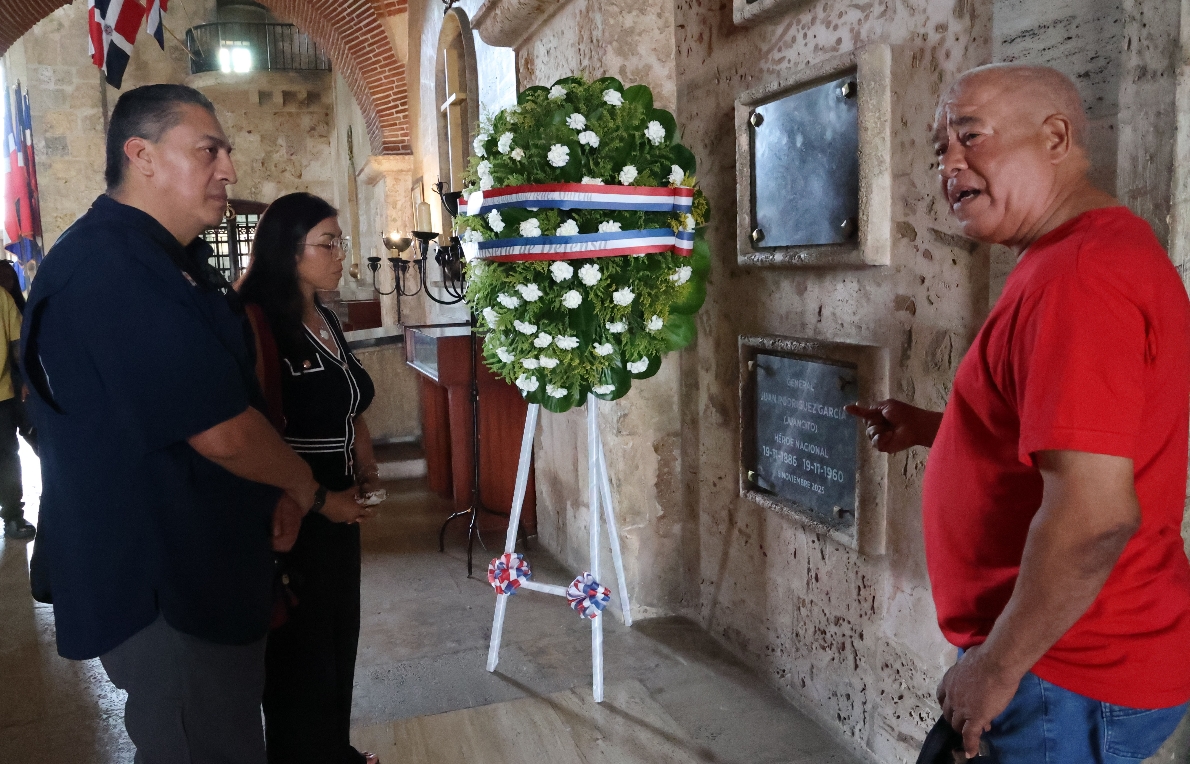
Santo Domingo.- He transfer of the remains of Juan Rodríguez García “Juancito”, to the Pantheon of the Homeland, represents a lot more than a posthumous tribute. It is the fulfillment of a historical and moral debt with one of the Dominicans who made the most sacrifices in the name of the freedom and democracy during tyranny
The solemn ceremony, headed by the president Luis Abinader, last Saturday sealed the official recognition of a man who, without belonging to a military caste or a dominant political elite, bravely took up the cause of freeing his people from yoke of the Trujillo dictatorship.
“This transfer is an act of historical justice. Juancito Rodríguez embodies the courage of the men who gave everything for the country, without expecting anything in return,” said the president during the ceremony, held in the historic mausoleum of the Colonial City.
From farmer and democratic politician to symbol of resistance
Born in Estancia Nueva, Moca, in 1886Rodríguez was for much of his life a prosperous farmer, rancher and politician with a democratic vocation. He stood out for his productive work in Barranca, La Vega, where he built one of the most important haciendas in the region.
His natural leadership and commitment to the well-being of his community led him to hold public positions such as deputy and senator, from which he firmly defended transparency and social justice.
However, his life took a definitive turn when he openly confronted the dictatorship of Rafael Leónidas Trujillo Molina. The persecution did not take long: he was stripped of his property, his land and his peace of mind. Persecuted by the regime, he was forced to go into exile in Cuba, where a new battle began: that of organized resistance against the tyrant.
Since his exile, Juancito Rodríguez became a pillar of international anti-Trujillism. He put his fortune and influence at the service of the democratic cause, actively supporting the Cayo Confite (1947) and Luperón (1949) expeditions, two of the most emblematic attempts to overthrow the dictatorship and establish a free government. Despite the defeats, he never gave up his ideal.
His commitment to freedom came at a very high price. His first-born son, José Horacio Rodríguez, fell in combat during the expedition of June 14, 1959, along with other young patriots who tried to liberate the country. The news was a devastating blow, but Juancito, far from giving up, kept his faith intact in the democratic future of the Dominican Republic.
He died on November 19, 1960, in exile in Havana, without being able to return to his homeland. For decades, his remains rested in the municipal cemetery of Moca, along with those of his daughter Pucha Rodríguez, also a fighter against tyranny.
Historical recognition
Official recognition came in May 2025, when, through the Decree 288-25President Abinader declared him a National Hero. The measure, long awaited by historians and family members, elevated his figure to the place he deserves within the nation’s moral pantheon.
Now, with its transfer to the Pantheon of the Homeland, the Dominican Republic inscribes its name alongside those of the men and women who, with their example, built the foundations of freedom and national sovereignty. During the ceremony, Abinader highlighted that the legacy of Juancito Rodríguez “remains alive in the memory of the Dominican people and should inspire new generations to always defend democratic values.”
An eternal example of patriotism and dignity
Juancito Rodríguez symbolizes the citizen who, without wearing a uniform or holding power, made his life a act of moral rebellion against oppressionn. Its history reminds us that freedom is not inherited: it is conquered, defended and honoured.
For all these reasons, his entry into the Pantheon of the Homeland is not a symbolic gesture, but rather the definitive reunion between the grateful nation and one of its most worthy sons, whose entire life was an offering to the cause of Dominican freedom.