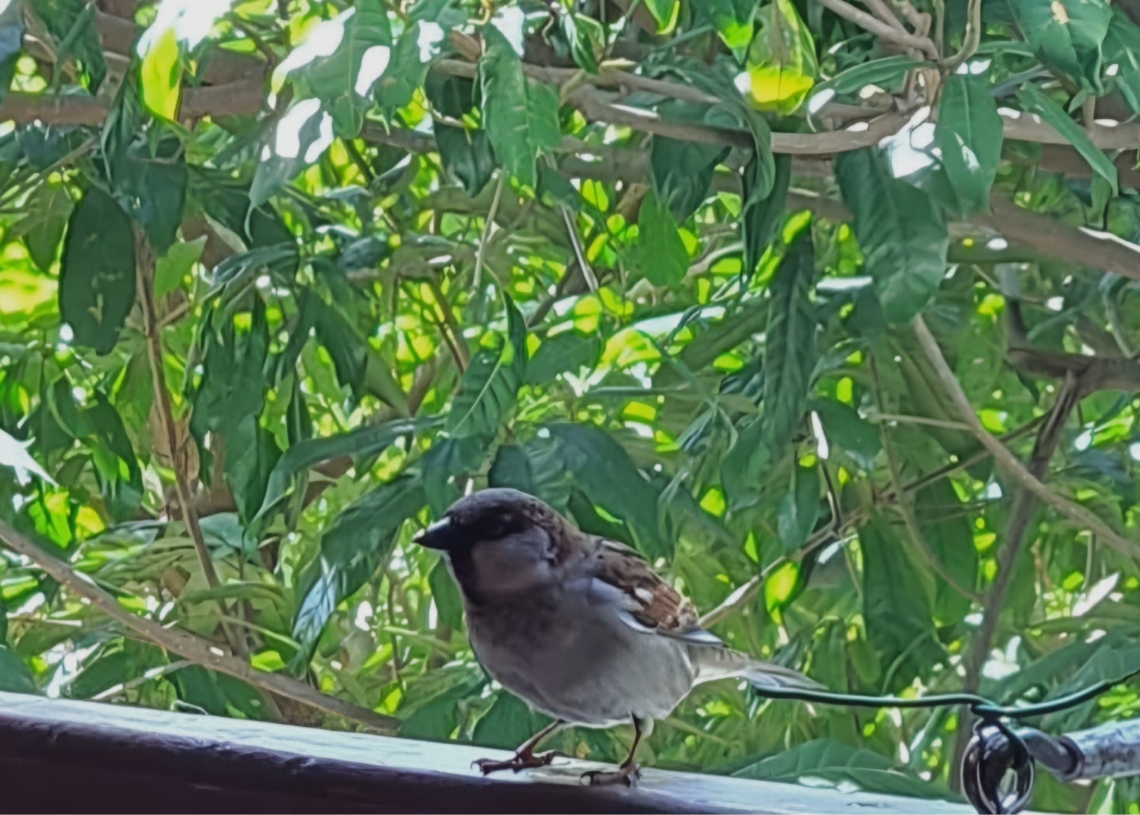
Sparrows get a bad press. They are called “grapeless birds”, loud, gluttonous, with sad (brown) plumage. His song —because they sing— It is not appreciated like that of canaries or nightingales, although there are ornithologists who describe it as melodious and happy.
The chirping of sparrows is a song of love, to invite mating. And it seems to work for them, because, except in Antarctica, the winds from all continents sustain them. That is, they procreate incessantly. And among so many possible places, they prefer to nest in cities, close to humans, a distinction that we should be grateful for.
House sparrows arrived in Cuba (passer domesticus) in the middle of the 19th century (they are from Europe and Asia). It is assumed that they were introduced into the country through the Port of Havana. Already in 1865, Juan C. Gundlach (1810-1896), a German ornithologist who spent most of his life in Cuba, reported the sighting of sparrows in all the provinces, which speaks of their rapid acclimatization.
The poets
Certain poets have focused on these humble little birds. Some with sarcasm; others, with evident sympathy. Nicolás Guillén, who invented what he thought were his inadequacies, objects that this bird is “too normal,” and wonders: “Isn’t there a great sparrow?”
Miguel Hernández, in the narrative piece The sparrow and the prisonersays:
“The sparrows are the children of the air, the children of the suburbs, squares and small squares of space. They are the poor people, the working masses who have to solve the problem of existence every day in a heroic way. Their struggle to exist in the light, to fill the grim silence of the world with tweets and commotions, is a joyful, determined, inalienable struggle. They reach, to conquer the necessary crumb of bread, places where no other bird reaches. “They are seen in the most remote corners. They are heard everywhere. They run all the risks and dangers with the grace and security that their perpetual childhood has given them.”
In Platero and meJuan Ramón Jiménez, very just Nobel Prize winner of our language, reads:
“Blessed birds, without a fixed party! With the free monotony of the native, of the true, nothing, other than a vague happiness, the bells say to them. Content, without fatal obligations, without those Olympus or those hells that excite or intimidate the poor slave men, with no more morality than their own nor more God than the blue, they are my brothers, my sweet brothers.
“They travel without money and without suitcases; they move house when they feel like it; they presume a stream, they sense a foliage, and they only have to spread their wings to achieve happiness; they do not know Monday or Saturday; they bathe everywhere, at every moment; they love nameless love, the universal beloved.
“And when the people, the poor people!, go to mass on Sundays, closing the doors, they, in a joyful example of love without ritual, suddenly come, with their fresh and jovial hubbub, to the garden of the closed houses, in which some poet, whom they already know well, and some tender donkey—will you join me?—watch them, fraternally.”
Sparrow: sadness?
Be exhaustedin Cuba, means distilling melancholy. Having a sparrow, being sad, swimming in anguish whose causes are almost always hidden, even for the sufferer.
When I was studying at the Faculty of Philology at the University of Havana, for a time I shared a classroom with students from North Korea. They worked in the embassy of that country in Cuba. They were drivers, gardeners, props. Boys without university level who were sent to learn Spanish under pressure, and during class time they did not understand a single word of subjects as complicated as Linguistics or History of the Language.
One of them, Pac Bug Yong (this is my phonetic and ear transcription of his name), whom we affectionately called Paquito, was once approached in the 3rd year scholarship. and F, in Vedado, by a Cuban classmate who saw him, crestfallen, sorrowful, sitting on his bunk, staring at a non-existent point. He asked him: “What’s wrong with you, compadre.” The Korean laboredly responded: “Nothing, I have a tremendous gorilla.” “A gorilla?” the Cuban was amazed. “Yes, one of those little birds…”
Kill the last sparrow
In 1958, Mao Zedong, absolute leader for life of the People’s Republic of China, launched the far-fetched campaign of The Great Leap Forward. This attempt to achieve a development that could economically equate the country with the so-called world powers was based on the use of heterodox techniques. One of the fronts consisted of the mass extermination of the mill sparrows (passer montanus), with the argument that these decimated the rice crops. The reasoning was simple: without sparrows the production of that cereal would increase.
The campaign, which the entire country engaged in, consisted of making excessive noise so that the small birds could not nest anywhere, and would fall dead from fatigue. Extensive nets were also placed in the fields, where they were trapped.
With the dramatic decrease in sparrows, locusts, insects of unstoppable voracity, increased exponentially in the fields. The natural food chain was broken, the ecological balance was altered, and the remedy was worse than the disease.
Currently, the sparrow population has decreased drastically in some European cities, such as London or Madrid. There are those who say that the disappearance of sparrows is due to the growth of pollution and increased noise in cities. Others think that, rather than disappearance, we should talk about emigration to rural areas.
Karma
In November 2016, I traveled for 15 days to Lahore, Pakistan, to participate in the Faiz International Festival, an event dedicated to promoting culture and art. There I went to talk about Cuban literature and cinema, and to read some of my modest lyrical work. The poems were translated into English, and from this language they were translated into Urdu, which is the official language of the country.
In reality, I don’t know what the young people who filled the rooms must have understood, since they always applauded generously. I have never known if it was an act of courtesy or if in Urdu my verses surpassed the originals.
In the few moments that I had free, I went out to tap my feet in the city of chaotic traffic and buildings with high historical value. So I ended up very close to the Emperor’s Mosque (1673), in the old part of the city, a sample of Mughal architecture, and considered one of the most beautiful in the world.
It caught my attention that some cars traveling along the congested main artery stopped at the edge of the sidewalk, right where a man had a large cage full of sparrows. They gave money to the merchant for some copies —no more than three or four— and then they released them to fly. I found no explanation for this intriguing fact until several days later, when a girl from the country clarified to me that this procedure was a kind of karma cleansing. By restoring freedom to the little birds, those men believed they were mitigating the faults they had committed, consciously or not.
Here the expression karma —what my friend used— It should not be the right one, since Muslims, who are the vast majority of Pakistanis, do not believe in this law of inexorable compliance. Although, like practitioners of all known monotheistic religions, they accept that good actions bring good; and the bad ones, the opposite. Distinguishing one from the other corresponds to divine justice.
Agapito Rubirosa
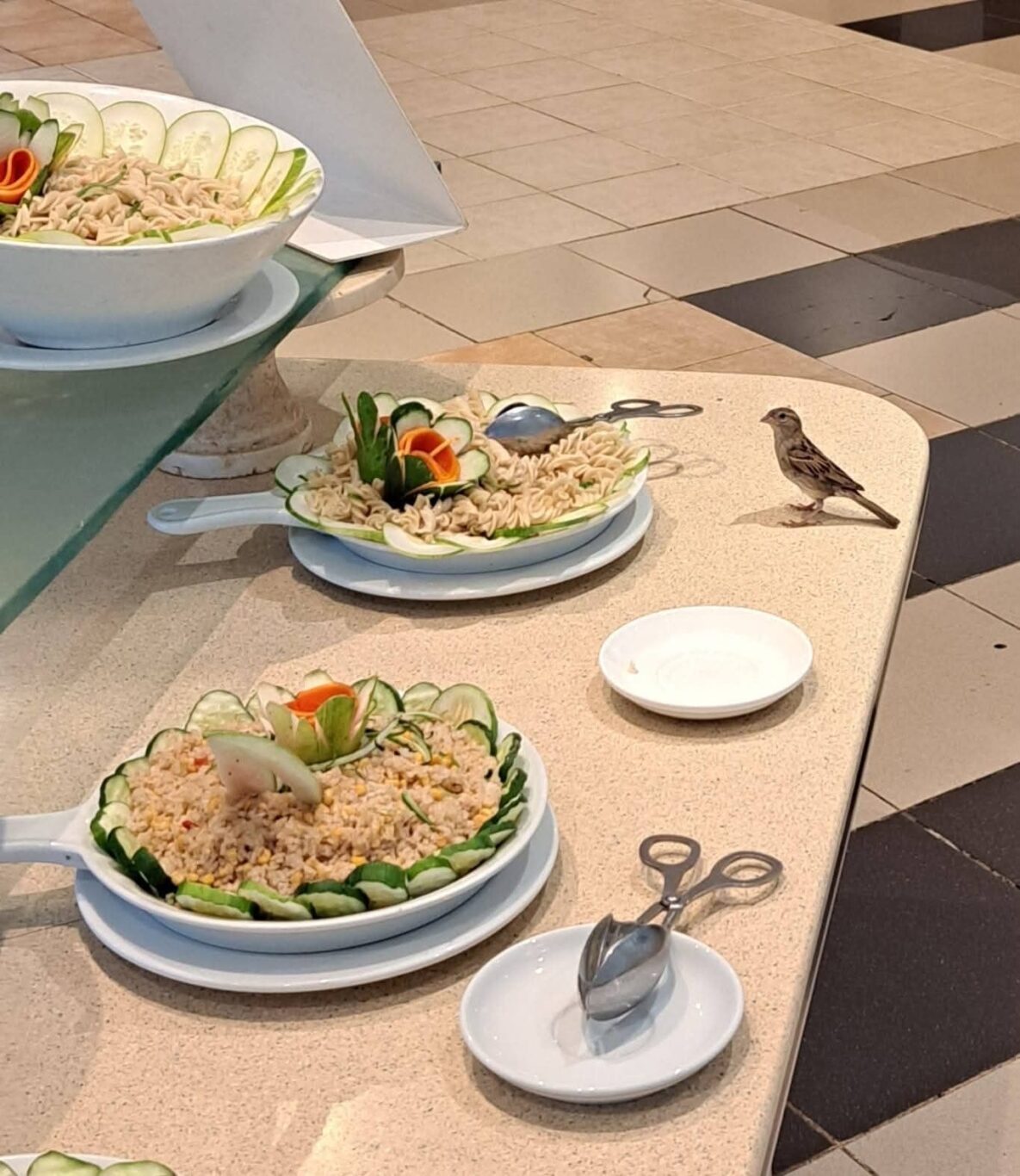
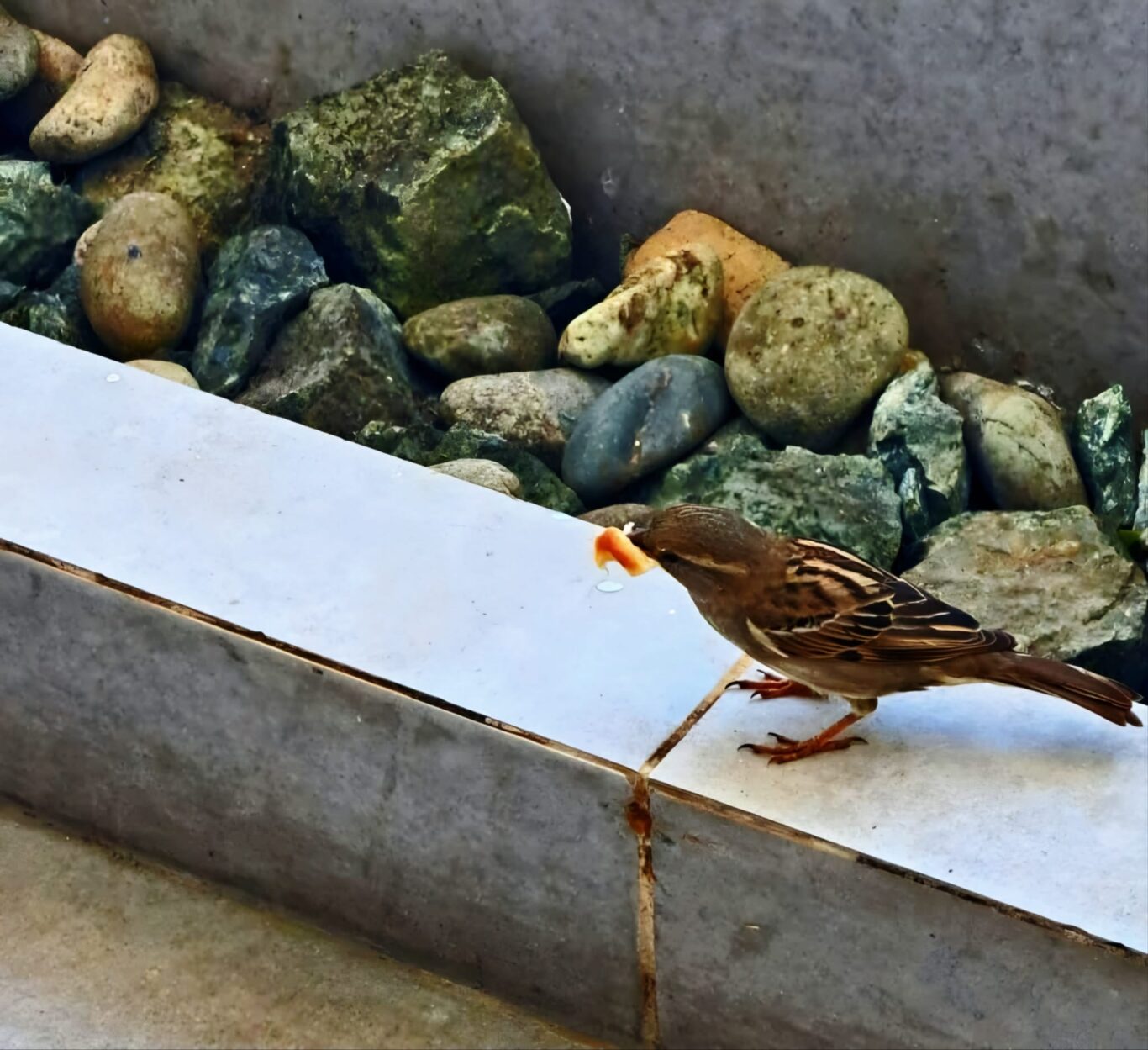
At this point the reader must have suspected that, at the very least, I am not indifferent to sparrows. I love them for their boisterous way of greeting the day and their ease in establishing relationships with human beings; also, that they are supportive of their fellow human beings.
In the room where I work, in my apartment in El Vedado, the window is double-paned, made of wood. When I am at work, it remains closed, as it isolates me from the growing noise of the city, from neighbors’ conversations from balcony to balcony, to the insistent honking of those who come to pick up family members or co-workers.
That time, as soon as the day had cleared, I felt some insistent tapping on the window, which took my concentration away. I opened it and discovered in the leafy tree that was right in front of me, a sparrow that looked at me without flinching.
I am not an animal lover in the strict sense of the term, and I am a materialist. So I thought it might not have been the sparrow knocking on my window. I also set out two small bowls, one with water and the other with a handful of rice grains. And I continued doing my thing.
The next day the scene was repeated. Someone was tapping softly again on the wood damp from the recent drizzle. There he was again, whom I greeted with a confidence that later gave me a lot to think about: “What a comeback, Agapito. Here again? And so began this symbiotic relationship in which I provide him with food and he greets me every morning. On the rare occasions when I forget to feed him, he scandalizes from the nearby branches until I open the window.
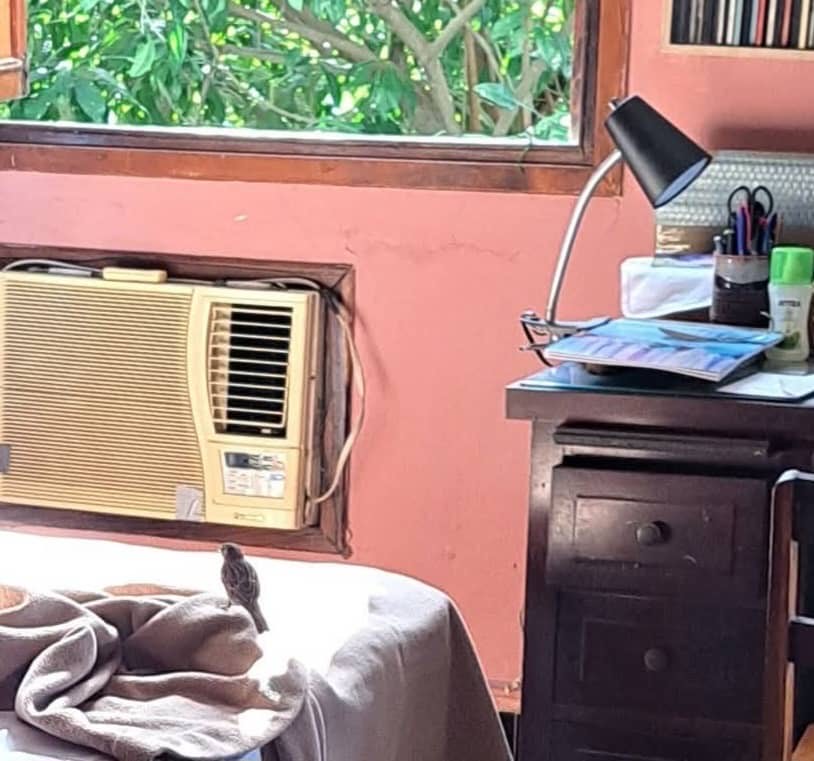
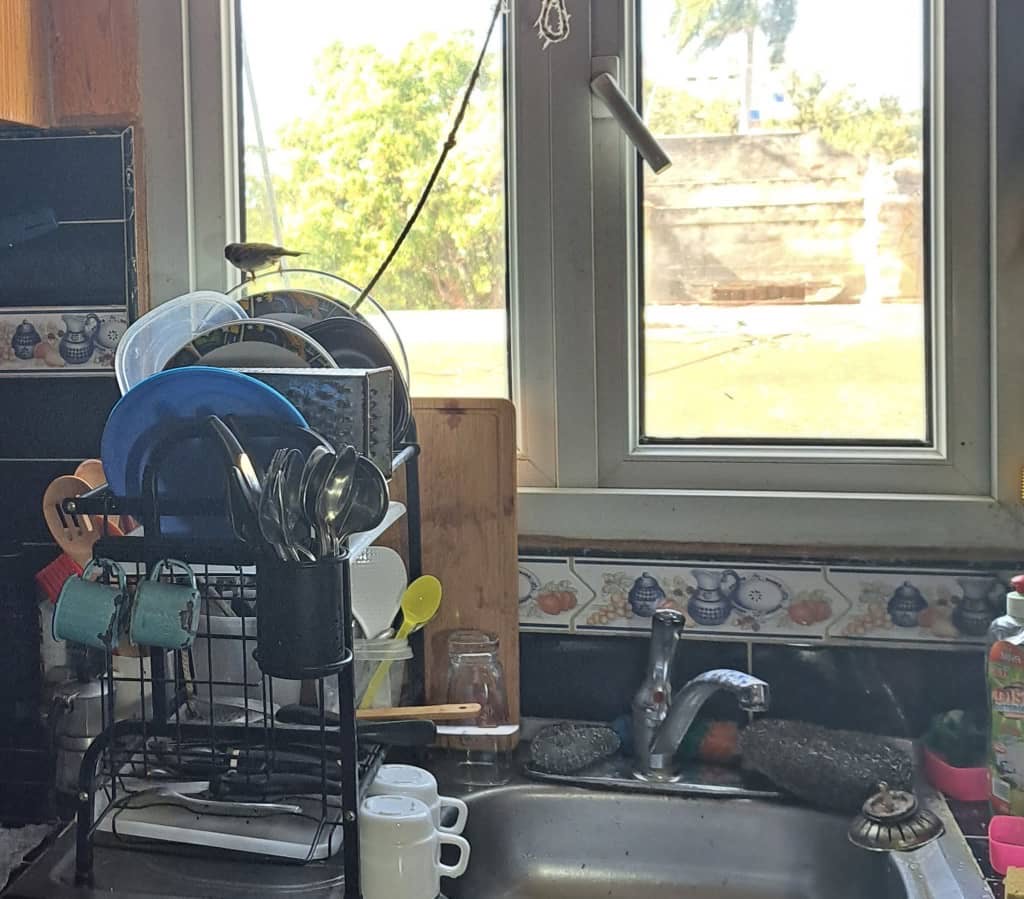
The numerous photos I take of him, and some friends who have met him in the middle of the afternoon, attest to the fact that I have not invented Agapito, because having breakfast and dinner every day have become his indispensable habits.
But Agapito —name that now I think is from town people, and I don’t know how it came to my mouth— It doesn’t always come alone. Sometimes he shows up in the morning with what must be his partner; and other times, with a gang of six or seven troublemakers like him, invited to share the snack, the amount of which I have been forced to increase over the months.
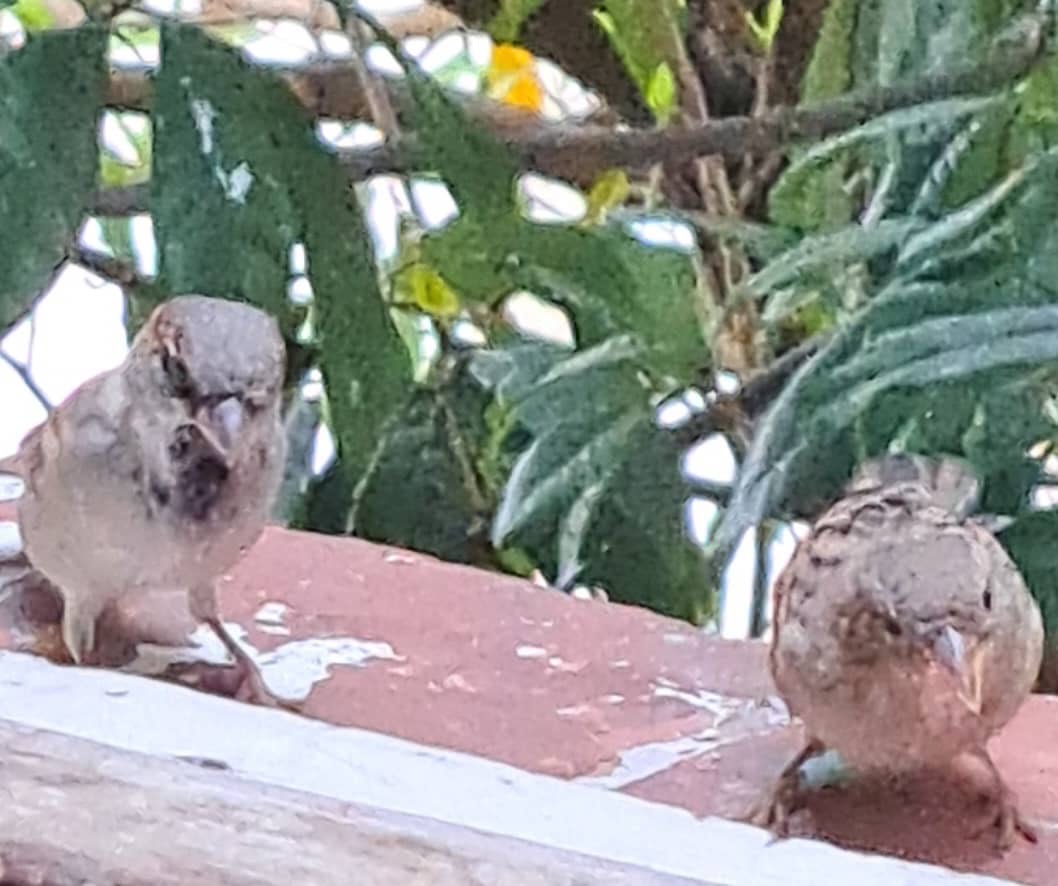
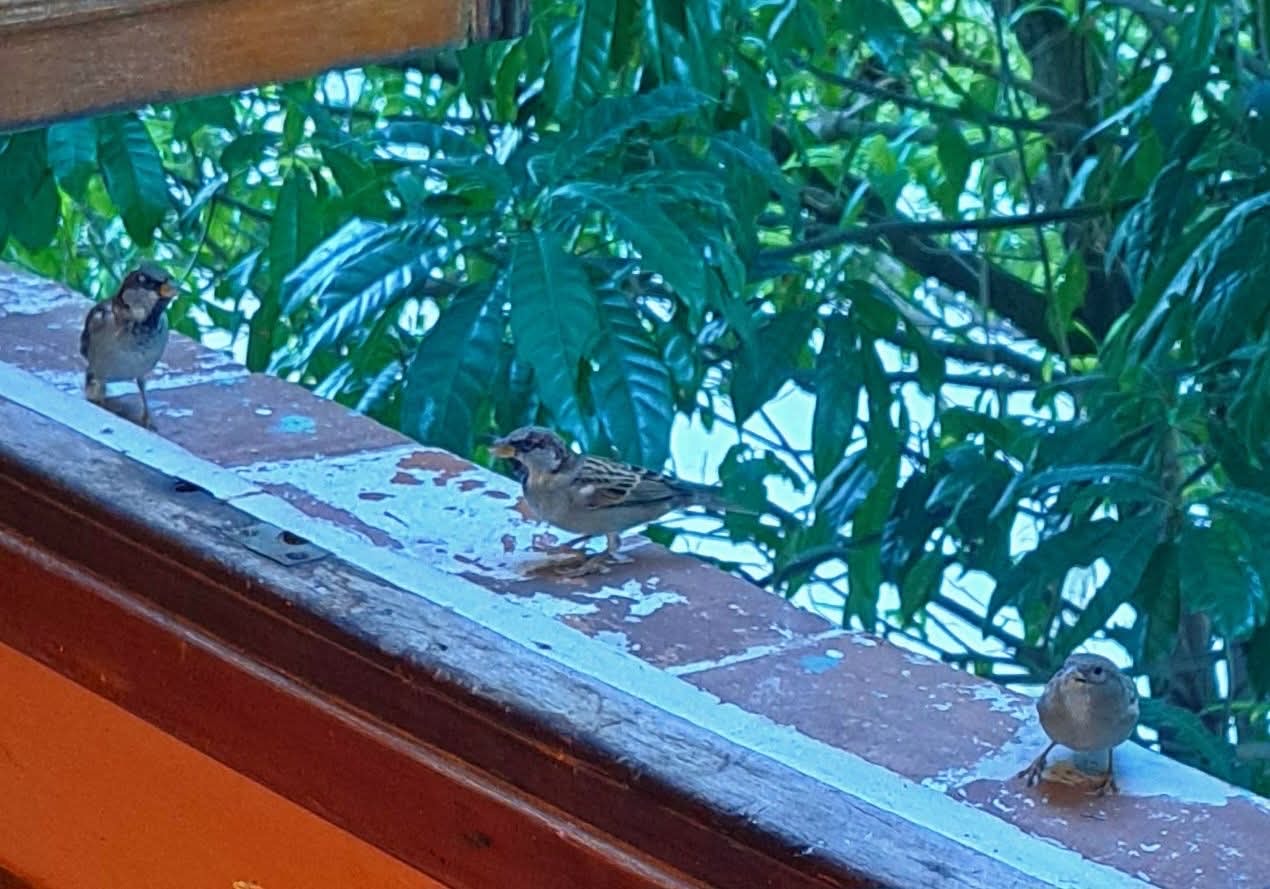
Portraying Agapito is complicated. He and I share the space, but from there to him staying still for a moment or coming to eat in my hand, there is a way. I pretend not to see him the times when, after eating, he takes a walk around the house, and rests briefly on paintings, records and books. Once he accompanied me to wash, and even allowed me to take a snapshot before he darted out of the window.
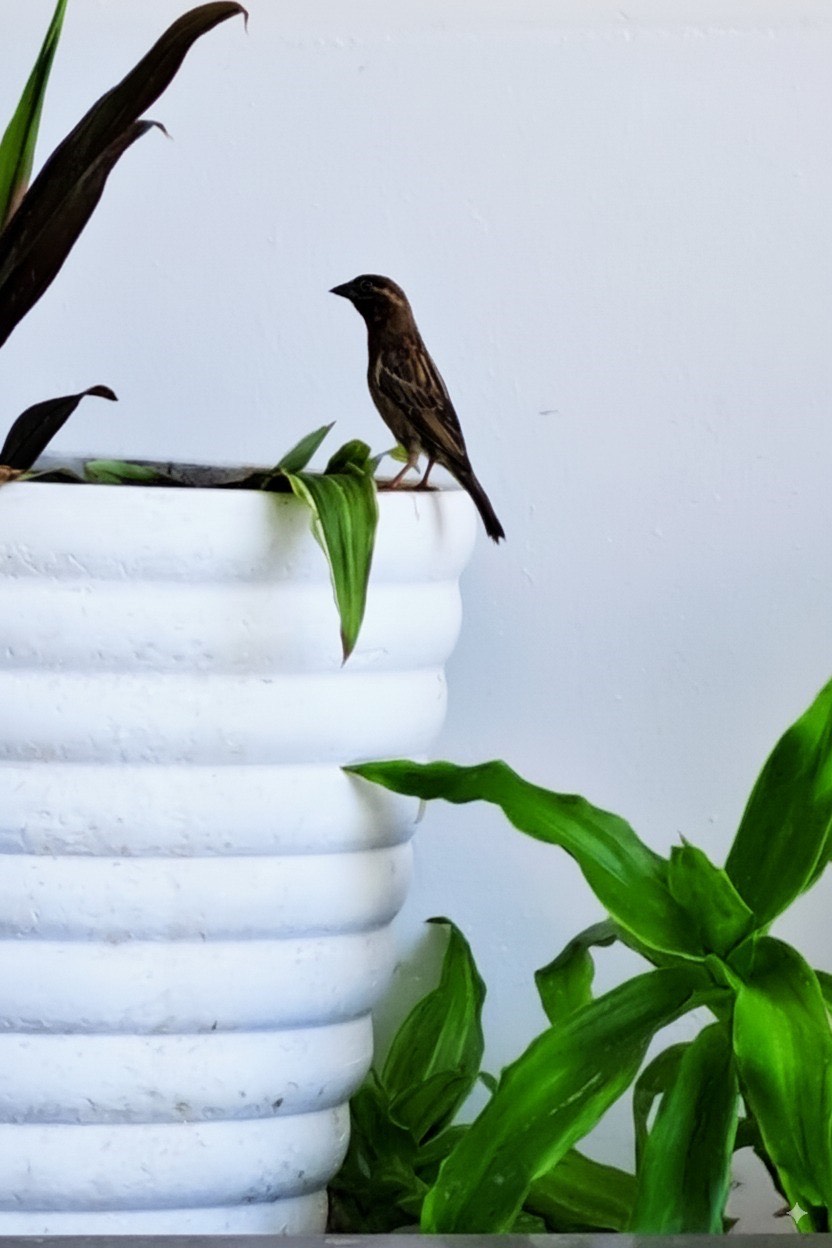
To Pito —which is what friends call him— I discover it wherever I go. In Spain, more “repuestico”, sunbathing on La Rambla; in Mexico, almost indifferent, sipping the sky of “the most transparent region” at the fountain of Coyoacán. I have seen him in Moscow and Milan, in Manila and Buenos Aires, in Skopje and Caracas, even long before we were close, when I still did not know his last name, Rubirosa, which he chose himself, from playboy Dominican.
Every time I return home it is there, at dawn. Over time he has become a close family member, the closest physically. We respect our territories, we pretend not to see each other many times. I never ask him where he goes after gorging himself on the windowsill. He has, like me, a shielded private life, which is not subject to debate. And that’s how it goes for us.
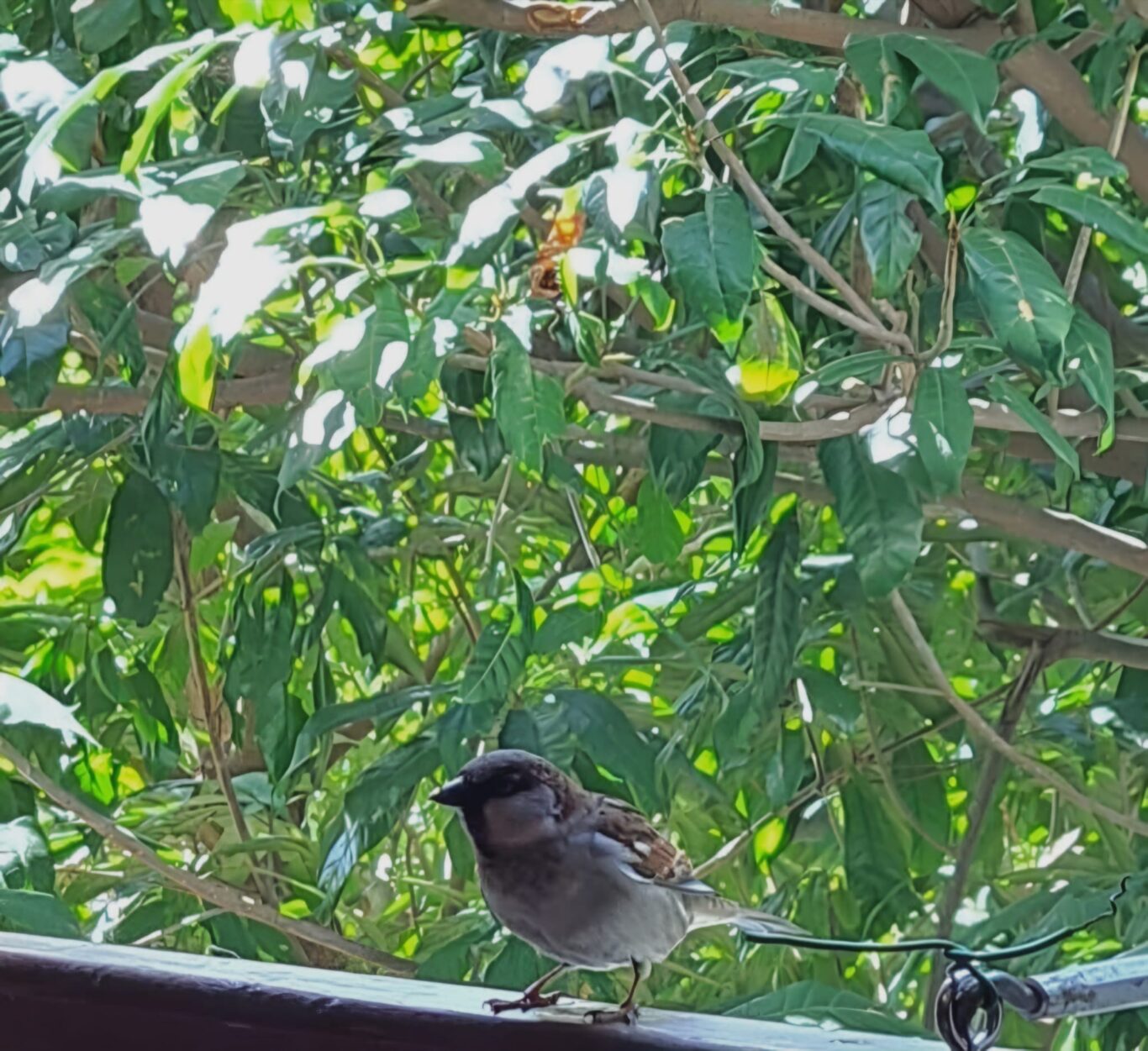
a colleague —incredulous— He asks me how I know it’s always the same sparrow. I told him that friends recognize each other within a mile. He insists that I may be feeding all the sparrows in the neighborhood, and not one in particular. To get her off my back, I told her that the next dawn, before serving her rice, I will ask Pito for his identity card. To Agapito Rubirosa, “child of the air”, my brother, my “sweet brother”.

The sparrow is a municipal being,
electoral,
loud.
Her usual dress
It is a brown cotton blouse;
the pants
of the same fabric.
(He does not wear a belt).
Finally glutton.
Gentlemen, how gluttonous the sparrow is.
Feeding is not bad,
but you have to have moderation,
as the manual teaches
of Good Education.
Objection
capital:
too normal.
Won’t there be a sparrow
brilliant?
Nicolas Guillen