In January 1957, José Garibi Rivera, archbishop of Guadalajara and representative of the Vatican, received the players of the “Chivas” soccer team, who had just won their first league after defeating Irapuato, thanks to a headed goal by the historic forward Chava Reyes.
The surprise of the footballers was enormous when the one who was the first Mexican cardinal and member of the conclave that elected Paul VI lifted his cassock and revealed the mythical red and white “chivas” shirt underneath it. whom at that time he baptized with the nickname that they have carried to this day: “The sacred flock.”.
The faith that unites millions
In Mexico, passions are lived on the surface. Two of the most intense are the devotion to the Virgin of Guadalupe and the love for the Guadalajara Sports Club, known as the “chivas”. At first glance, they seem like different worlds: one religious, the other sports. But if we look closely, we discover that both share symbols, emotions and a deep bond with Mexican identity.
On December 12 of each year, millions of people come to the Basilica of Guadalupe in Mexico City. Young people, families and older adults travel the roads on foot, by bicycle or even on their knees to pay tribute to the patron saint of Mexico. That date transforms the country into a mosaic of faith. Songs, prayers and “mañanitas” (happy birthday) are felt throughout Mexico.
Millions of devotees of the Virgin of Guadalupe head to her Basilica on December 12.
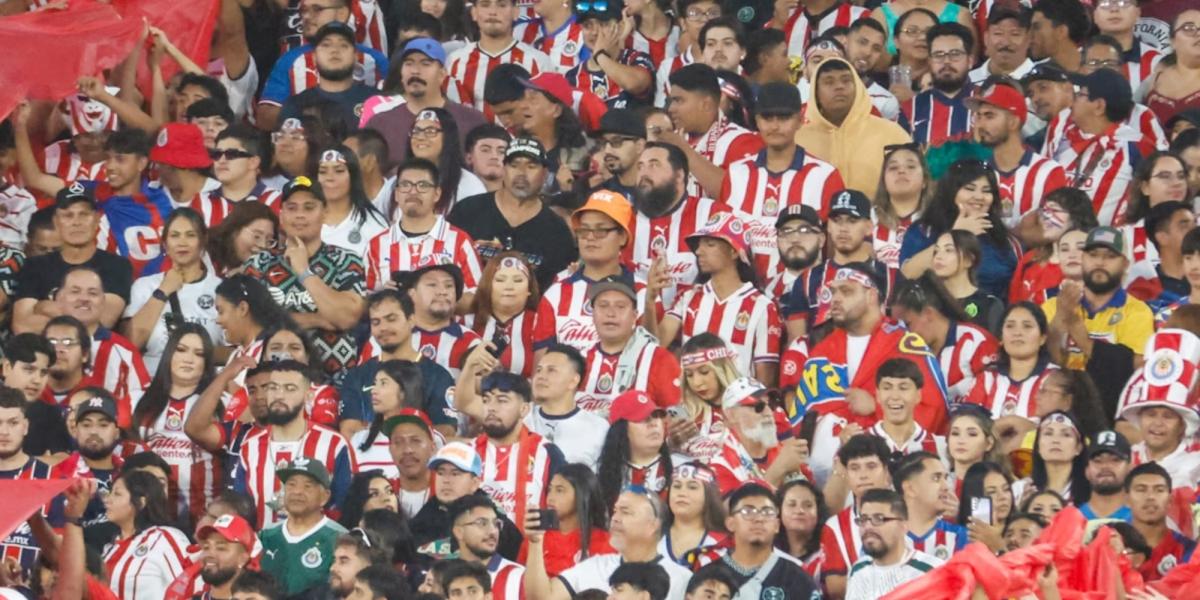
Something similar happens when the “chivas” take the field. It happens live, inside Akron Stadium, or in front of a television. The colors red, white and blue generate the same emotional intensity that the Virgin’s mantle provokes. Fans sing, shout goals and, sometimes, They entrust the result to the “Morenita del Tepeyac”.
Rituals that excite
Guadeloupan religiosity and red-and-white fervor have something in common: rituals. Candle holders, rosaries and altars on one side; t-shirts, flags and batons (cheerleading groups) on the other. Both spaces, temple and stadium, transform the individual into the collective. In a society where humanity is increasingly encapsulated, shared devotion unites multitudes in grief, hope and joy.
Recent studies show that fans feel pride not only in titles, but also for the values of your team. Since its inception, the “chivas” have only played with Mexican soccer players, a phenomenon similar to that embodied by Athletic Club de Bilbao in Spain, which only integrates soccer players of Basque origin.
The marked national accent of the Club Deportivo Guadalajara lineups connects with the values associated with the imagery of Guadalupana Marian devotion. Few Mexicans feel alien to these popular demonstrations, which act as a rallying point for nationalist sentiment.
This coincidence has its roots in that clerical blessing of Archbishop Garibi Rivera and in the baptism of the “sacred flock.” The religious connection with the soccer team has been maintained and consolidated in the city of Guadalajara, as well as throughout the country. Not in vain, his own Pope Pius XII gave his blessing to the “chivas” at the request of that cardinal with a vocation as a fan.
Mexican pride beyond borders
Guadalupe devotion also adapts to local culture. In some indigenous regions, rituals mix Catholic elements and local traditions, strengthening cultural identity. This connection explains why we can see the Virgin and the red and white shield together on murals and stands. They are symbols of pride and belonging.
The “duotheism” that brings together the Virgin of Guadalupe and the “chivas” does not stay in Mexico. Millions of migrants in the United States wear red and white stamps and t-shirts. This habit represents a way of keeping their Mexican identity alive despite the distance. For them, both signs function as “master symbols”which sustain the culture and community far from the native country.
Culture of shared emotions
One of the distinctive elements of Mexican culture consists of experiencing emotions in community. Whether in the Basilica or in the stadium. The songs, tears and screams multiply. The Virgin of Guadalupe and the “chivas” function as identity catalysts: they allow you to recognize yourself, feel accompanied and reinforce a sense of belonging.
The diary Los Angeles Times points out that the Virgin also symbolizes cultural resistance and indigenous memory. A characteristic shared by the “chivas” team, which also inspires that feeling of national roots.
At the gates of the 2026 World Cup
On the occasion of the 2026 World Cup, the country is already experiencing a festive atmosphere. For this third fair (Mexico already hosted it in 1970 and 1986), the city of Guadalajara is preparing to receive thousands of fans and tourists.
The Tapatios (citizens of Guadalajara) and the Jaliscienses (natives of Jalisco) will become hosts for spectators from all over the world for a few weeks. To receive them, local and state authorities they have announced great works that seek to facilitate the stay of visitors and improve services.
Just as important as these works will be the role that Guadalupe devotion and the color of the local fans will play. These expressions of popular culture and deep-rooted Mexican faith constitute distinctive signs that will accompany each other, uniting them in the same festive event.
The religious-football connection will become even more relevant in the capital, Mexico City, since in this same geographical space the “cathedral” of Mexican football (Azteca Stadium) and the Basilica of Guadalupe coexist.
The “sacred” passion that beats in the Mexican heart
The Virgin of Guadalupe and the “chivas” of Guadalajara inhabit different worlds, but they touch each other in the Mexican heart. Both represent faith in the impossible, hope in the face of adversity and the need for symbols that give meaning to the collective.
Between prayers and goals, Mexican culture beats with the same intensity. For millions of people, carrying the Virgin and the “chivas” in their hearts is not just a custom. It is a way of being Mexican, of celebrating identity and sharing emotions that transcend generations and borders.