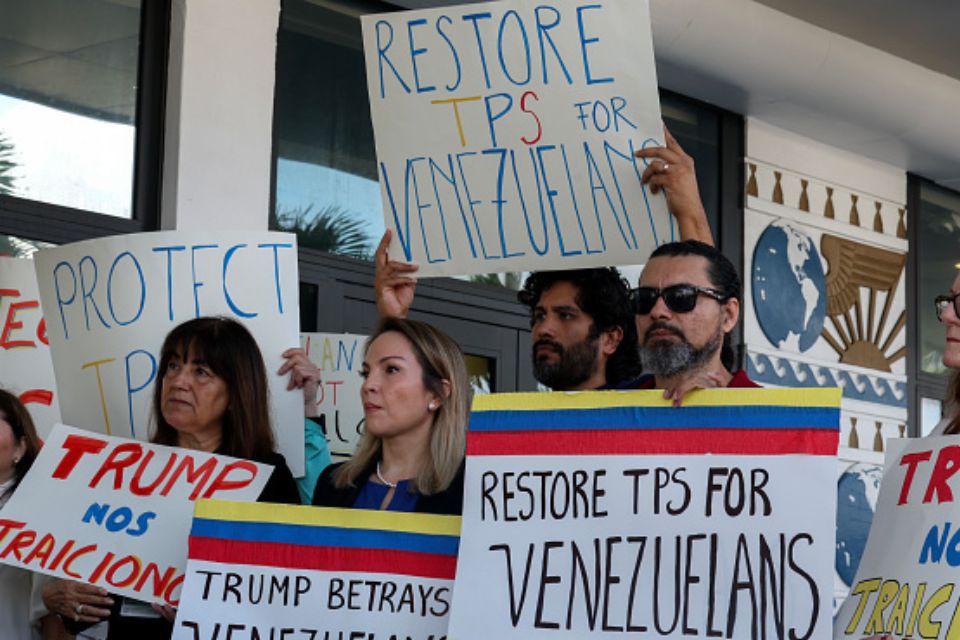
600,000 have been left without TPS in recent weeks. Some are still temporarily protected, having previously filed an asylum claim, or having a few more months of work permit, but the vast majority are left exposed if they decide to stay.
600,000 Venezuelans have remained in an irregular situation in the United States after the expiration of their temporary protected status (TPS), granted by the Biden administration and revoked by Donald Trump. It allowed them to remain in the country legally since it was considered that they could not return to their native country safely.
«People (are) very distressed, very desperate. If you do not have an asylum request, if you do not have any other option, you have the risk of being deported if you are detained,” says Wiliam Díaz, founder of “Casa de Venezuela”, an NGO that legally helps migrants in the United States.
It explains the feeling of the Venezuelan community, after this Friday 250,000 of them were left without their TPS, temporary protection status. They join the 350,000 who lost it a few weeks ago, after a judicial victory by Donald Trump to revoke it.
In total there are 600,000. Some are still temporarily protected, having previously filed an asylum claim, or having a few more months of work permit, but the vast majority are left exposed if they decide to stay.
*Read also: González and Machado insist that the US maintain protection for Venezuelan migrants
Rachel Schmidtke is responsible for Latin America for the NGO Refugees International in the United States: «The majority are going to be left without status in the United States and that means they are in a very precarious situation. They will lose their permit to work, so they will not be able to work in a dignified or formal manner in the United States and they may also be subject to detention. Or they can be deported, so those people are already in a very high-risk situation.
This situation, together with the aggressive actions of ICE agents, the immigration and customs service, means that those who remain in US territory choose, as William Díaz says, to live in hiding: «No one wants to be on social networks, no one wants to declare to the media and no one even wants to participate in events. This weekend there was a traditional religious holiday event in Venezuela and the attendance was very poor.
Faced with the prospect of living clandestinely or being detained, another solution is to leave the country before being forced to do so. TPS applicants received this protection due to the risk of returning to Venezuela.
Rachel Schmidtke explains that Refugees International is looking for alternatives: «Many who do not want to return to Venezuela for obvious reasons, but perhaps want to go to Colombia or Spain or other countries where (they could) live in a safer situation, where they have family. We have to start looking at whether other countries can open more legal routes for these people.
The NGO Casa de Venezuela is working to request that a Deferred Deportation be applied, to buy time, but the Trump administration does not seem inclined to grant extensions.
*Journalism in Venezuela is carried out in a hostile environment for the press with dozens of legal instruments in place to punish the word, especially the laws “against hate”, “against fascism” and “against the blockade.” This content was written taking into consideration the threats and limits that, consequently, have been imposed on the dissemination of information from within the country.
Post Views: 523