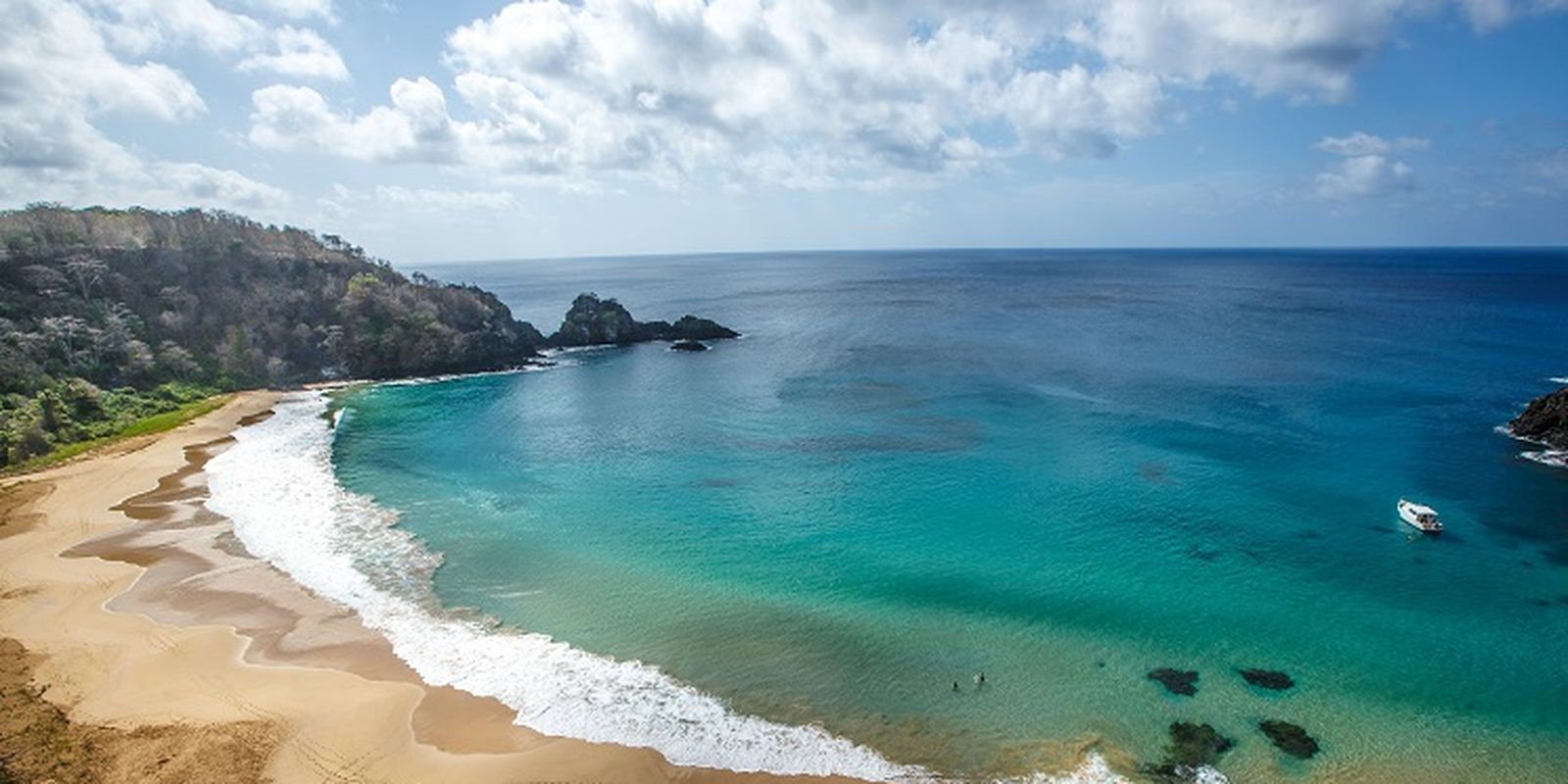
The Noronha Verde Solar Plant project, which aims to decarbonize electrical energy generation in the Fernando de Noronha archipelago by 2027, was launched this Saturday (8) by the Ministry of Mines and Energy (MME) and the Neoenergia group. The structure provides for the complete supply of electricity to the island by solar sources. The partnership also has the participation of the government of Pernambuco.
With an investment of R$350 million from Neoenergia, the project envisages the installation of more than 30 thousand photovoltaic solar panels integrated with battery storage systems. The panels will be installed on 24.63 hectares, which is equivalent to 1.5% of the area of Fernando de Noronha. These areas were provided by the Air Force and the island’s administration, which is carried out by the Pernambuco government.
The implementation will be carried out in two phases, with the first expected to come into operation by May 2026 and the second, in the first half of 2027. As a result, Noronha will be the first inhabited oceanic island in Latin America to reach this level of decarbonization. The announcement of the project took place on the eve of COP30, which will be held in Brazil this year.
The Minister of Mines and Energy, Alexandre Silveira, stated that, with Noronha Verde, the country sets an example, within the scope of COP30, in relation to the transition of the energy matrix.
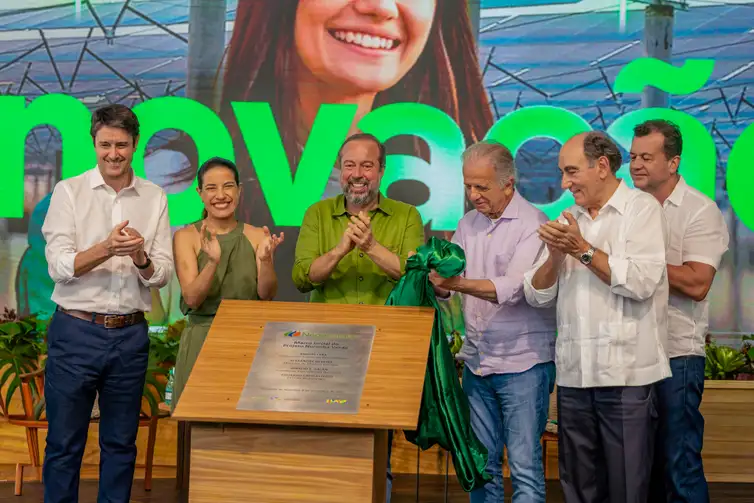
São Paulo – 11/08/2025- The federal government, through the Ministry of Mines and Energy (MME), and the Neoenergia group launched, this Saturday (8), the Noronha Verde Solar Plant project. Photo: Neoenergia publicity – Neoenergia publicity
“We are moving forward in this new economy, which is the green economy. [A mudança da matriz energética]which began under the pillar of sustainability, today generates employment and income. There is no solution outside of this new economy. Fernando de Noronha sets an example for the world. Brazil sets an example within the COP, of its change in the energy matrix”, said Silveira.
For Ignacio Galán, president of Iberdola, which is the controlling shareholder of Neoenergia, the project celebrated today is an example of how cooperation and a shared vision can transform realities, in addition to leaving a legacy for future generations.
“None of this would be possible without a clear energy policy, the vision promoted by President Lula and Minister Silveira and the country’s regulatory stability have made Brazil a global reference in the electricity sector,” said Galán.
The new photovoltaic solar plant, integrated with the battery system, will have a generation capacity of 22 MWp, with 49 MWh from the BESS system, equivalent to the consumption of 9 thousand homes on the continent, the company informed.
“I also reinforce that the benefits of the project go beyond clean and sustainable energy, the project will also contribute to the Brazilian electrical system by reducing the island’s generation cost by up to 10%. Therefore, cleaner, sustainable and cheaper energy”, said Neoenergia CEO, Eduardo Capelastegui.
He explained that, during the day, the solar plant will provide the energy necessary for the island’s instantaneous consumption and to charge the batteries, while at night the batteries, previously charged, will provide energy for nighttime consumption. “All this with security of supply and zero emissions.”
Professor Edileuza Maria dos Santos, resident of Fernando de Noronha, participated in the event and spoke on behalf of the community.
“We wanted to see our island grow without losing the essence of nature that we love so much. And now, with this solar plant, this will be possible. We are proud to know that we will have clean energy and a happy future for our children, our grandchildren and our community”, he said.
In her speech, the governor of Pernambuco Raquel Lyra welcomed professor Edileuza. “It’s great to hear what you say because, in truth, all of this matters if it makes sense to you. If it weren’t to bring real repercussions, to change the lives of those who live here, it wouldn’t make any sense to us, so thank you for your trust,” she said. She added that “a place is only good to visit when it is good to live in”.
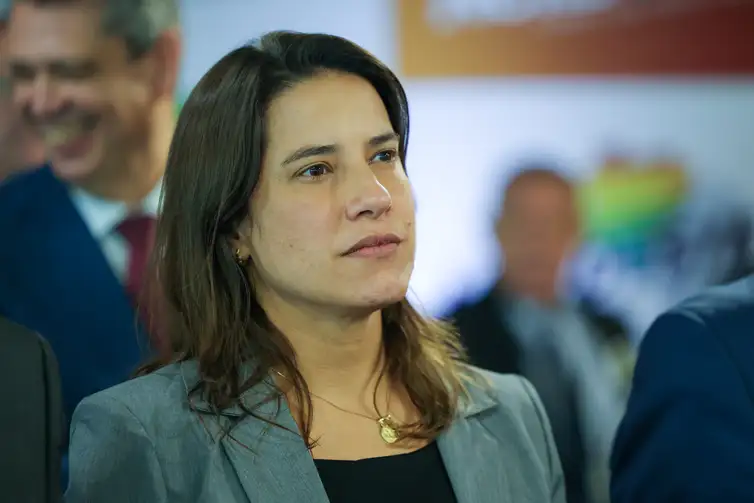
The governor of Pernambuco, Raquel Lyra, stated that removing diesel from Noronha’s power generation is a new beginning for the island. Photo: Fabio Rodrigues-Pozzebom/ Agência Brasil Archive
According to Lyra, the island did not receive investment for a long time. “Today we are laying a foundation stone. Taking diesel from here means a new beginning for Fernando de Noronha. Taking fossil fuel from the island, [significa] allow us to start a new window of opportunity, of investments in tourism and sustainable development”.
Power generated by diesel
Currently, the energy consumed in Fernando de Noronha is generated by the Tubarão Plant, based on diesel – a fossil fuel -, which meets 95% of demand. The other 5% is met by three small solar plants operating on the island. After the complete transition, Tubarão will only be available as a backup, in case of any need.
Considering the logistics of this fuel, on average 200 thousand liters of diesel arrive via ships from Pernambuco and Rio Grande do Norte. Around 30,000 liters of fuel per day are used at the plant to supply energy to the island. According to the company, in 2024, the operation of the Tubarão Plant resulted in the emission of 21 tons of CO².
Neoenergia informed that the solar plant project was licensed by the State Environmental Agency of Pernambuco (CPRH), with the consent of ICMBio, manager of the Federal Conservation Units. “It will be a legacy for the country at a time when we host the most important event focusing on the global climate agenda, the COP,” said Capelastegui.
*The reporter traveled at the invitation of Neoenergia