“For some of the mints around the world that implement coated steel, such as the Royal Canadian Mint, the European Central Bank and the National Central Banks of the Eurozone, the development of these types of innovative solutions is essential to support a circular economy, contribute to reducing the carbon footprint and drive responsible sourcing practices,” the document states.
The electrodepositing or electroplating technique in the metal currency minting industry has been adopted by most mints around the world for the production of their coins, thanks to the benefits that this entails, from cost reduction, as well as environmentally friendly production.
This measure also seeks to ensure that the manufacturing of these coins is done under ESG or environmental criteria in a context in which Mexicans continue to prioritize the use of cash over other means of payment in the face of the expansion of the informal economy, the arrival of remittances from the United States and the low penetration of financial services.
Banxico highlighted that Mexico’s monetary base grew around 4% in the last year, at the same rate as inflation. For this reason, the central bank has increased the number of metallic coins it orders from the Mint by almost 55% since 2021.
“Since the first quarter of 2022, the Central Bank’s minting orders have exceeded 500 million pieces to meet a growing demand for cash among the population, coupled with the existing coins in circulation,” the document highlights.
It is estimated that in the following years, Banxico will order the minting of more than 3,000 million coins per year to satisfy the needs of the Mexican population to carry out daily transactions, regardless of the growth that digital payments will have.
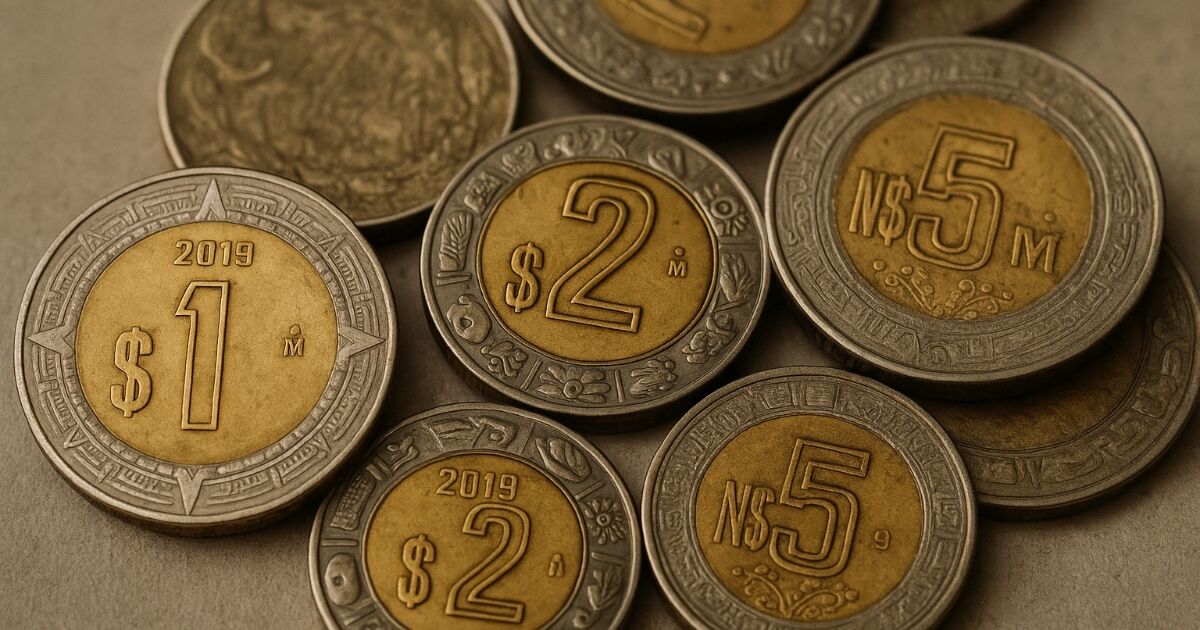
The Institutional Program of the Mexican Mint 2025-2030 explains that since 2022 both the Mint and Banxico evaluated the technical possibilities of making changes to the 1, 2 and 5 peso coins.
“In 2023, Casa de Moneda and Banxico carried out tests of similar one-peso pieces with electroplated coins from the Royal Canadian Mint. The results of the respective tests and technical analyzes resulted in the fact that it is technically feasible to mint one-peso coins,” they say.
The coins are blank metal discs that will later become currency.
Despite the greater volatility in the prices of the steel used for coated steel blanks, the price trend for this is downward compared to the trend for the alloy of other alloys.
A decrease in the intensive use of blank cutting machinery is considered, since it is planned to import coated steel blanks – ready to be minted. “In order to avoid dependence on the import of coated steel blanks, since currently said blanks are not produced in the country, Casa de Moneda will evaluate the feasibility of installing a production line for coated steel blanks at the San Luis Potosí plant.”