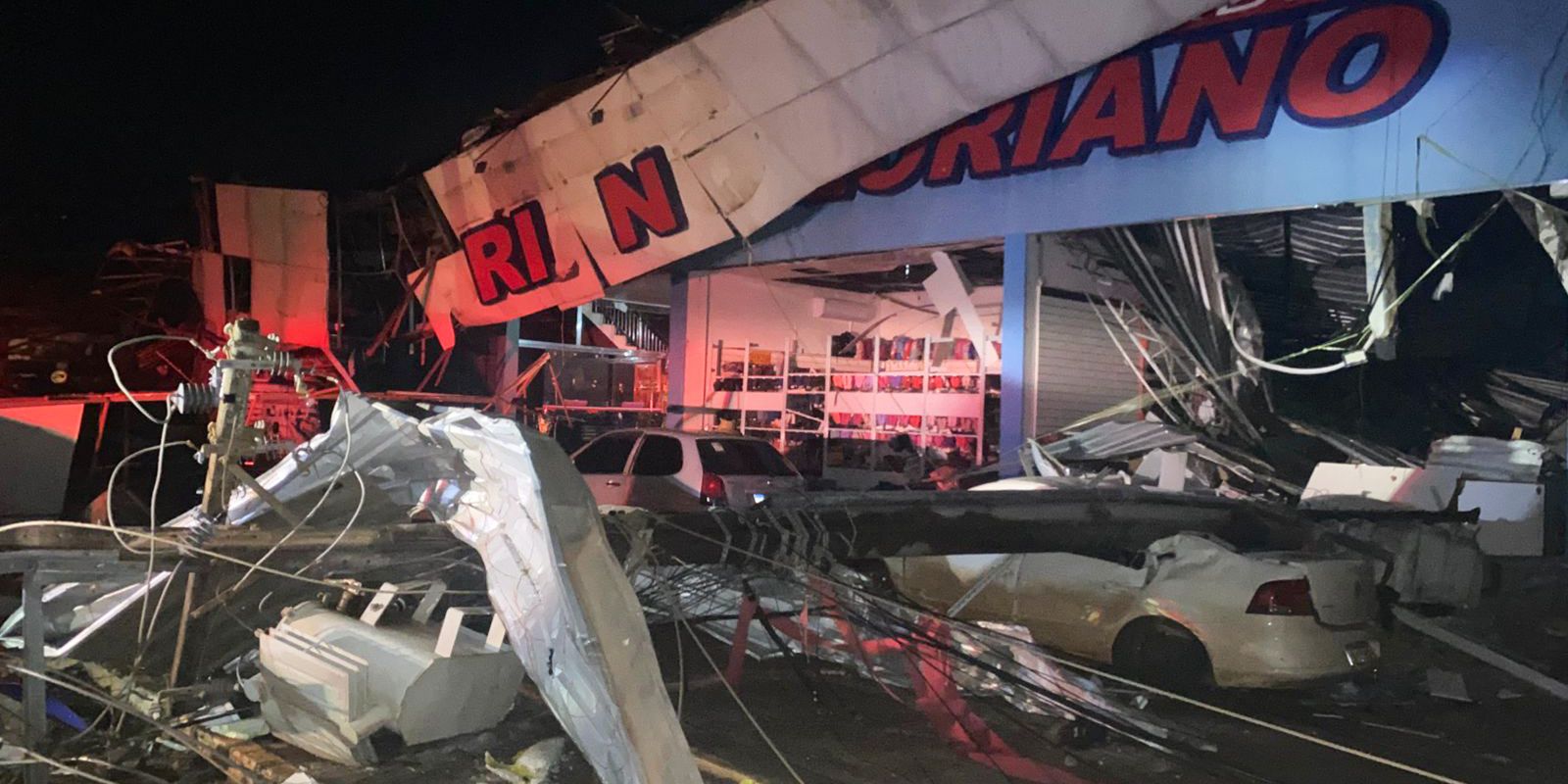
The tornado that destroyed 90% of the city of Paraná of Rio Bonito do Iguaçu and left at least 750 injured should serve as a warning of “desperation and urgency” for the authorities gathered at the United Nations Climate Conference (COP-30), argued the executive secretary of the Climate Observatory, Márcio Astrini. The event starts next Monday (10), but the bosses meeting of State was held last Thursday and Friday. 
“What happened in Paraná, which is sad and serious, is yet another repetition of what has been happening not only in Brazil, in the Amazon, in Rio Grande do Sul, in São Sebastião, in Petrópolis, in the north of Minas, south of Bahia, but also throughout the world,” he highlighted.
“The last ten years were the ten hottest years in history. All of this should be included in the Climate Conference, but, often, what we see is that the meeting becomes impervious to the real world”, criticized Astrini, who represents the main Brazilian civil society network working on climate change.
Astrini hopes that the Paraná event be mentioned by President Luiz Inácio Lula da Silva, at the official opening of the COP, Monday (10) and that this “reality” helps to raise awareness among participating countries about “the real world, which is dying”.
“We have some countries that are more vulnerable to this situation, like Brazil, which depends on agriculture, the generation of our energy depends on climate regularity, with hydroelectric plants. President Lula must make the opening, he may mention it. We always hope that these quotes and these realities have an effect inside”, he adds.
Oceanographer Renata Nagai, researcher at the University of São Paulo, supported by the Serrapilheira Institute, explains that tornadoeslike the one that hit Rio Bonito do Iguaçu, do not happen just because of climate change, but climate imbalance can contribute to them being more frequent and intense.
“Climate change is associated with an influx of fossil fuels and greenhouse gases into the atmosphere and this increases energy, causing the atmosphere and oceans to heat up. This increase in heat also causes an increase in humidity, through evaporation. More heat and more humidity serve almost as a fuel for these extreme meteorological events”
The expert explains that tornadoes are columns of air that rotate at very high speed, formed from storm clouds. Despite being fast and small in size, they can have great destructive power when they touch the ground. The phenomenon is favored by high humidity and hot air.
Professor and researcher at the University of São Paulo (USP) Michel Mahiques states that this type of phenomenon could become more common.
“Tornadoes, like the one that happened in Paraná, occur due to large differences in pressure, caused by air masses with very different properties, such as temperature. Now, with climate change, these differences intensify, and the possibility of extreme events like this increases”