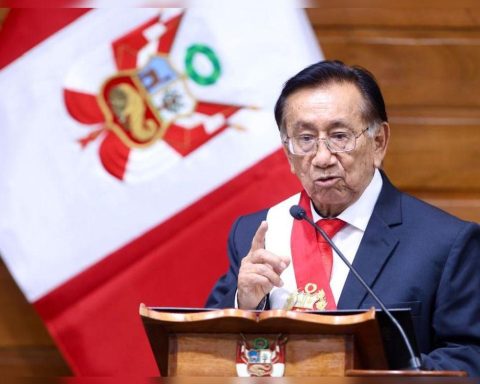
He Judiciary decided to maintain its independence from the Constitutional Courtby declaring inadmissible the request of the JNE that sought to annul the registration of the political movement promoted by the former president of the Judiciary, Duberlí Rodríguez. The decision, contained in the Resolution No. 09 of file 06374-2025, maintains that the T.C. He never ordered the suspension of the process, but only of some first-instance resolutions.
listen to the newsText converted to audio
Artificial intelligence
The pronouncement of the Constitutional Chamber of Lima emphasizes that no other body can interfere in the jurisdictional function. Consequently, the Chamber considers itself authorized to continue with the review of the case, despite the order of the Constitutional Court to stop the effects of the rulings that benefited Rodríguez’s party.
WE RECOMMEND YOU
CANDIDATES IN CADE AND DOCTOR ROCK SPEAKS | WITHOUT SCRIPT WITH ROSA MARÍA PALACIOS
With this ruling, the Judiciary It sends a political and legal signal in the pre-electoral context. The controversy occurs a few months after the elections 2026in which the National Election Jury keeps various party registration processes under review.
Lima Court rejects JNE request and warns of interference by the Constitutional Court
In the court document of November 6, the First Constitutional Chamber declared the request for annulment is inadmissible formulated by the attorney of the JNEwho argued that the Chamber had ignored an order of the T.C.. According to the resolution, the Court only ordered the suspension of six resolutions issued in the first instance, but not the processing of the appeal process.
The text emphasizes that the principle of judicial independenceincluded in article 139 of the Constitution, prevents even other constitutional bodies – such as the Constitutional Court—interfere in ongoing cases. The magistrates maintain that their actions are limited to exercising constitutional control over the acts of the National Election Jury denounced as harmful to fundamental rights.
In his singular vote, the superior judge Tapia Gonzales warns that the JNE seeks “undue interference” and even proposes referring the case to international organizations such as the UN and the IACHR to defend judicial independence. Another magistrate, Chauca Caveagrees that the precautionary measure of the T.C. It does not paralyze the process and emphasizes that the Court’s order is limited to avoiding resolutions that alter the electoral schedule.