The Venezuelan public conversation has become militarized: radars, militias, aircraft carriers, flight maps. In the midst of this noise, the great absentee is the civil. There are no widespread protocols for schools, hospitals or communities; There is no mapping of shelters, non-attackable areas, collection centers or care routes for vulnerable people if tension escalates. This void, warns sociologist Damián Alifa, is not filled by Civil Protection, firefighters, police, or the hospital system; and NGOs that try to replace it fear being criminalized for “generating anxiety.”
On these tensions turned the most recent edition of Night D, where Alifa maintains that the country is navigating between two waters: the skepticism of “nothing is going to happen” and the alarmism that buys the entire military narrative. At both extremes, he says, what is essential is missing: civil preparation. “It is urgent to have preparations as civil society for a case of national emergency of that level.”
In conversation with Víctor AmayaAlifa proposes to dispute the meaning of peace. Not the “peace” of the gag, of incommunicado prisoners or of repressed mothers, but a peace with guarantees: freedom for political prisoners, effective recognition of democratic institutions and space for community organization. “We have to think about what a great peace movement would be like,” he says, and that this flag is not a monopoly of power.
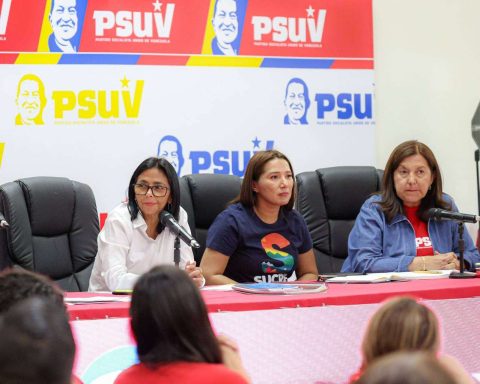
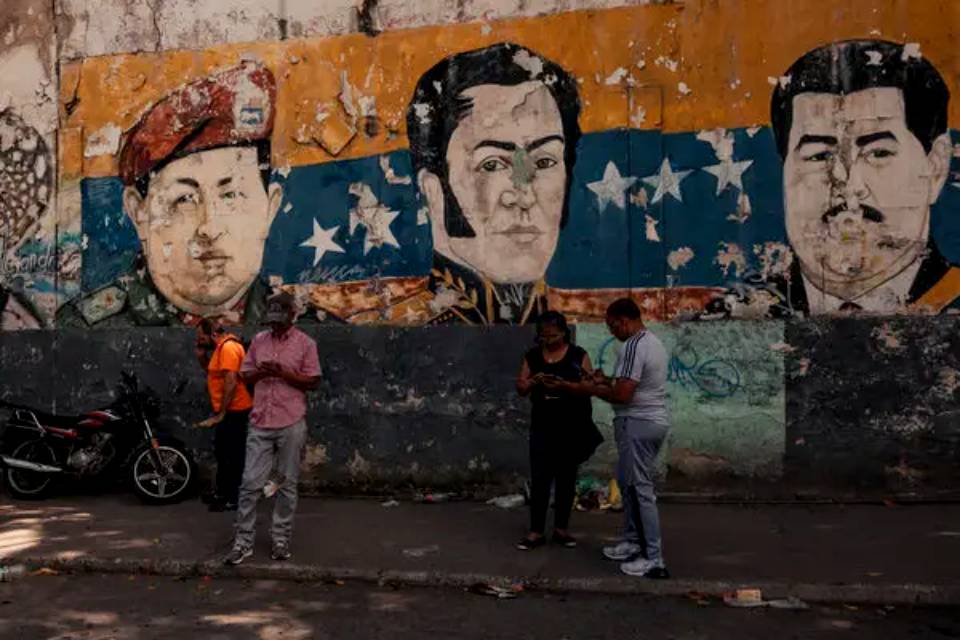
The diagnosis of Chavismo that Alifa draws is stark: a cohesive system at the top, with sufficient control over the Armed Forces, crossed by an existential fear of leaving power. That fear—cultivated since the 2002 coup and the oil strike, and fueled by the narrative of symbolic erasure—led to more closed-mindedness and authoritarianism. «Fear breeds the most authoritarian regimes»he summarizes. Hence the hyperconcentration of decision-making in very few hands and the prohibitive cost of dissent: neither dissident Chavismo nor the critical military finds shelter, and the price of taking internal distance is very high.
And while the international sphere discusses aircraft carriers and sanctions, we should invent—or perhaps give birth—a “democratic Chavismo” That it breaks with blind loyalty, recognizes limits and reopens a political channel would be useful. “If it doesn’t exist, you have to invent it.”
According to the sociologist, it is not about romanticizing the ruling party or waiting for a “naturally” moderate current to appear, but rather about working to open a space within that political world that recognizes limits and the need for democratic coexistence. “You have to invent it and you have to build it, I’m not referring to an infiltration, but to aim for the most democratic narrative of Chavismo,” he explains.
That narrative, he says, existed at some point, even if it was fragmentary: “That Chavismo that spoke of participatory democracy, that believes in the importance of elections, that does not have extreme positions in relation to dissidence.” But that line was swept away by the absolute concentration of power: «Today, how many people can make decisions in Chavismo? Five, sometimes three, sometimes two.
Even those who remain within the ruling party with critical nuances lack real influence. “It is very complicated for those voices to influence that leadership that is risking its life,” and for those who dare to question, the risk is high. «The cost of deferring is enormous. “You run a gigantic risk.”
That is why he insists that it is not enough for there to be silent dissidence: it is necessary to build a place for them where there is the possibility of dialogue and minimum guarantees of return to politics, without reprisals. “We must generate fertile ground for this democratic Chavismo to exist,” he concludes.
In parallel, the dominant opposition has become monolithic in a strongly anti-socialist identity. That connects it with external right-wing support, but distances it from the international left. Result: a double short circuit. A good part of that left prefers to remain silent or avoids substantive definitions about Venezuela; and the opposition, ideologically closed, loses bridges that could expand its legitimacy in progressive spaces. The discussion is once again trapped in the left-right binary, with little ground for broad positions that recognize complexities and establish communicating vessels.
In this ecosystem, does international mediation from the left have a margin? Alifa believes that his role should not be overstated. Voices like Lula or Petro—or Boric’s clearer stance—can help de-escalate tensions with the United States and, in favorable moments, open dialogue. But their ability to move the internal plates is limited: Maduro’s power neither depends on them nor is it especially sensitive to them when it comes to substance. Even so, moderate gestures from the left—such as demanding minutes or conditions—make the ruling party more uncomfortable than strident speeches from the right, because they hit where it hurts: in one’s own narrative.
*Journalism in Venezuela is carried out in a hostile environment for the press with dozens of legal instruments in place to punish the word, especially the laws “against hate”, “against fascism” and “against the blockade.” This content was written taking into consideration the threats and limits that, consequently, have been imposed on the dissemination of information from within the country.
Post Views: 289