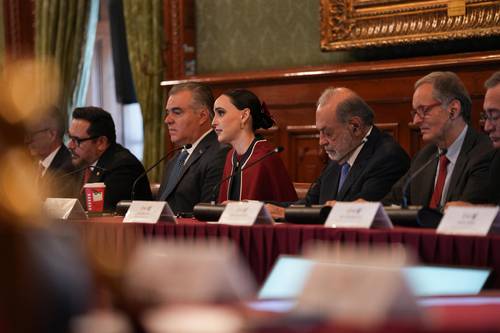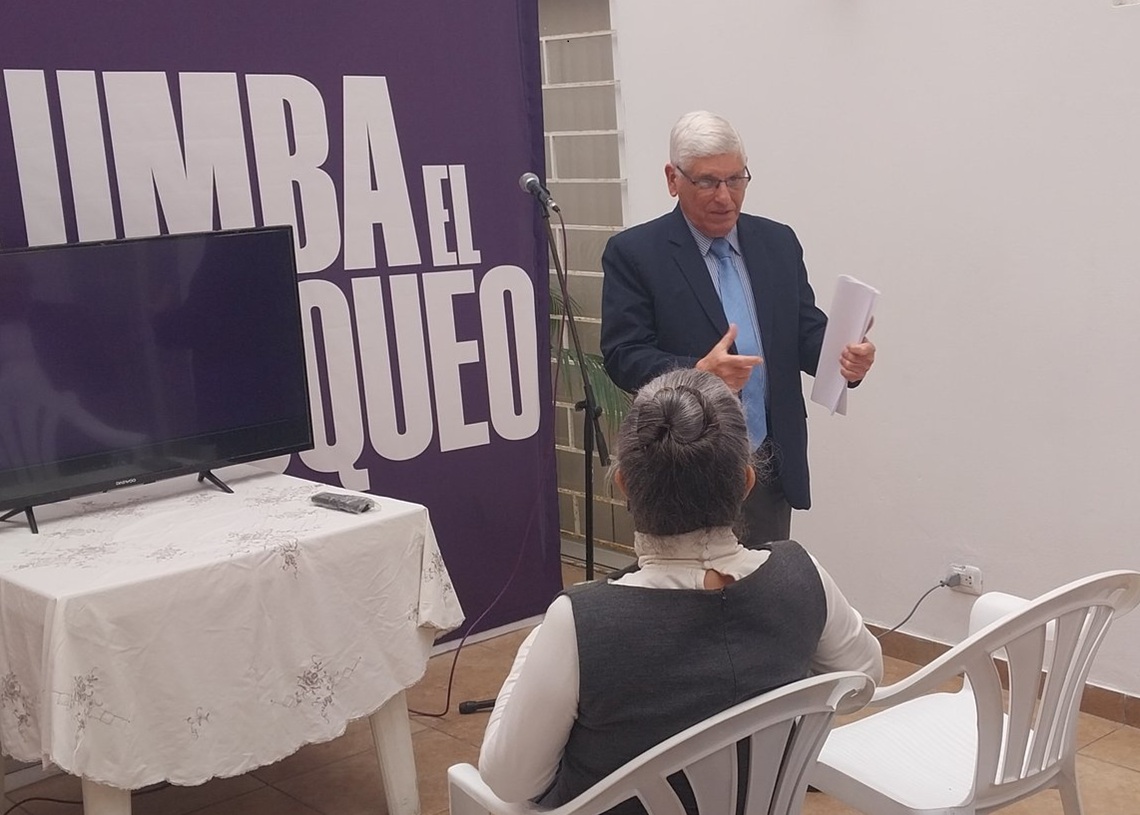
The Government of Peru announced this Friday the “definitive” departure of the Cuban ambassador to that country, Carlos Zamora, amid questions about the work of the island’s diplomat.
The announcement was made after a meeting with Vice Foreign Minister Félix Denegri, on October 28, which focused on “the activities carried out (by the Cuban diplomat) during his management in Peru,” says a statement from the Peruvian Foreign Ministry.
“Based on what was discussed in that meeting, it is reported that Ambassador Zamora finished his duties in Peru,” said the statement, cited by the media.
Short on details, the official note does not clarify the specific reasons for the decision. Nor does it specify whether it is an expulsion or an agreed departure between both parties, nor whether Cuba will send a replacement for Zamora, who would have already left the South American nation.
However, political sources and local media point out that the measure is part of a climate of growing tension between the authorities of Peru and the governments of other countries, including Cuba, which are accused of interfering in Peruvian internal affairs.
The right of Peru has been demanding for months the expulsion of Zamora, who is accused of being an agent trained by the former KGB (Soviet intelligence service) and of being an “agitator” and an “intelligence operator” linked to formations of the Peruvian left.
Until now, the Cuban Foreign Ministry (Minrex) had not commented on the departure of its main representative in Peru, while other members of the Cuban embassy in Lima were not available for comments. according to the agency Reuters.
Press Release 022-25:
Regarding the request for safe passage for Betssy Chávez and the departure of the Cuban ambassador.
https://t.co/HXqYGc22xf pic.twitter.com/lgdWEbSJ1x
— Peruvian Foreign Ministry (@CancilleriaPeru) November 7, 2025
The conflict with Mexico: the trigger?
The departure of Zamora, who had held his position since 2021, coincides with a diplomatic crisis between Peru and Mexico. It detonated after the latter country granted asylum to former Prime Minister Betssy Chávez, a fugitive from Peruvian justice for her connection to Pedro Castillo’s failed self-coup in 2022.
Unilaterally, Peru broke off relations with Mexico, calling asylum “interference,” and now seeks to reform the 1954 Caracas Convention—which regulates the right to asylum—in the OAS.
Foreign Minister Hugo de Zela argued that Mexico “abused” the convention, while the Peruvian Congress declared persona non grata to Mexican President Claudia Sheinbaum.
However, commercial exchange between both countries will remain normal despite the breaking of diplomatic relations between both countries, the Peruvian Minister of Foreign Trade and Tourism, Teresa Mera, stated on Friday.
The Mexican Government rejected Lima’s decision and maintains that it granted diplomatic refuge to Chávez in accordance with the 1954 Convention on Diplomatic Asylum (Caracas Convention), to which both Mexico and Peru are party states.
Peru breaks relations with Mexico, which regrets that “unilateral” and “disproportionate” decision
Right turn in Peru
Analysts suggest that Zamora’s expulsion reinforces the right-wing turn of the interim government of José Jerí, successor to Dina Boluarte—successor, in turn, of the now on trial Pedro Castillo—who was dismissed at the beginning of October in a lightning impeachment trial in Congress.
Tensions with Cuba and Mexico revive old ideological divisions in the region. Peru accuses both countries of supporting Castillo, whose government (2021-2022) maintained close ties with Havana. Mexico even granted asylum to the family of the former president, who is serving prison time for “rebellion.”
For political analyst Fernando Rospigliosi, “the Peruvian government sees Cuba as an arm of Castroism that still promotes revolts in Latin America.”
While the Peruvian right celebrates the departure of the ambassador from the island and the break with Mexico, human rights organizations warn of a “climate of ideological hunting.”