On October 27, the National Banking and Securities Commission (CNBV) and Bank of Mexico (Banxico) presented a public consultation to reduce the costs of payments with credit and debit cards.
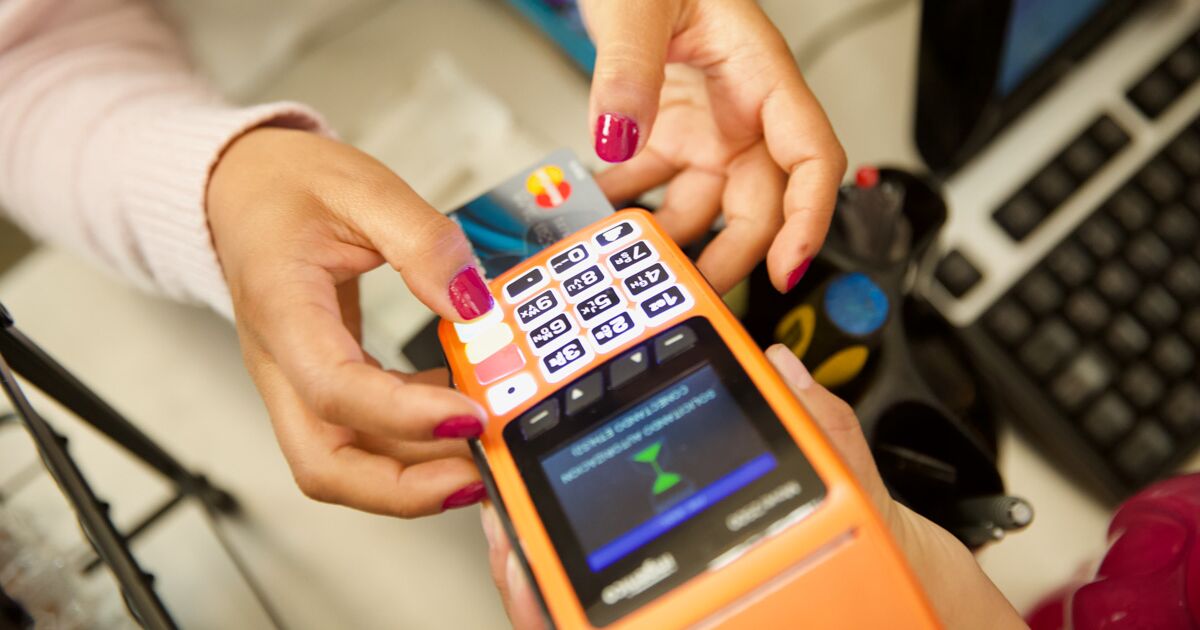
One of the main points in the discussion will be interchange fees, which are the fees that banks and other financial institutions charge for accepting credit and debit cards at their point-of-sale terminals.
In 2023, Cofece warned that the exchange fees in Mexico are among the highest in the world with an average of 1.36%, while in other countries this fee is 0.2% on average.
However, data from Banco de México highlights that credit card interchange fees reach up to 1.91% of the total payment, while for debit cards the fees reach up to 1.15%.
The proposal from Banxico and the CNBV aims for interchange fees to be 0.6% for payments with credit cards and 0.3% for debit cards.
The Association of Payment Methods Aggregators (ASAMEP) celebrated that with this proposal from the regulators the recommendations of the Cofece of 2023 are met, when it said that these commissions inhibit consumption and formality.
“For our part, we will be participating in the corresponding public consultation, aligned with our mission of promoting the economic development of Mexico and promoting the growth of the digital economy through the implementation of an inclusive and accessible payment infrastructure for the entire population,” said ASAMEP.
Asked about this project, the Association of Banks of Mexico (ABM), chaired by Emilio Romano, said that the union will accelerate the launch of its RedM, a network whose main owners or shareholders are banks, acquirers, aggregators, etc.
“We are already working, we agreed on a budget and we agreed on the next steps to make it a reality,” said Emilio Romano. “The RedM is fully compatible with the rules it establishes or the rules that Banco de México and the National Banking and Securities Commission are providing.”
How does the payment network work in Mexico?
The issuers are the banks, Sofipos or fintech companies that provide the credit or that have the money in a debit account. It is estimated that there are more than 112 companies of this type operating in the country.
These companies, by giving a card to account holders, allow people to go to a store to make purchases with a plastic card, this plastic can be issued by Visa or Mastercard.
The business where the purchase is made, for example a department store, has a bank terminal or payment aggregator (Mercado Pago, Clip, etc.) and through an acquirer, which is a company that provides payment acceptance services, accepts cards.
There are currently four clearinghouses in Mexico: E-Global, Mastercard, Visa and Prosa (which recently acquired Visa).
E-Global is owned by Banamex (46.14%), BBVA (46.14%) and HSBC (7.72%).