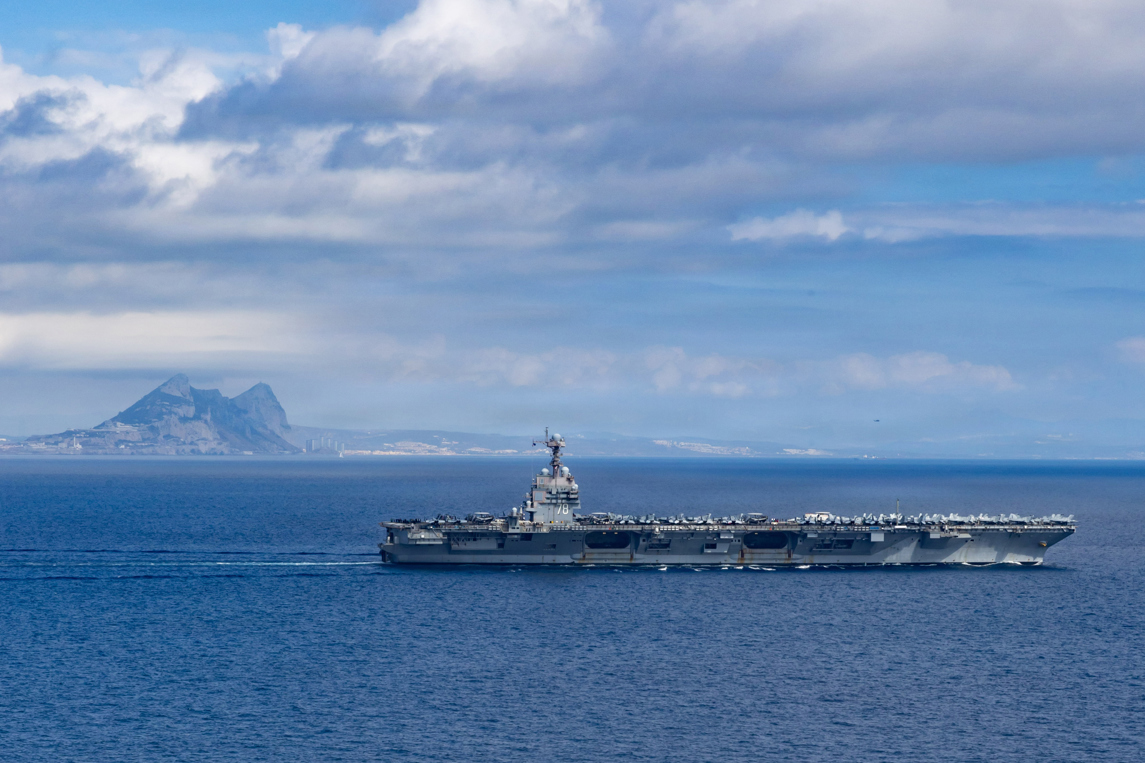
In a analysis published in Foreign Policyanalysts William M. Leo Grande and Peter Kornbluh warn of the largest military deployment of the United States in the Caribbean since the missile crisis of 1962. With ten warships and some 10,000 soldiers positioned off the coast of Venezuela, the authors maintain that the White House — under a second term of Donald Trump — would be preparing an offensive against the government of Nicolás Maduro, under the pretext of the fight against drugs.
“But the real goal is to overthrow Venezuelan President Nicolás Maduro and, by cutting off the flow of Venezuelan oil to Cuba, realize the Republican right’s decades-long dream of bringing about the collapse of the Cuban government.”
According to LeoGrande and Kornbluh, the operation is also supported by the hope of causing the collapse of the political system of the island, whose economy has been suffering from the worsening of a prolonged energy crisis. In less than a year, between the final months of 2024 and so far in 2025, Cuba has suffered five total disconnections from the National Electrical System (SEN).
The text by LeoGrande and Kornbluh recalls that this same strategy of suffocation was already tried without success by John Bolton in 2019, and that it returns today, promoted by the current Secretary of State and National Security Advisor, Marco Rubio.
The authors emphasize that Cuba, although less dependent today on Venezuelan crude oil than a decade ago, remains vulnerable to an eventual total cut in supplies:
“If Washington manages to overthrow Maduro, his successor would likely end oil shipments to Havana, dealing another blow to an already faltering Cuban economy. The United States’ success in Venezuela could also threaten Cuba’s national security if the Trump administration, intoxicated by victory, decided to expand its aggressive military interventionism. However, Havana is no longer as dependent on Venezuela as it was a decade ago.”
Since 2016, Venezuelan oil production began to decline due to mismanagement and lack of maintenance. By mid-2018 it had already been reduced by half, and during those same years the international price of crude oil also fell by around 50%, drastically cutting the country’s income.
Consequently, oil shipments to Cuba decreased as Caracas allocated a greater part of its production to cover its own needs. “By 2024, these shipments had been reduced to 32 thousand barrels per day, and they have been even lower this year,” the authors highlight.
Beyond the economic effects, the warning launched by LeoGrande and Kornbluh maintains that Washington’s policy of force could reinforce the historical image of the United States as an interventionist power and accelerate Latin America’s shift towards new alliances with China.
“Trump’s tariffs have already shown that the United States is no longer a reliable economic partner. If it is now also becoming a military threat, then it is time to look for partners—and security alliances—elsewhere.”
This move would also have humanitarian and geopolitical implications: military action could further destabilize Venezuela, put the lives of Cuban professionals working in that country at risk and intensify regional tension.

Protesters hold a Venezuelan flag during a march in Caracas against the United States military deployment in the Caribbean Sea, which Maduro considers a threat to his government. October 30, 2025. Photo: EFE/Ronald Peña.
“Airstrikes against Venezuela will not stop the flow of drugs into the United States. Where big profits are at stake, demand always breeds supply. Military action and the threat of escalation could lead to Maduro’s ouster, but the Venezuelan military benefits from the status quo. If they remain intact, then not much will change in Caracas, short of a US military occupation.
“Nor is a cutoff of Venezuelan oil supplies likely to topple the Cuban government, which has survived much worse economic blows.
“Trump’s foreign policy watchword is to speak loudly and brandish a big stick. No one can stop him from hitting Venezuela with it, and once he does, he will no doubt claim victory, no matter how meager the results. But the damage he will leave behind — to U.S. regional interests and to Venezuela — will not be easily repaired or forgotten.”